

Explore by Category
Find Your Kind of Thai Food.
Thai food is a conversation of sour, salty, sweet, spicy and bitter — often in the same bite. A Bangkok wok, a Chiang Mai curry shop and an Isan papaya-salad cart can taste like three different countries.
This page is about the food itself: the dishes you order, share and remember. Choose a style of cooking that pulls you in. Then go dish by dish.
Thai Classics
The plates that made Thai food famous. Pad Thai, Tom Yum Goong, Pad Kra Prow — you will see them on almost every menu. Taste them properly, and you will understand why they travel so well.
Curries
Coconut, herbs and slow heat. Green Curry is bright and fragrant; Massaman is gentle and deep. Thai curry is less about proving how spicy it is, and more about the rice beside it.
Grilled & Street Food
Charcoal, smoke and a wok that never cools. Satay, omelets and the everyday plates that keep night markets open late — this is how a lot of Thailand actually eats.
Noodles
Some bowls belong to a place. Boat noodles in the Central plains, Khao Soi in the North, wide soy-seared Pad See Ew almost everywhere. Comfort, with a story in the broth.
Seafood
Fish, shrimp and shellfish cooked the Thai way: sour, spicy, fried until the skin shatters, or simmered in a broth that wakes the table. Fresh from the sea, the river or the lake.
Salads & Spicy
Not a side of leaves — a full flavor. Som Tum and Larb hit sour, salty and chili first. Eat them with sticky rice, and they stop being “salad” and become the meal.
Regional Specialties
The North, Isan, the Center and the South do not cook alike. These dishes tell you where you are — through herbs, heat, and the way people share a table.
Thailand’s Must-Try Dishes
Thailand, Dish by Dish.
What they taste like, how they’re served, and what to order when you want the real thing. Classics are listed first. Regional, everyday, and street dishes continue below.
Thai Classics
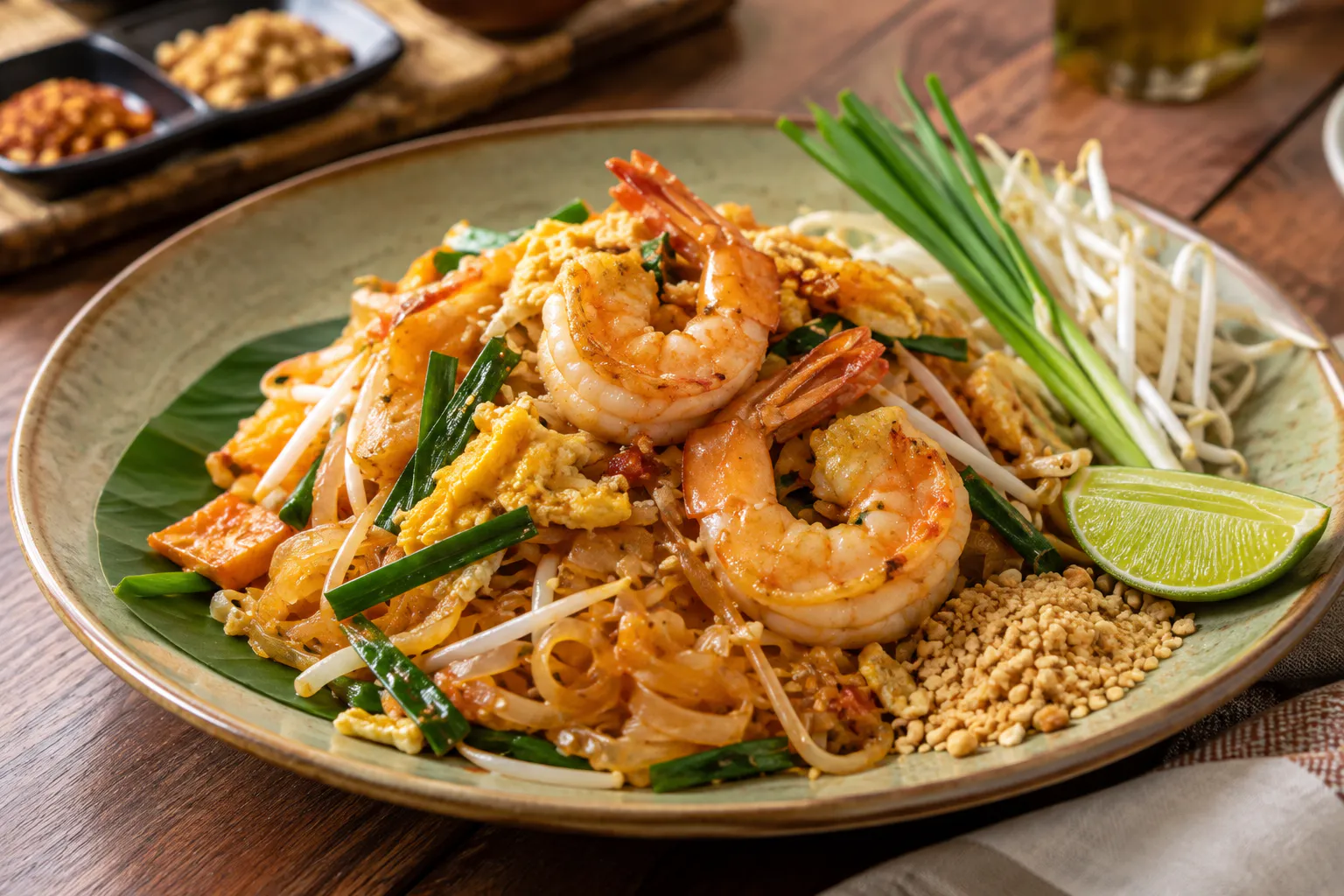
Pad Thai ผัดไทย · Stir-Fried Rice Noodles
Thailand’s most famous noodle dish: thin rice noodles stir-fried with egg, tofu, bean sprouts, and a tamarind-fish sauce that is tangy rather than heavy. Street stalls and restaurants both do it well — squeeze the lime over the top, add crushed peanuts, and keep chili flakes on the side if you want to control the heat.

Seafood
Tom Yum Goong ต้มยำกุ้ง · Spicy Shrimp Soup
A bright, steaming soup built on lemongrass, galangal, kaffir lime leaves, chili, and plump shrimp. The broth should taste sharp and fragrant, not creamy — unless you ask for Tom Yum Nam Khon, the version with a splash of evaporated milk. Eat it with rice; it is meant to wake up the table, not sit politely in the background.
Curries
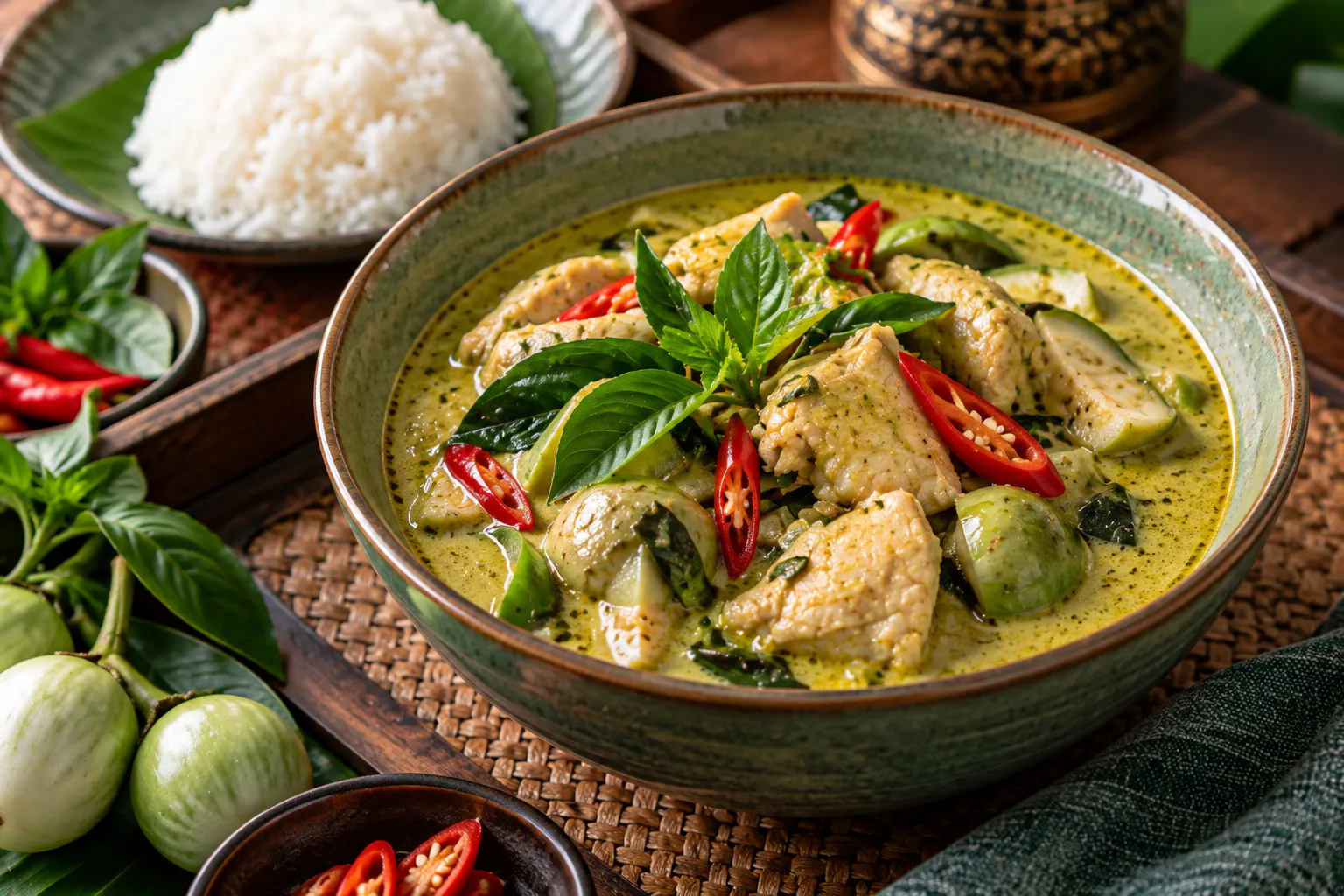
Green Curry แกงเขียวหวาน · Gaeng Keow Wan
A coconut curry with a vivid green paste of fresh chilies, basil, and coriander root. Thai eggplant and Thai basil give it a herbal lift, while coconut milk keeps it round and slightly sweet. Order it with jasmine rice, and expect more fragrance than fire unless you ask for it spicy.
Curries
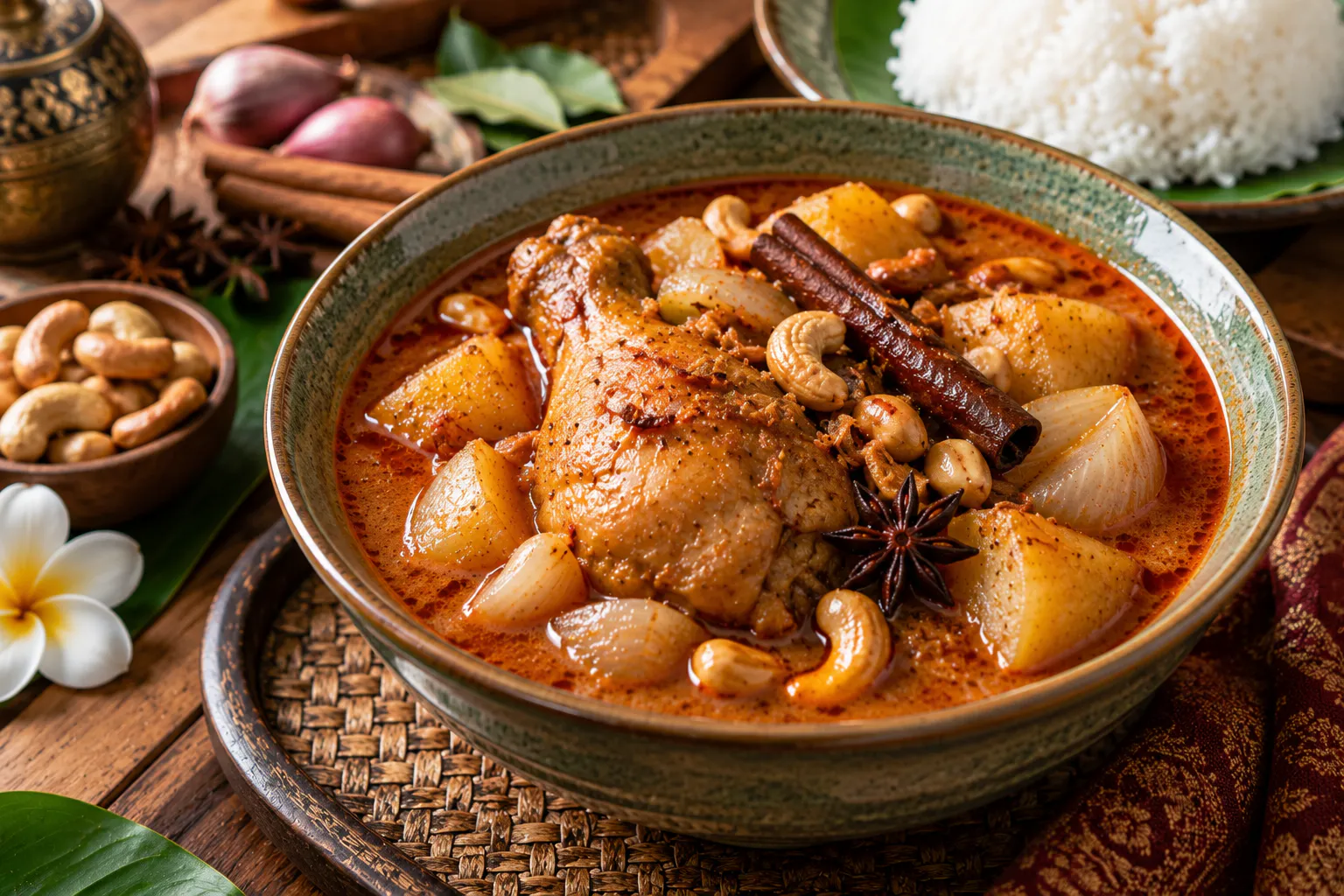
Massaman Curry แกงมัสมั่น
A slow, Persian-influenced curry scented with cinnamon, cardamom, and star anise, usually made with beef or chicken, potatoes, and peanuts. It is one of the gentlest Thai curries — deep and comforting rather than sharp. A good first curry if you are still finding your heat level.
Thai Classics
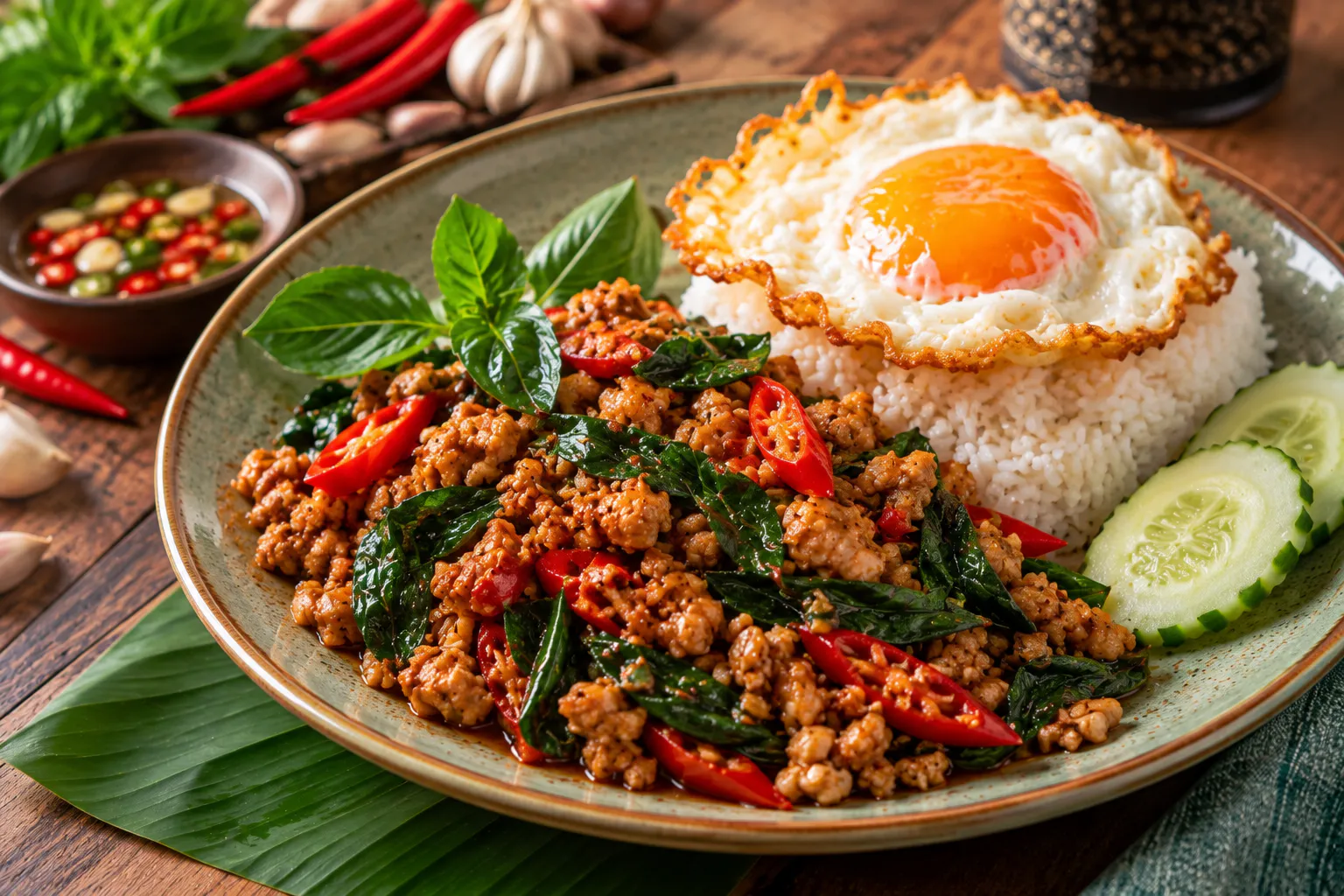
Pad Kra Prow ผัดกระเพรา · Stir-Fried Holy Basil
The everyday Thai favorite: minced pork or chicken flash-fried with garlic, bird’s eye chilies, and holy basil, then served over rice with a crispy fried egg. Locals eat this for lunch more than Pad Thai. Say “pet mak” if you want it properly spicy, or “mai phet” if you do not.
Salads & Spicy
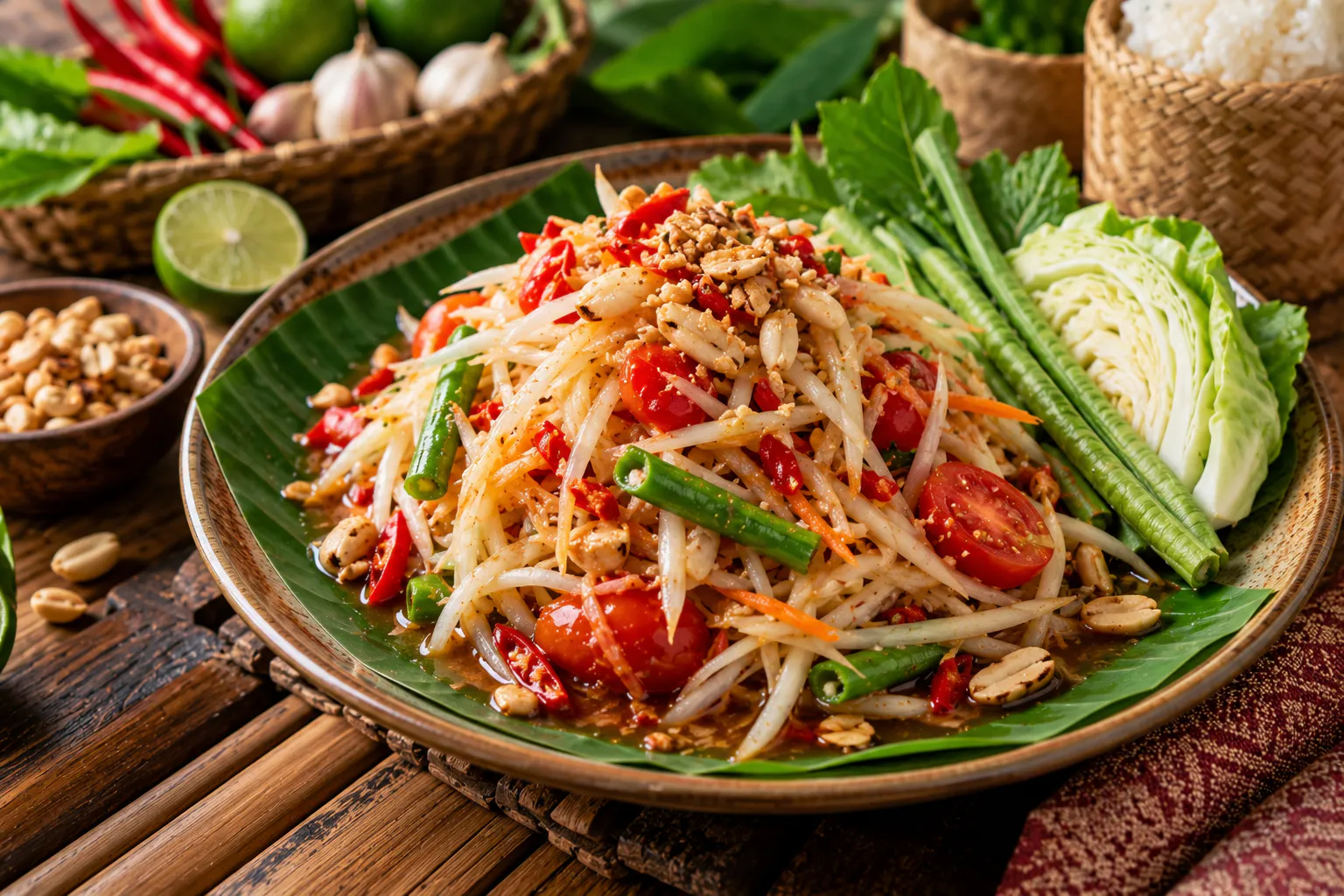
Som Tum ส้มตำ · Green Papaya Salad
Shredded green papaya pounded with lime, fish sauce, garlic, palm sugar, tomatoes, long beans, and peanuts. The result is loud, fresh, and addictive. Ask for Som Tum Thai for a milder, sweeter version, or Som Tum Lao / Som Tum Pu if you want the full Isan punch with fermented fish.
Noodles · Regional
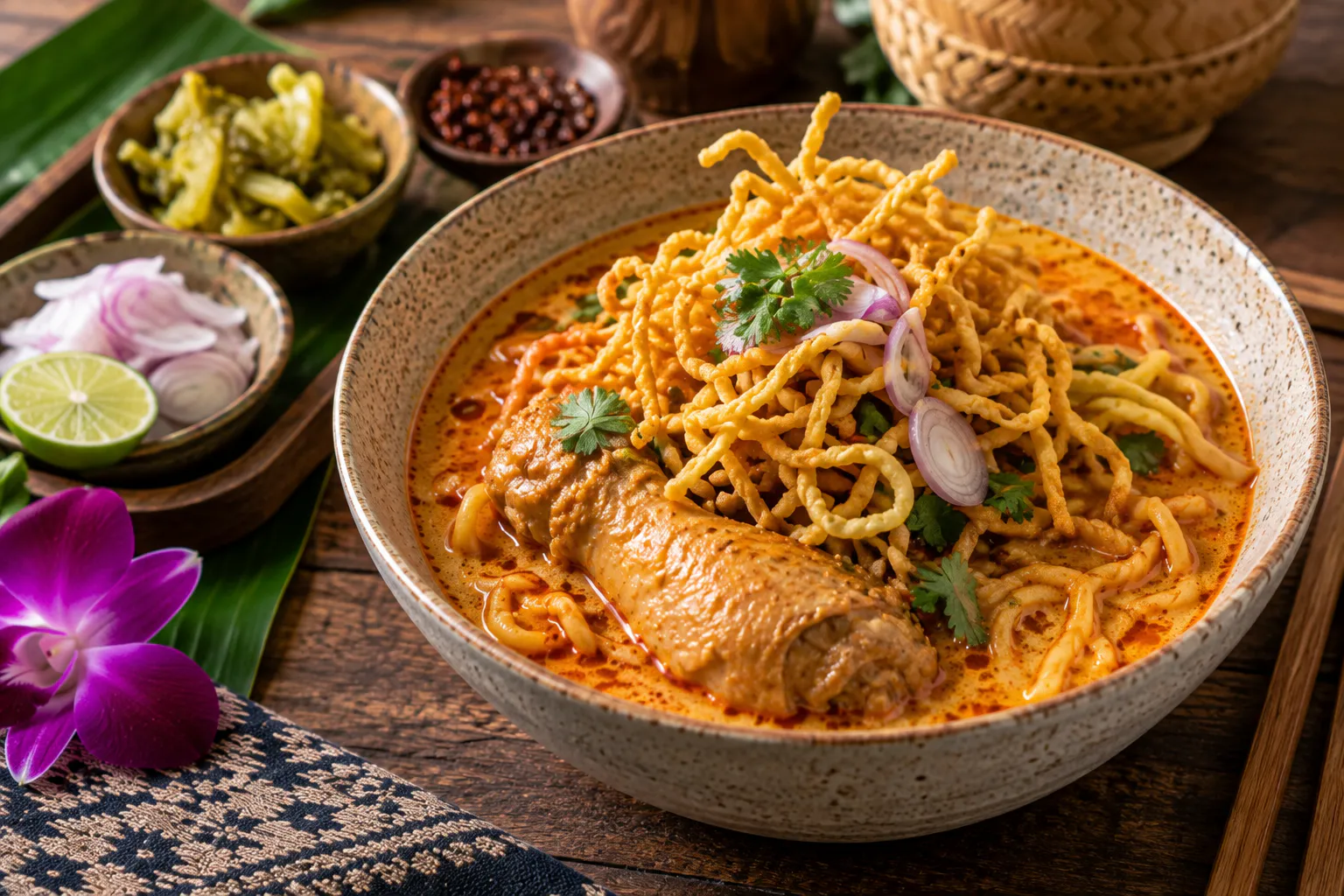
Khao Soi ข้าวซอย · Northern Coconut Curry Noodles
Egg noodles in a coconut curry broth, topped with a nest of fried crispy noodles, pickled mustard greens, shallots, lime, and chili oil. Chiang Mai is the classic place to try it. Stir the condiments in yourself — the dish is designed to be finished at the table.
Grilled & Street Food
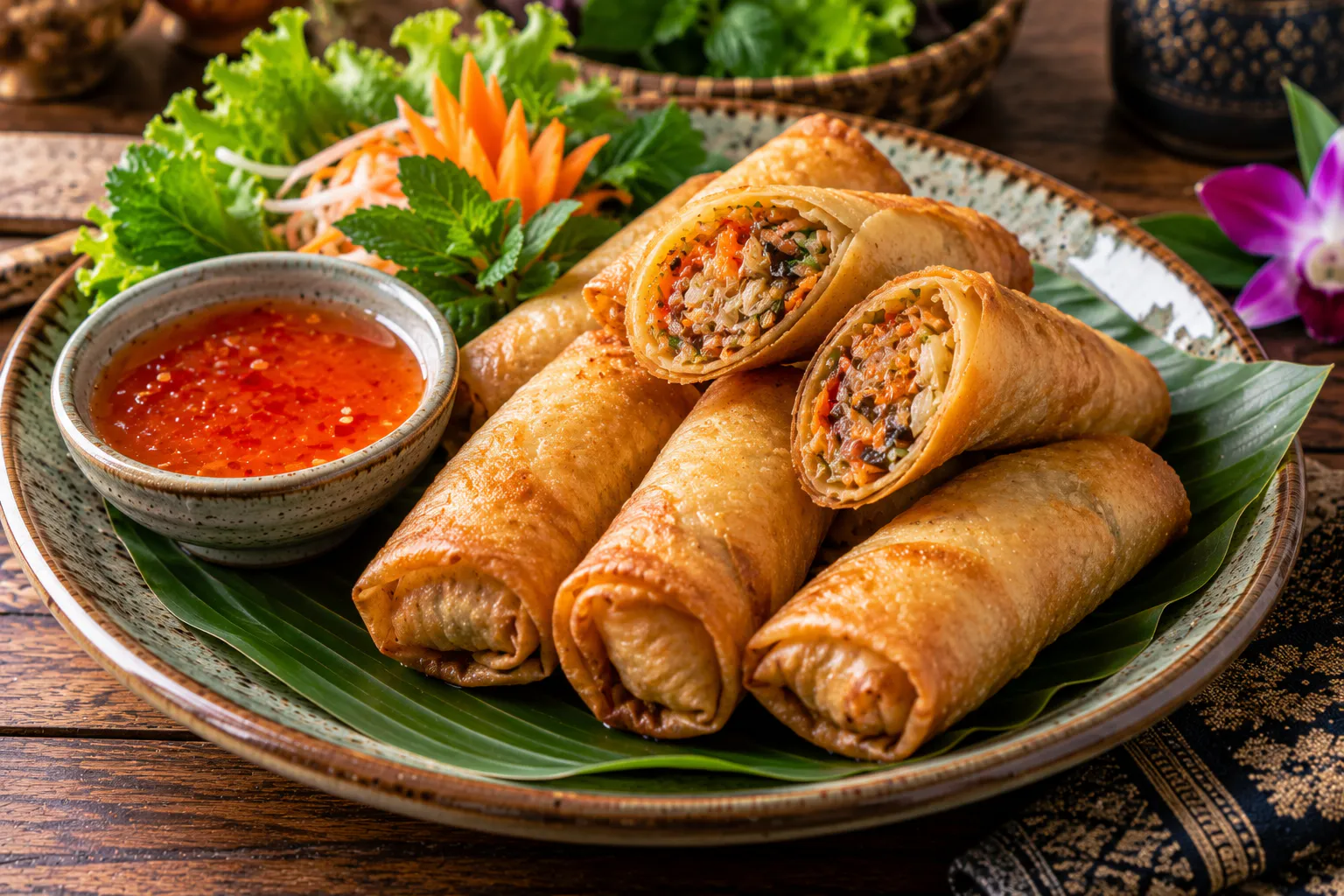
Spring Rolls ปอเปี๊ยะทอด · Por Pia Tod
Deep-fried rolls stuffed with glass noodles, vegetables, and sometimes minced pork or shrimp, served with a sweet chili dip. They are a starter, a snack, and a safe first bite if you are easing into Thai food. Look for ones that are still shatter-crisp from the fryer, not sitting under a heat lamp.

Thai Classics
Chicken with Cashew Nuts ไก่ผัดเม็ดมะม่วงหิมพานต์ · Gai Pad Med Mamuang
A wok stir-fry of chicken, roasted cashews, onion, and peppers in a lightly sweet chili-soy glaze. Dried chilies add aroma more than pain. It is one of the easiest dishes for first-time visitors — familiar, crunchy, and excellent with rice.
Thai Classics
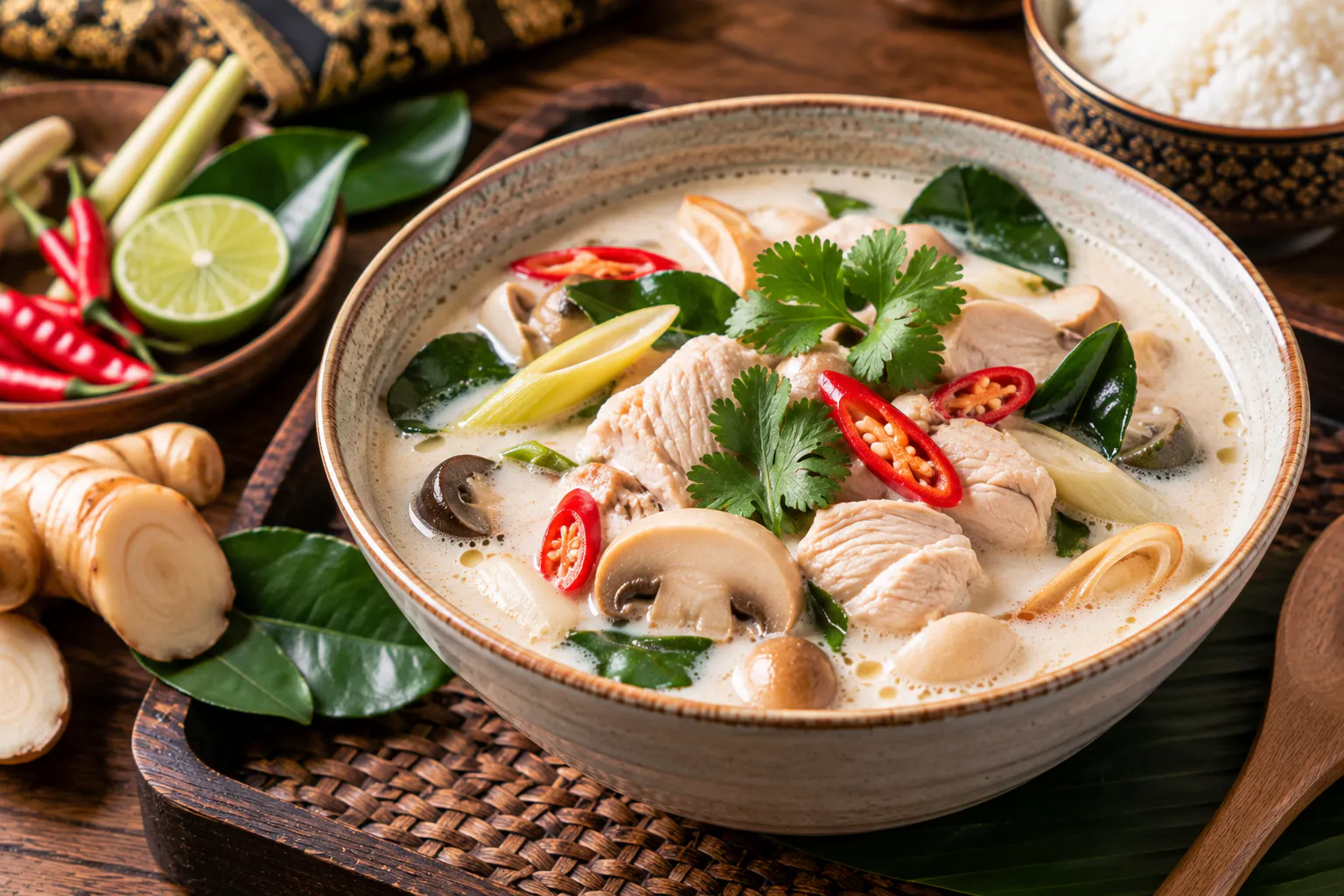
Tom Kha Gai ต้มข่าไก่ · Chicken Coconut Soup
A coconut-milk soup scented with galangal, lemongrass, lime, and tender chicken. It is the softer cousin of Tom Yum — silky instead of sharp, with a citrus finish. Ideal when you want Thai flavor without a blast of chili.
Thai Classics
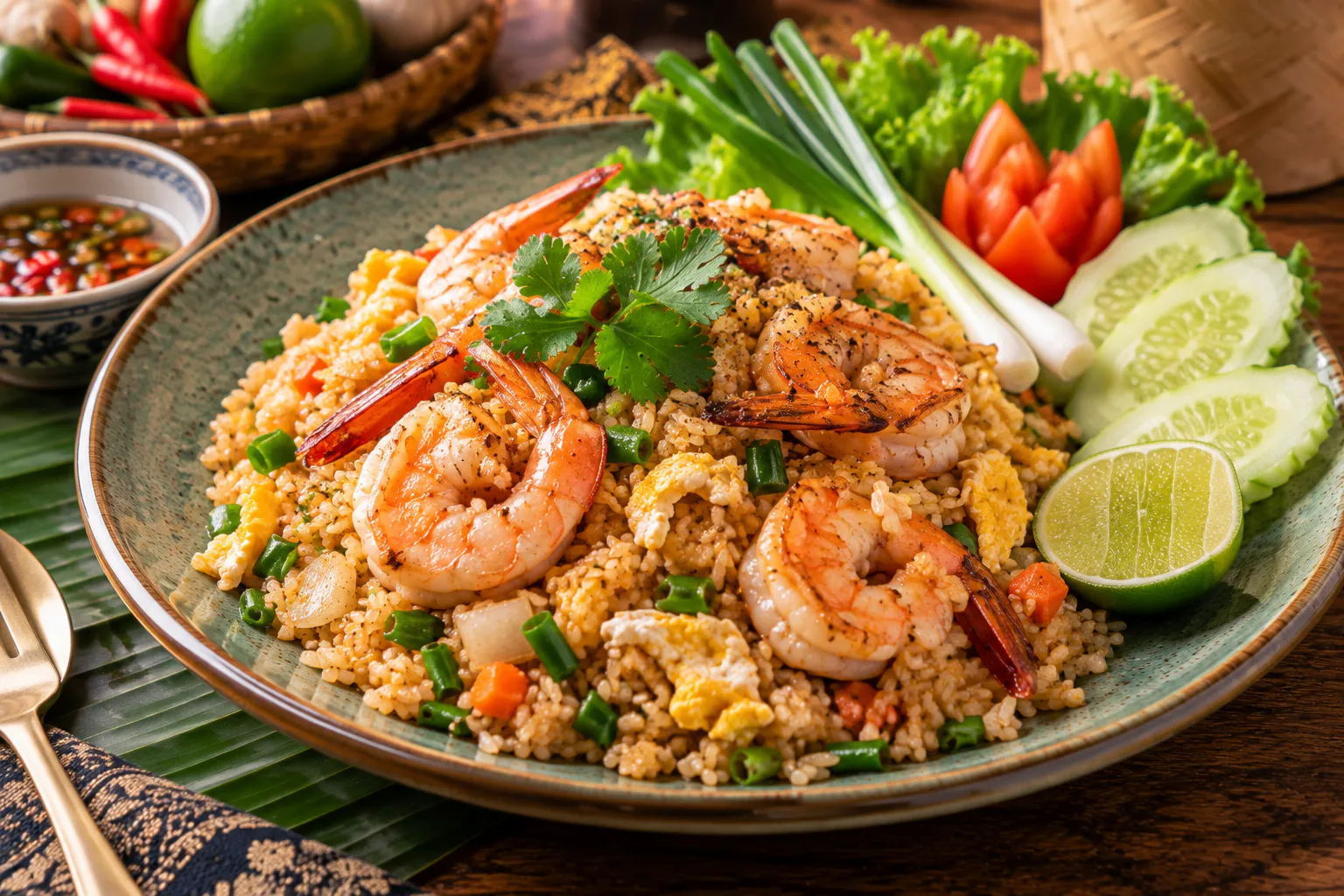
Thai Fried Rice ข้าวผัด · Khao Pad
Day-to-day Thai fried rice seasoned with fish sauce and soy, often with shrimp, crab, or pork, and always served with lime, cucumber, and a squeeze of prik nam pla. It should taste clean and a little smoky, not greasy. A reliable meal when you want something familiar done the Thai way.

Salads & Spicy
Yum Wun Sen ยำวุ้นเส้น · Spicy Glass Noodle Salad
Glass noodles tossed with minced pork or seafood, shallots, celery, tomatoes, and a lime-fish sauce dressing. It is refreshing rather than filling — a salad that still tastes unmistakably Thai. Share it with rice and a curry; it cuts through richer dishes.
Curries
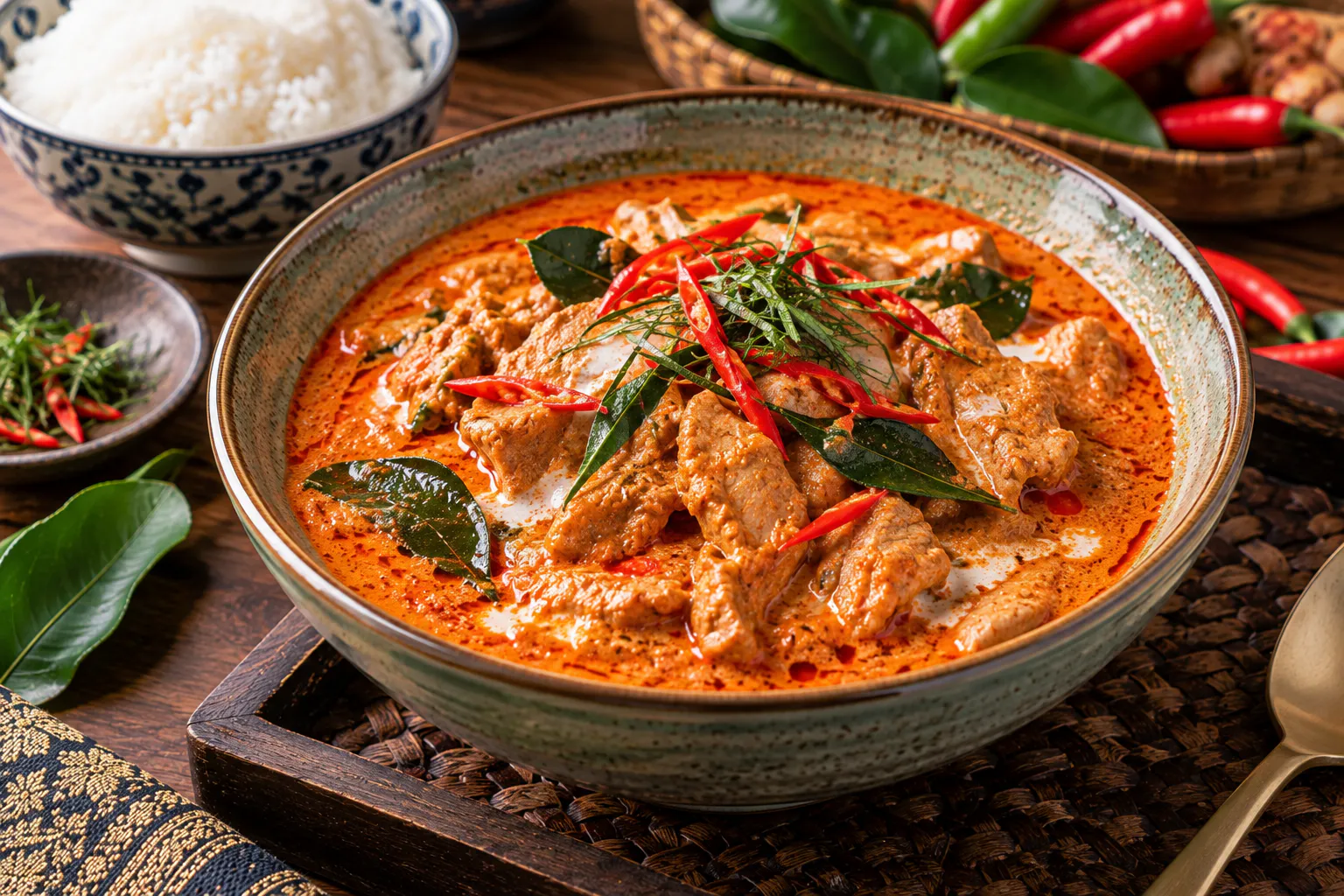
Panang Curry แกงพะแนง
A thicker, sweeter red curry, often finished with ground peanuts and ribbons of kaffir lime leaf. It clings to the meat instead of sitting as a soup, and the lime leaf is the perfume you should notice first. A good choice if green curry felt too herbal or massaman too mild.
Noodles
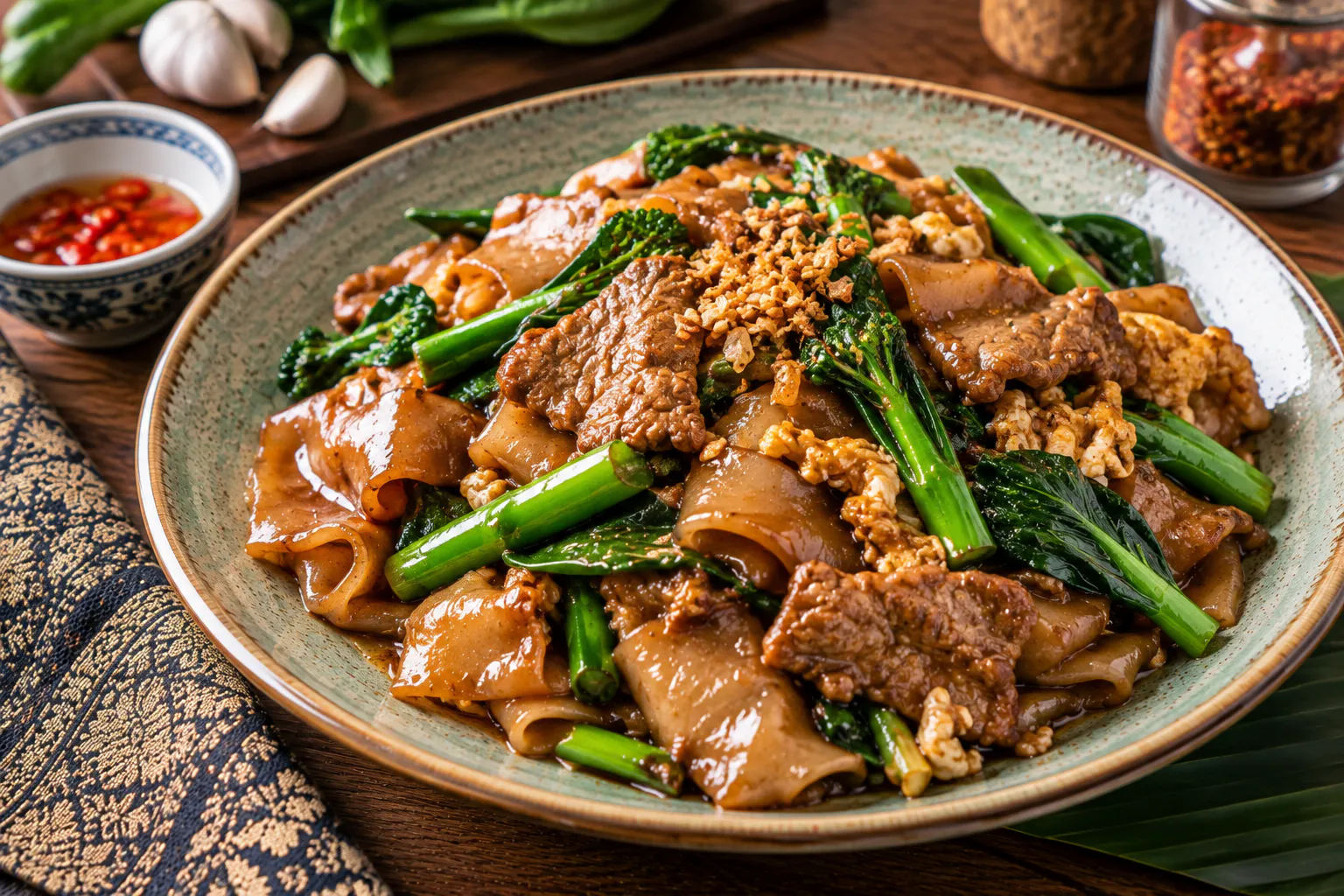
Pad See Ew ผัดซีอิ๊ว · Stir-Fried Wide Rice Noodles
Wide rice noodles seared in a hot wok with dark soy, Chinese broccoli, egg, and pork or chicken. The best versions have a faint char from the wok. If you like Pad Thai but want something less sweet and more soy-forward, this is the dish.
Regional Specialties
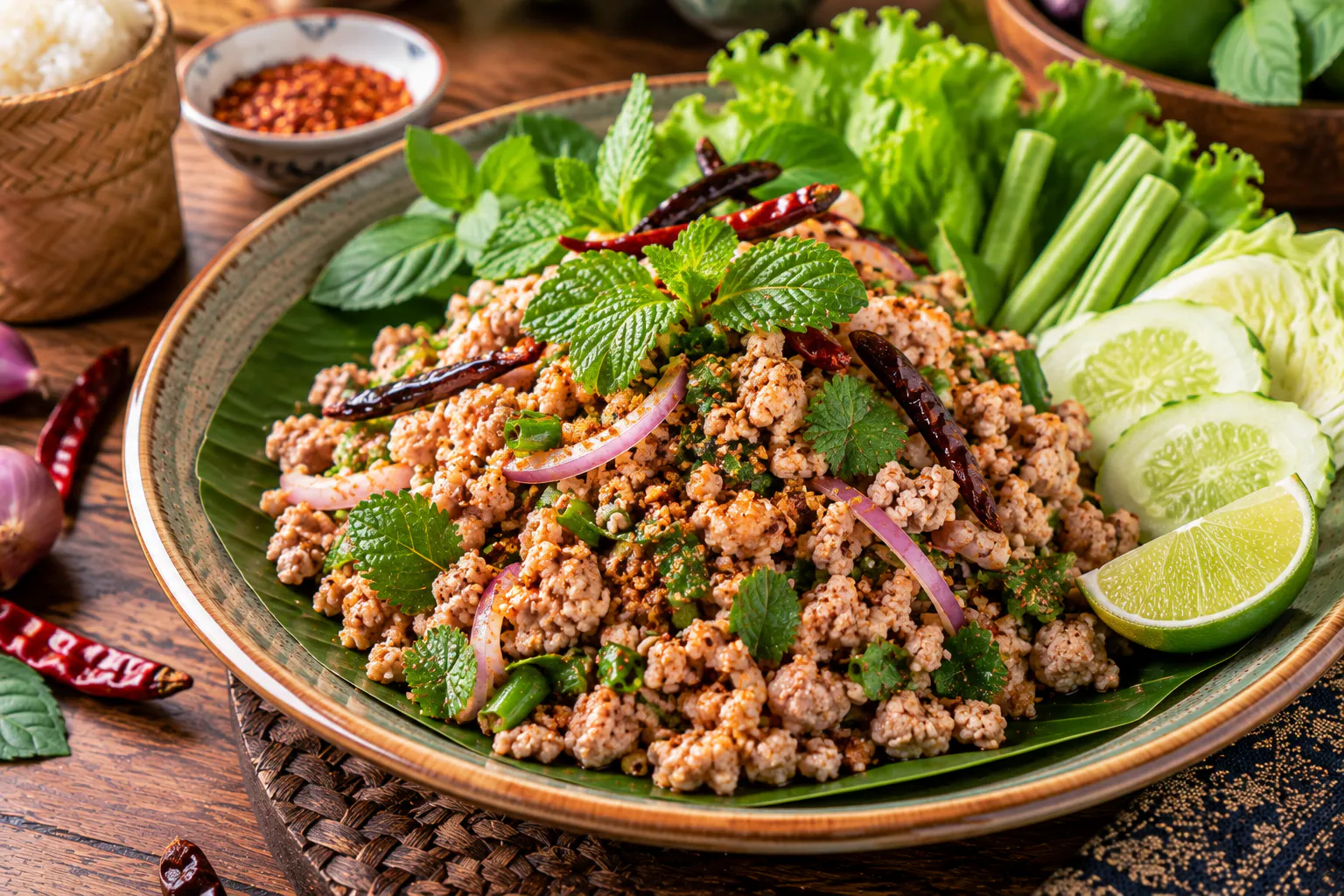
Larb Moo ลาบหมู · Spicy Minced Pork Salad
Minced pork tossed with lime, fish sauce, chili flakes, mint, shallots, and toasted rice powder that adds a nutty crunch. Eat it with sticky rice and raw vegetables, using your hands the Isan way. This is one of the clearest tastes of the Northeast.

Seafood
Pla Sam Ros ปลาสามรส · Fried Fish with Three-Flavor Sauce
A whole fish fried until the skin is brittle, then covered in a glossy sauce that is sweet, sour, and chili-hot at once. Bell peppers, onion, and sometimes pineapple ride along in the sauce. Share it family-style; it is a centerpiece, not a side.

Seafood
Tod Mun Pla ทอดมันปลา · Thai Fish Cakes
Fish paste mixed with red curry paste and sliced long beans, fried into bouncy, aromatic cakes. They should bounce when you bite, not crumble like Western fishcakes. Dip them in cucumber-chili relish; that cool crunch is part of the dish.

Thai Classics
Kai Jeow Moo Sab ไข่เจียวหมูสับ · Thai Minced Pork Omelet
A Thai omelet fried in very hot oil so the edges puff and shatter, with seasoned minced pork inside. It is home cooking and street food at once — cheap, fast, and best over rice with a spoon of chili fish sauce. If you only order one “simple” dish, make it this.
Northern Thailand
14 dishes · Region guide
Curries · Regional
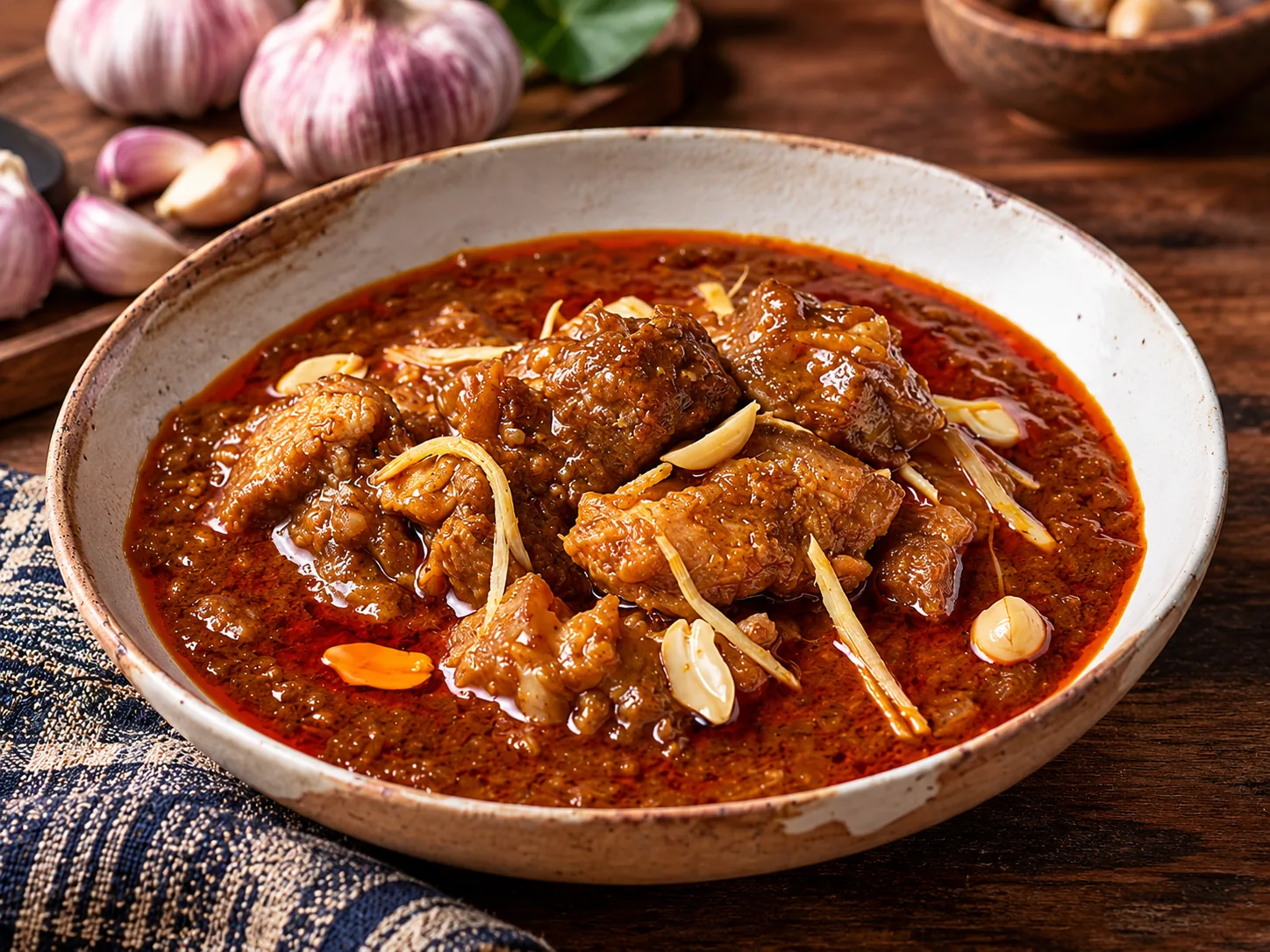
Gaeng Hang Lay แกงฮังเล · Northern Pork Curry
Gaeng Hang Lay is a rich pork curry commonly associated with Lanna cooking, with a spice profile often linked to Burmese and Shan traditions. Pork belly is simmered slowly with ginger, garlic, shallots, dried spices, tamarind, and palm sugar until the sauce turns glossy. Eat it with sticky rice or jasmine rice. The heat stays gentle; the ginger and sour-sweet sauce do the talking.

Regional Specialties
Nam Prik Noom น้ำพริกหนุ่ม · Roasted Green Chili Dip
Young green chilies are roasted until the skin blisters, then pounded with garlic, shallot, and salt into a coarse dip. Some kitchens add a little tomato. It is the everyday Northern chili dip: set it in the middle of the table with sticky rice, pork rinds, boiled vegetables, and grilled pork or sausage. Scoop with rice, not a spoonful of dip alone.

Regional Specialties
Nam Prik Ong น้ำพริกอ่อง · Tomato and Pork Chili Dip
Minced pork is simmered with tomato, chili paste, and garlic until it becomes a thick, spoonable dip. It is softer and less fiery than Nam Prik Noom, and the tomato gives it a gentle sweetness. Serve it warm with sticky rice, cucumber, cabbage, and pork crackling. A full Northern table often has both dips at once.
Curries · Regional
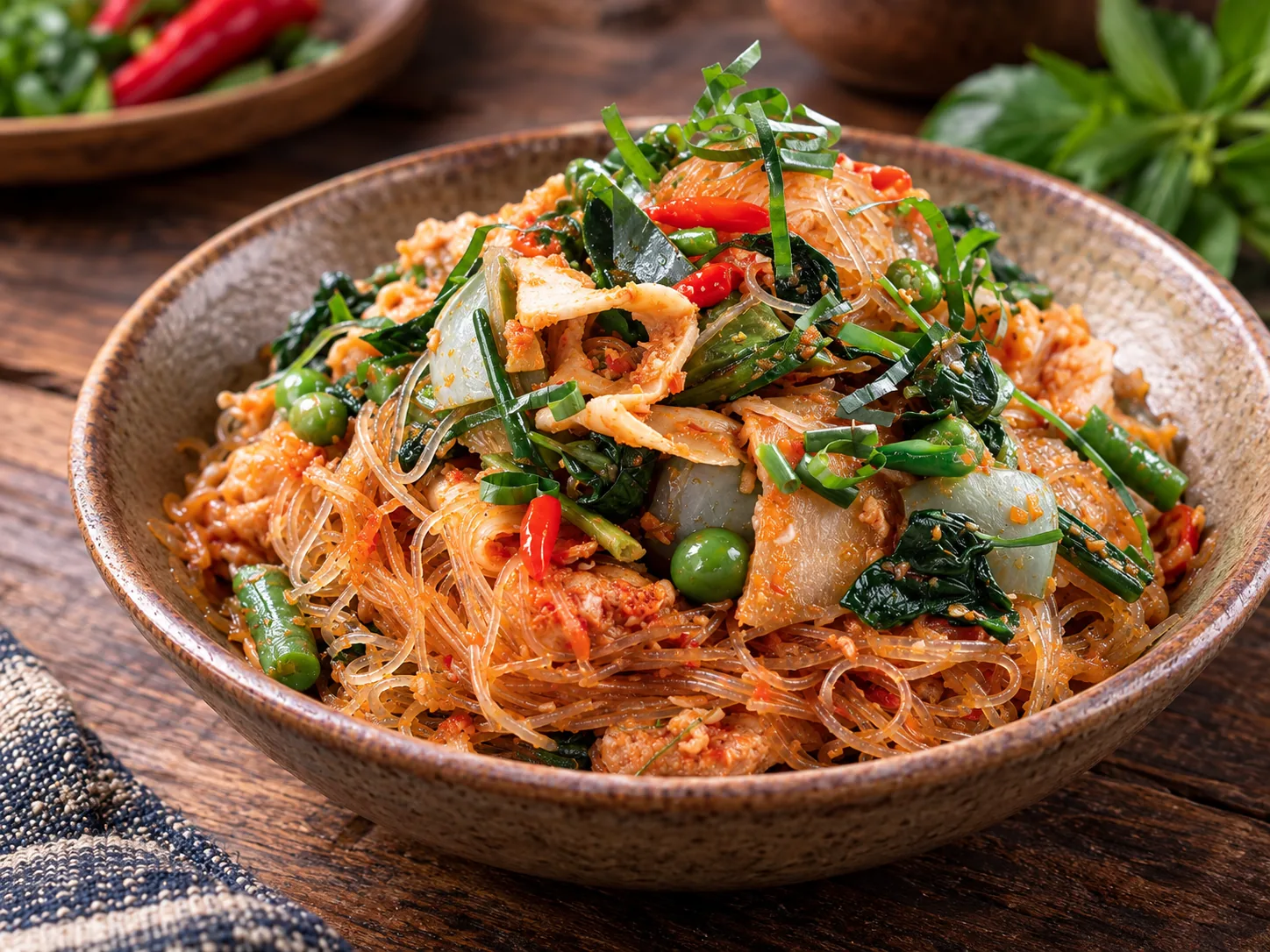
Gaeng Ho แกงโฮะ · Northern Mixed Curry
Gaeng Ho is a Northern curry that gathers grilled meats — often leftover sausage, roast pork, or chicken — with vegetables and a light chili-herb broth. The point is the mix: smoky pieces from the grill, greens, and a broth that tastes seasoned rather than creamy. There is no coconut milk. Eat it with sticky rice, the way a Lanna kitchen would finish a table of leftovers.

Noodles · Regional
Khanom Jeen Nam Ngiao ขนมจีนน้ำเงี้ยว · Northern Tomato-Pork Noodles
Thin fermented rice noodles sit under a Northern broth of pork, tomato, dried chili, and often a little pork blood, which deepens the color. Commonly associated with Northern Thailand and Tai Yai cooking. The bowl arrives with garnishes — pickled greens, bean sprouts, cilantro, lime, and fried garlic — so you can sharpen it at the table. Khao Soi, listed above, is the coconut-curry noodle; this one is tomato and pork.

Grilled & Street Food
Sai Ua ไส้อั่ว · Northern Herb Sausage
Coarse pork is mixed with lemongrass, kaffir lime leaf, cilantro, chili, garlic, and turmeric, then stuffed and grilled. Cut it on the diagonal so you see the herbs. Chiang Mai markets are a familiar place to find it, though the sausage belongs to Northern cooking more broadly. Eat it with sticky rice and Nam Prik Noom. It should taste fragrant and fresh, with a light snap to the casing.
Curries · Regional
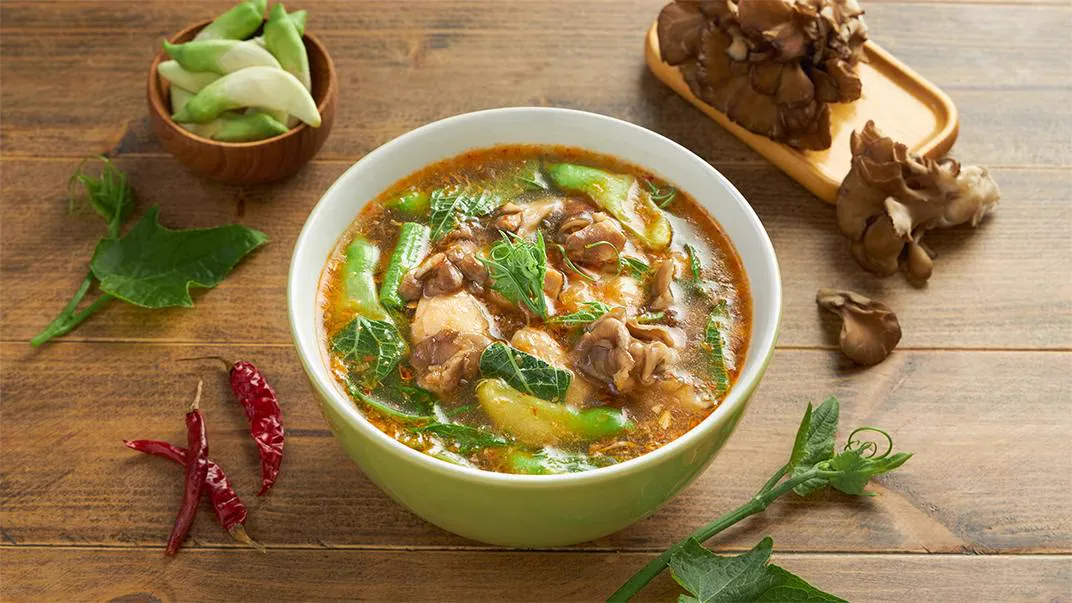
Gaeng Khae Gai แกงแคไก่ · Northern Herb Curry with Chicken
Chicken and a large handful of Northern vegetables and leaves — including khae leaves, cha-om, and other local greens — simmer in a clear, spicy broth. There is no coconut milk. The flavor comes from chili, fermented fish or shrimp paste, and the bitter-green herbs. Serve it with sticky rice. A good bowl smells like the garden, then hits with heat.

Regional Specialties
Gaeng Om Moo แกงอ่อมหมู · Herbal Pork Soup
Pork simmers with lemongrass, dill, basil, and chili in a light herbal soup. Gaeng om is eaten in both the North and Isan; this pork version is a familiar Northern table dish. The broth stays thin, and the herbs go in late so they stay bright. Eat it with sticky rice. Chicken and beef versions appear with the Isan dishes below.

Regional Specialties
Nam Prik Kha น้ำพริกข่า · Galangal Chili Dip
A dry Northern dip of roasted mature galangal pounded with dried chili, garlic, shallot, and salt, then often toasted again in a pan so it keeps. Lemongrass appears in many versions. It is hotter and drier than Nam Prik Noom. Serve it with steamed or boiled pork, mushrooms, bamboo shoots, and sticky rice. The galangal should smell warm, not raw.
Regional Specialties
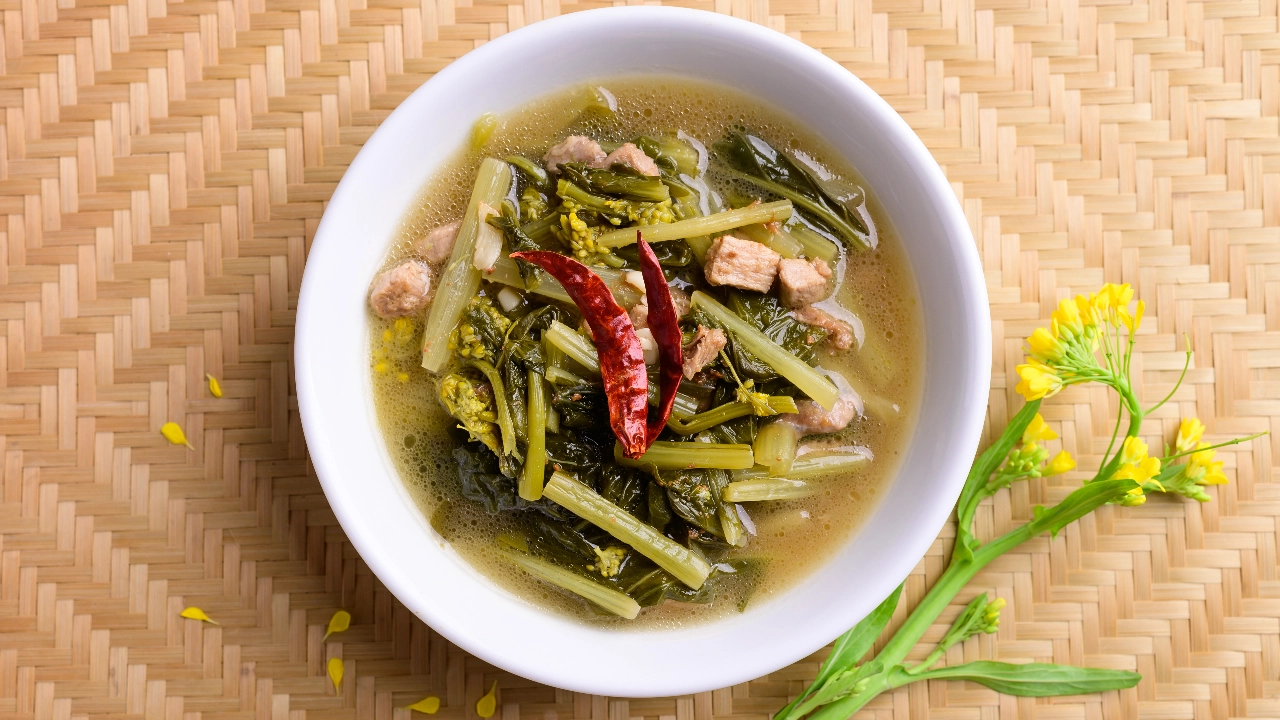
Jor Pak Kad จอผักกาด · Mustard-Green Soup
In Northern usage, “jor” means a vegetable boiled as a soup. Flowering choy sum or mustard greens go into a pork-rib or pork-belly broth seasoned with shrimp paste or fermented soybean, garlic, shallot, and tamarind. The greens should stay bright, and the broth tastes sour and savory. Fried dried chili is the usual accompaniment. Eat it with rice.

Regional Specialties
Khao Kan Chin ข้าวกั้นจิ้น · Steamed Pork-Blood Rice
Rice is mixed with minced pork, pork blood, garlic, and herbs, then steamed — often in banana-leaf parcels — until it sets into a firm, dark cake. It is sliced and served with fried garlic, dried chili, and cucumber or ginger. The blood seasons the rice; it should taste savory and aromatic. A Northern market and home dish, eaten with the chili on the side.
Curries · Regional
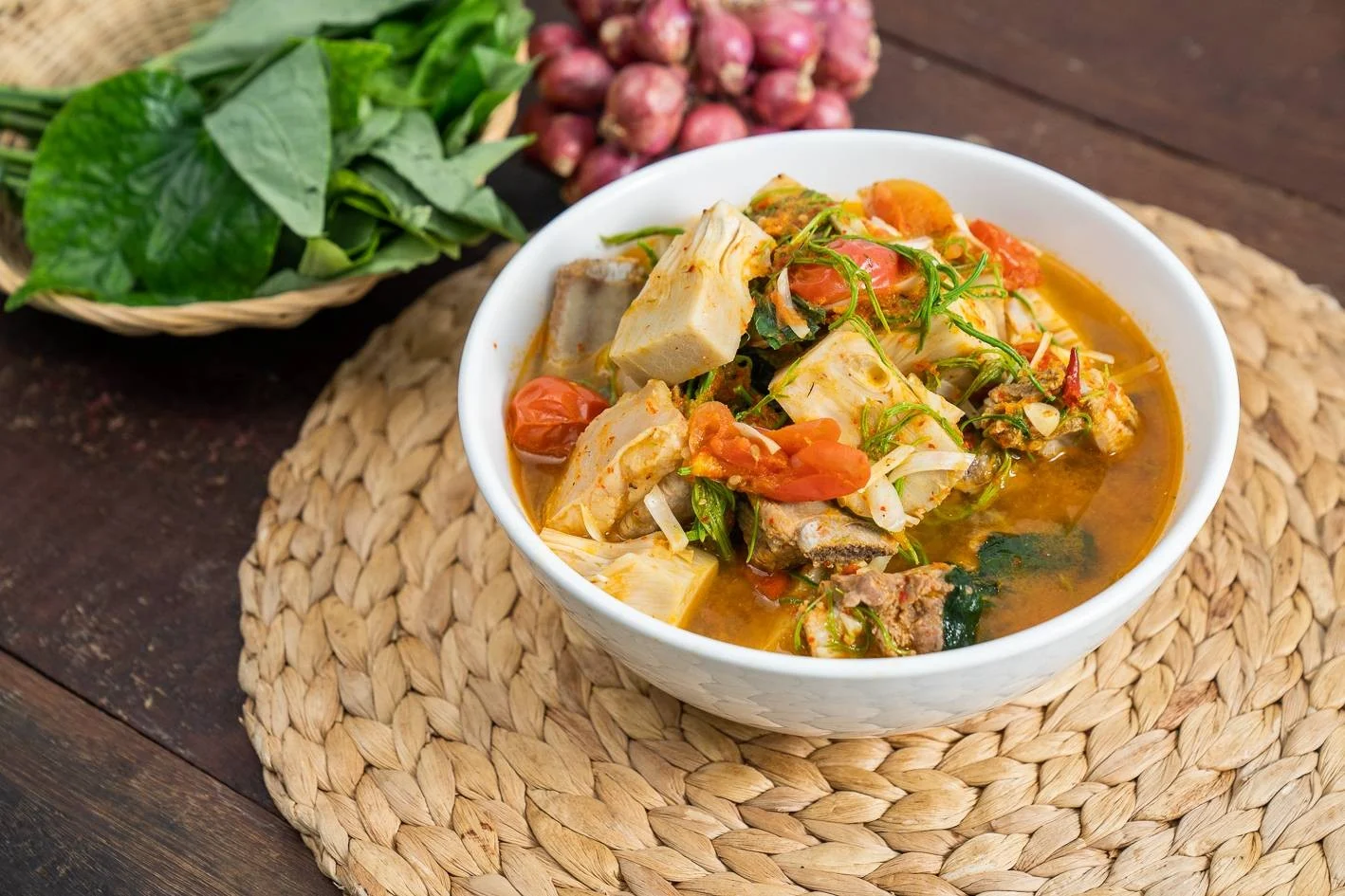
Gaeng Khanun แกงขนุน · Young Jackfruit Curry
Young jackfruit is boiled, then cooked with pork and a Northern seasoning of chili, garlic, tomato, and shrimp paste or fermented fish. The fruit loses its sweetness and takes on a savory, slightly bitter bite. Kitchens simmer it as a curry or cook it drier as a stir-fry. Eat it with rice, often with pork rinds for crunch. Commonly associated with Northern cooking.
Regional Specialties
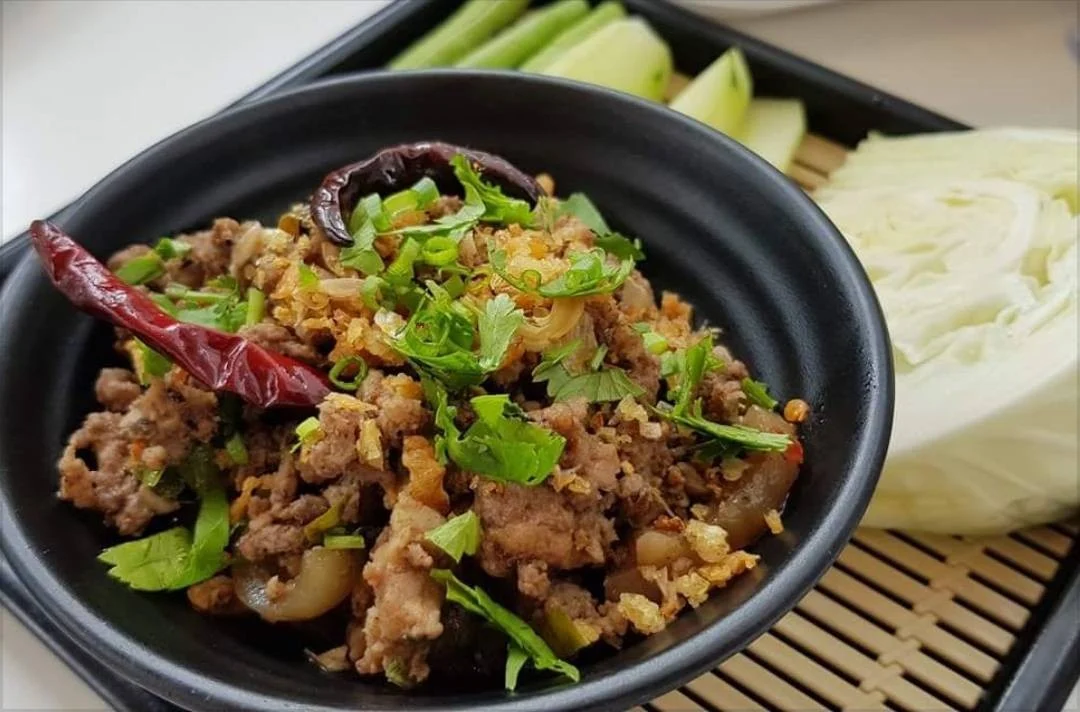
Laab Khua ลาบคั่ว · Dry-Fried Northern Laab
Minced pork or other meat is dry-fried with dried spices, shallots, garlic, herbs, and often a little blood, until the mixture is fragrant and just moist. Northern laab khua is a cooked dish. The Isan laab above is dressed with lime. Eat this one with sticky rice, fresh herbs, and raw vegetables. Also spelled larb on many menus.

Grilled & Street Food
Khaep Moo แคบหมู · Pork Rinds
Pork skin is boiled, dried, and deep-fried until it puffs. In the North it is a standard partner for chili dips, not only a bar snack. The best pieces shatter, then taste clean and salty. Serve them beside Nam Prik Noom or Nam Prik Ong, with sticky rice and cucumber. You will also see them on tables well beyond the North.
Northeastern Thailand (Isan)
15 dishes · Region guide
Salads & Spicy
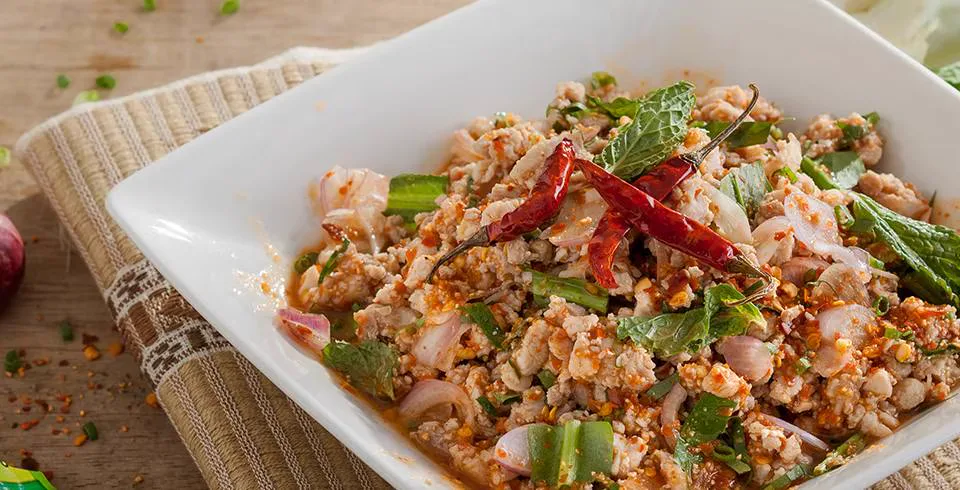
Laab Gai ลาบไก่ · Spicy Minced Chicken Salad
Minced chicken is dressed with lime, fish sauce, chili flakes, shallots, mint, and toasted rice powder. It is the chicken counterpart of Larb Moo, listed above, and just as much an Isan meal. Also spelled larb on menus. Eat it warm with sticky rice and raw cabbage, long beans, or cucumber. The rice powder should taste nutty, and the lime should be obvious.
Salads & Spicy
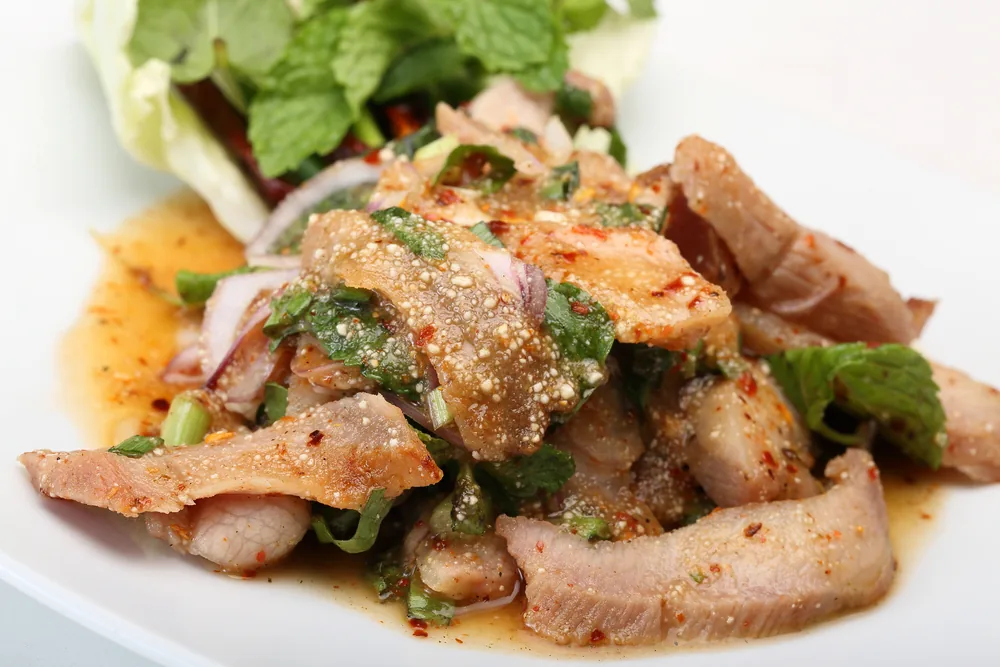
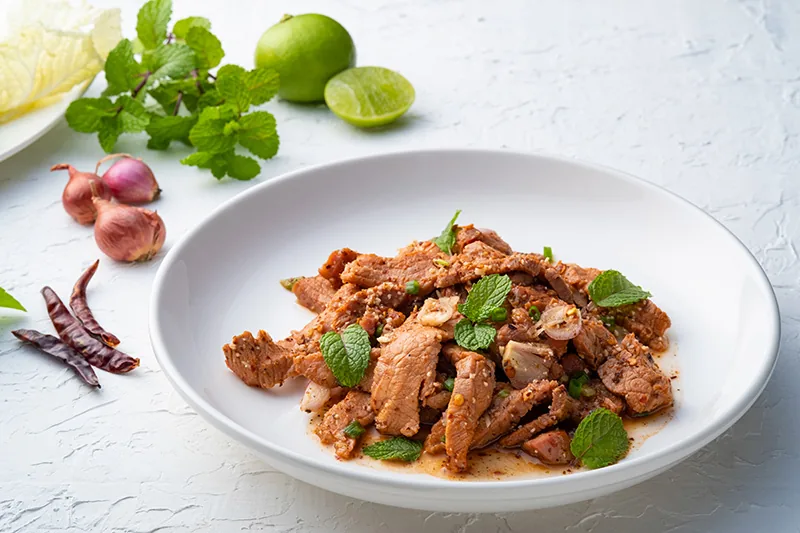
Nam Tok Moo น้ำตกหมู · Grilled Pork Salad
Grilled pork is sliced and tossed with lime, fish sauce, roasted chili, shallots, mint, and toasted rice powder, plus the juices from the meat. The seasoning is close to laab; the cut is slices from the grill. Serve it with sticky rice and a pile of raw vegetables. Ask for the meat well cooked if you prefer it that way — Isan kitchens often leave it juicy.
Salads & Spicy
Nam Tok Nuea น้ำตกเนื้อ · Grilled Beef Salad
The beef version of nam tok: grilled beef sliced against the grain and dressed with lime, fish sauce, chili, shallot, herbs, and toasted rice powder. The grill gives it a darker, smokier taste than minced laab. Sticky rice is the usual partner, along with cabbage and mint. Spice level follows the chili; say how hot you want it.
Regional Specialties
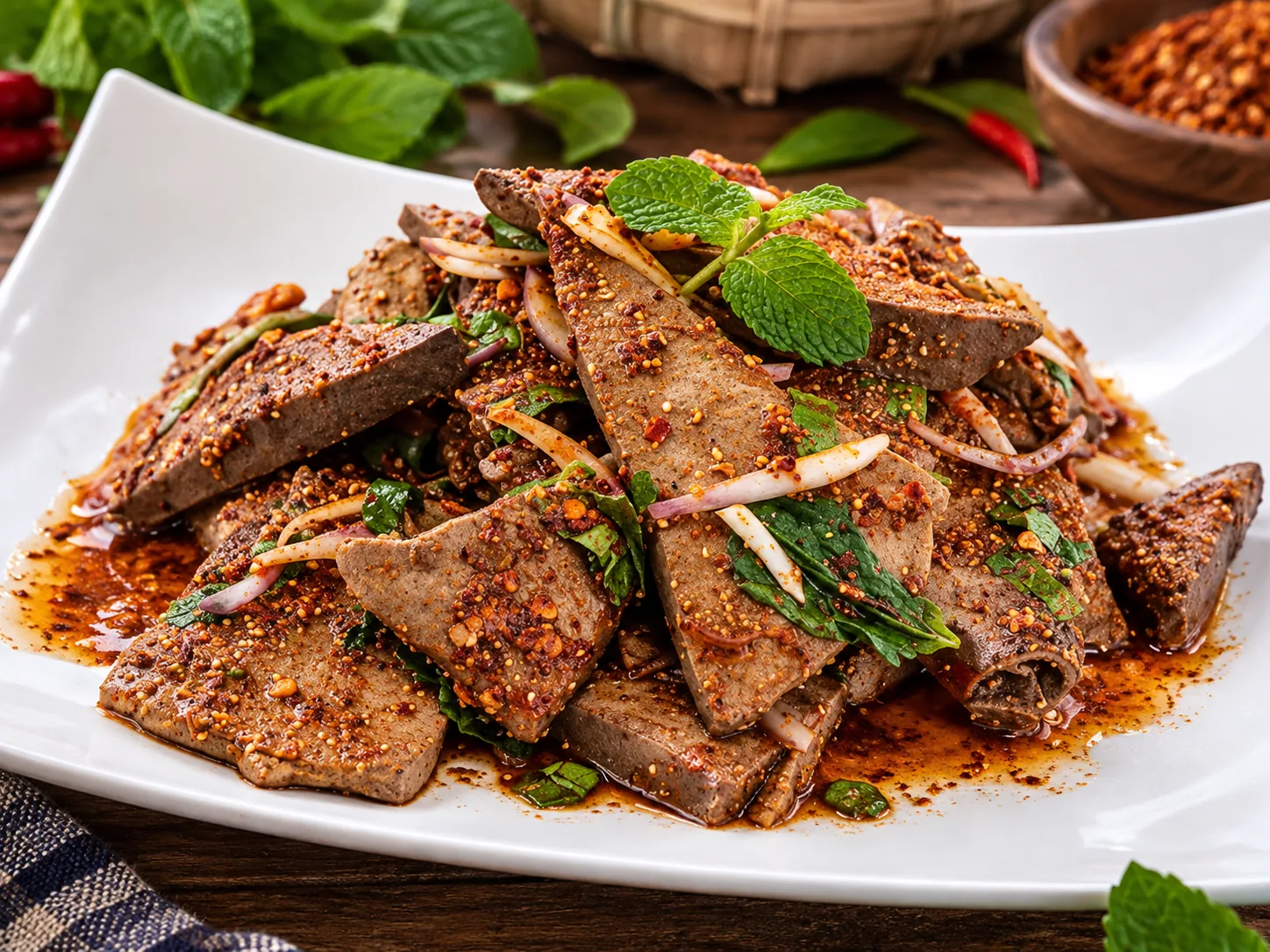
Tap Wan ตับหวาน · Sweet-Seasoned Liver
Pork liver is sliced and dressed with a sweet-salty chili sauce, shallot, and herbs. “Wan” refers to that sweet seasoning. It is an Isan plate, eaten in small bites with sticky rice so the richness stays in balance. The liver should stay tender, and the sauce should taste salty as well as sweet.
Salads & Spicy
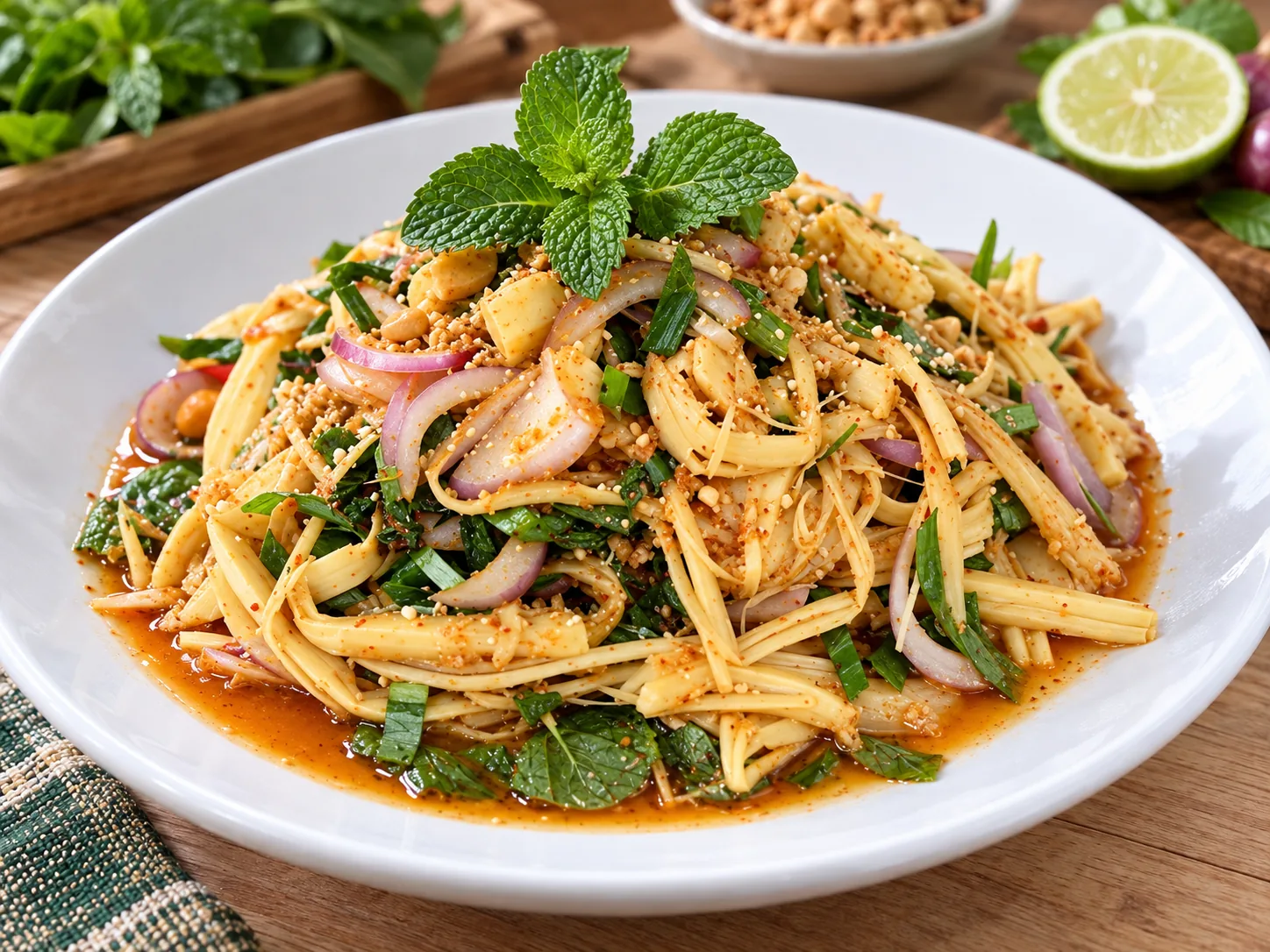
Sup Nor Mai ซุบหน่อไม้ · Isan Bamboo-Shoot Salad
Boiled bamboo shoots are shredded and tossed with lime, chili, shallot, herbs, and toasted rice powder. In Isan this plate is called sup nor mai: sharp, herbal, and eaten with sticky rice. The shoots are boiled first so the bitterness drops. Gaeng Plerng is the yanang curry made with bamboo and mixed vegetables.
Regional Specialties
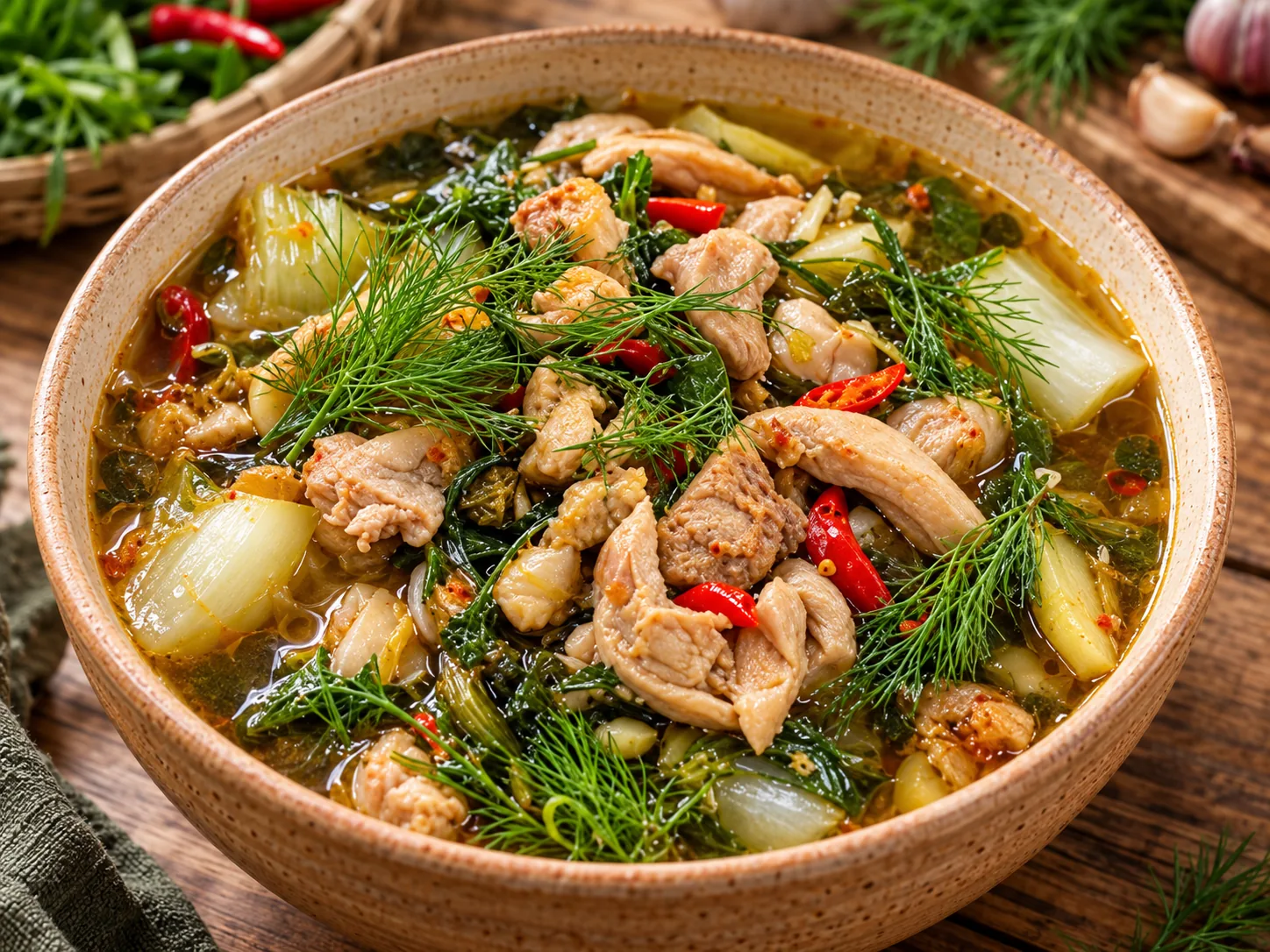
Gaeng Om Gai แกงอ่อมไก่ · Isan Herbal Chicken Soup
Chicken pieces simmer with lemongrass, galangal, dill, holy basil, and chili in a thin Isan broth. The herbs go in near the end. There is no coconut milk, and the bowl is meant to be shared with sticky rice. It belongs to the same herbal-soup family as Northern Gaeng Om Moo, with chicken as the usual Isan choice.
Regional Specialties
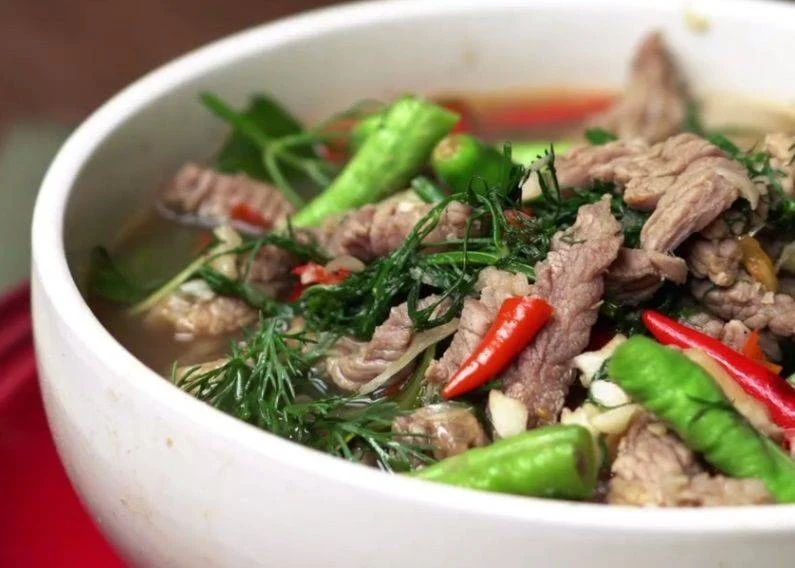
Gaeng Om Nuea แกงอ่อมเนื้อ · Isan Herbal Beef Soup
Beef replaces chicken in the same Isan herbal soup: lemongrass, dill, basil, chili, and a light broth. The beef is often kept tender rather than stewed for hours. Dip sticky rice into the broth and eat the herbs with the meat. Spice sits in the chili and the fermented seasoning, so it can be adjusted.
Curries · Regional
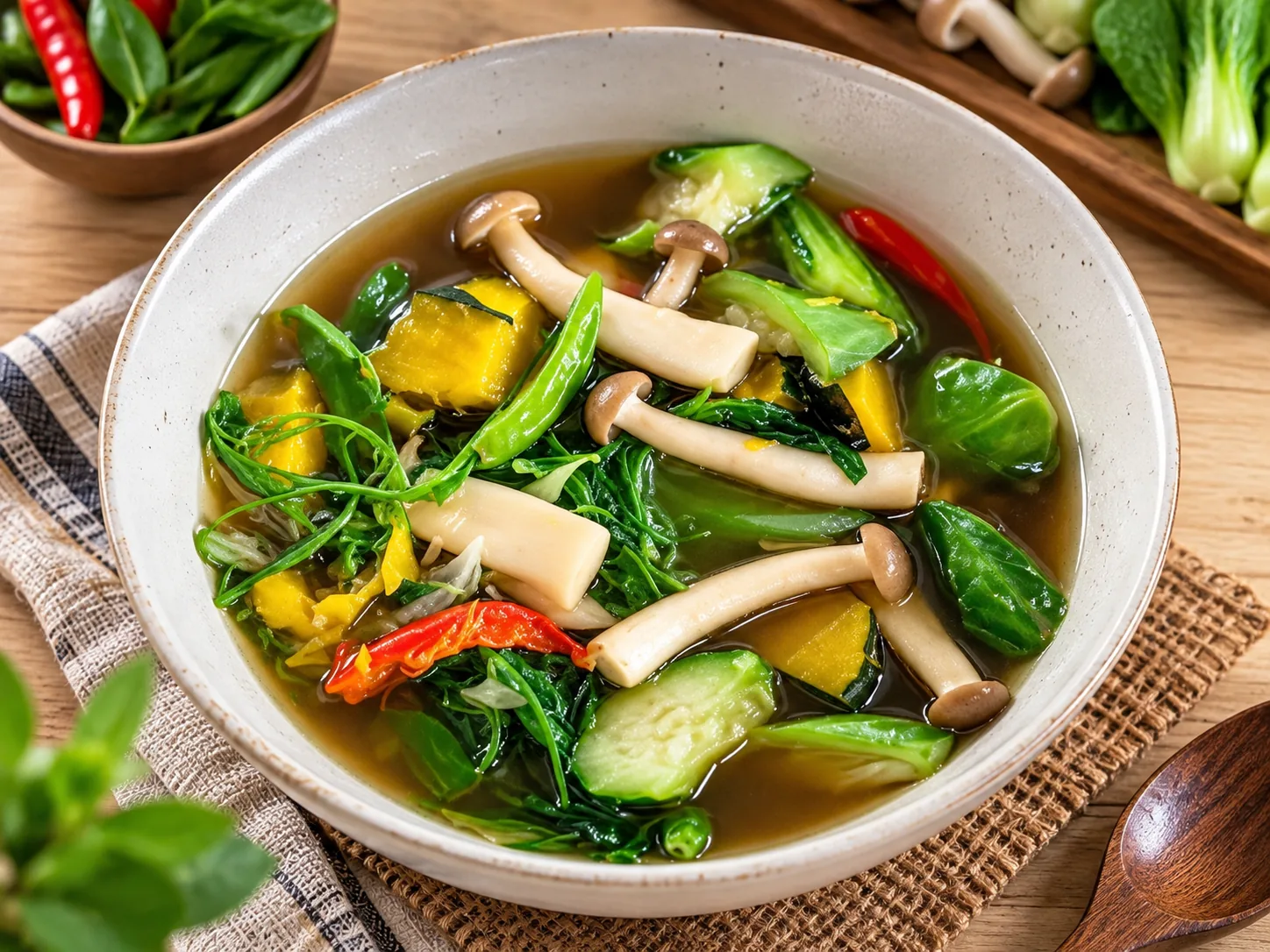
Gaeng Hed แกงเห็ด · Isan Mushroom Curry
Mushrooms are the main ingredient in an Isan curry darkened with yanang-leaf juice and seasoned with fermented fish, chili, and shallot. Local greens or bamboo may join the pot. The broth is herbal and hot, with an earthy mushroom taste. Serve it with sticky rice. It is a curry, thicker in flavor than a clear soup.
Curries · Regional
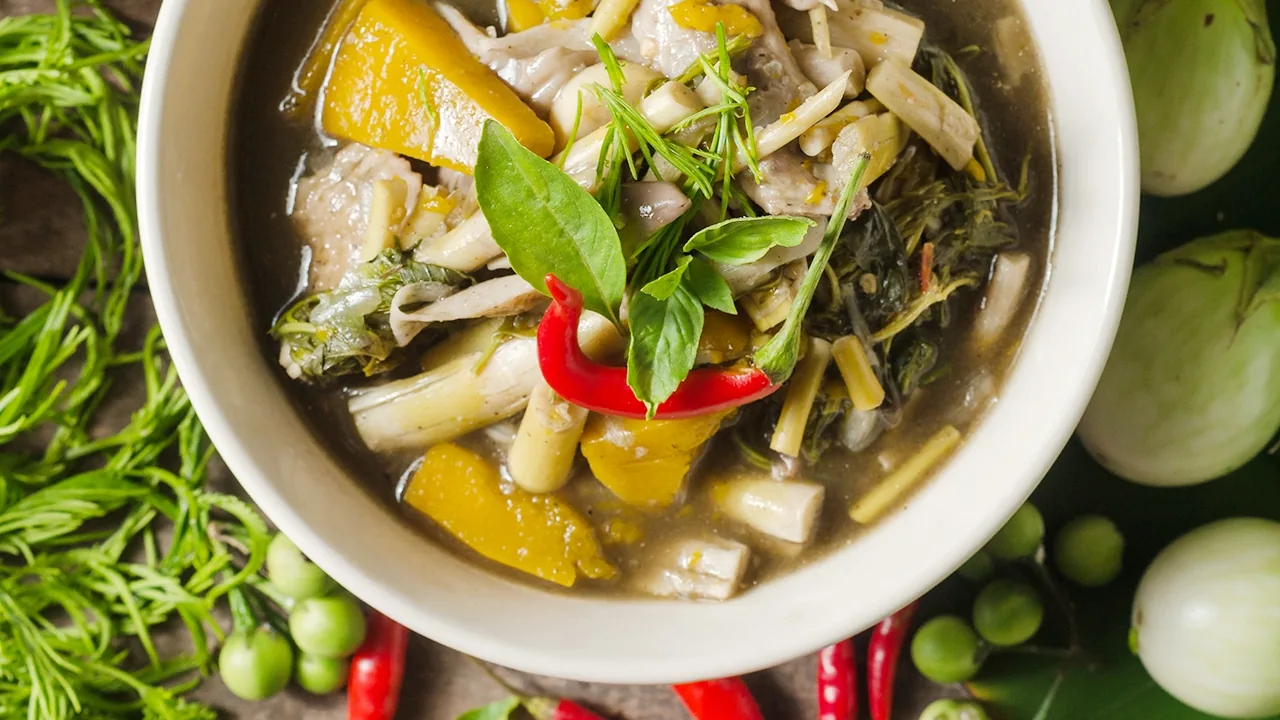
Gaeng Plerng แกงเปรอะ · Yanang and Bamboo Curry
Also called gaeng peuh, this is the Isan curry Central cooks often mean by that name: bamboo shoots and mixed vegetables in yanang-leaf juice, with a chili paste, fermented fish, and a little soaked sticky rice to give the broth body. Pumpkin, cha-om, and mushrooms are common additions. The color is dull green. Eat it hot with sticky rice.

Salads & Spicy
Tam Taeng ตำแตง · Pounded Cucumber Salad
Cucumber stands in for green papaya in the same mortar method as Som Tum: lime, fish sauce, chili, garlic, tomato, and often long beans or dried shrimp. It is wetter and milder than a fierce papaya salad, and very common when papaya is not the point. Eat it with sticky rice and grilled chicken. Tell the vendor how many chilies you want.
Salads & Spicy
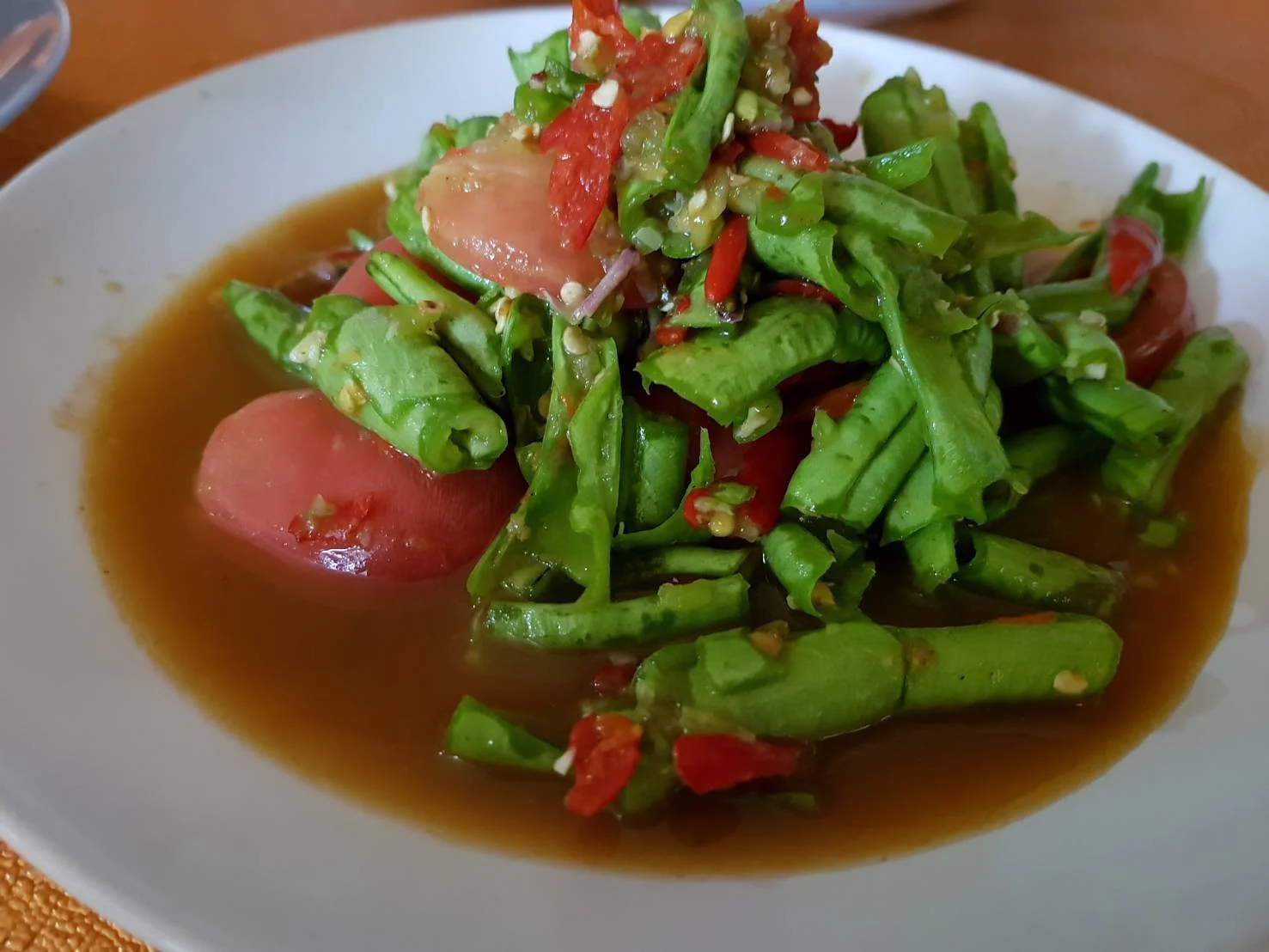
Tam Tua ตำถั่ว · Pounded Long-Bean Salad
Long beans are cut and pounded with lime, fish sauce, chili, garlic, and tomato. Peanuts or dried shrimp show up in many stalls. The beans stay crisp, which is the pleasure of the dish. It belongs to the som tum family and is eaten the same way: with sticky rice, and often with grilled meat. Heat is decided in the mortar.
Salads & Spicy
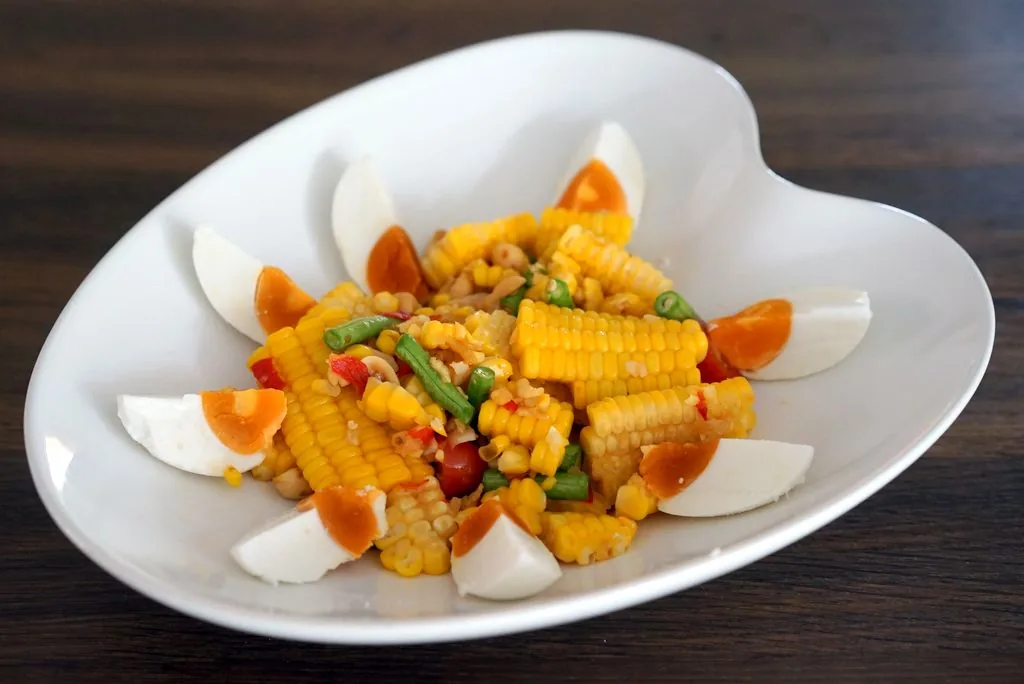
Tam Khao Phot ตำข้าวโพด · Pounded Corn Salad
Sweet corn is pounded, just enough to crack the kernels, with lime, fish sauce, chili, garlic, and tomato. The corn’s sweetness balances the sour dressing. Some stalls add dried shrimp or salted egg. It is a som tum variation, served with sticky rice and whatever grilled dish is on the table. Ask for less chili if you want the corn to stay in front.
Regional Specialties
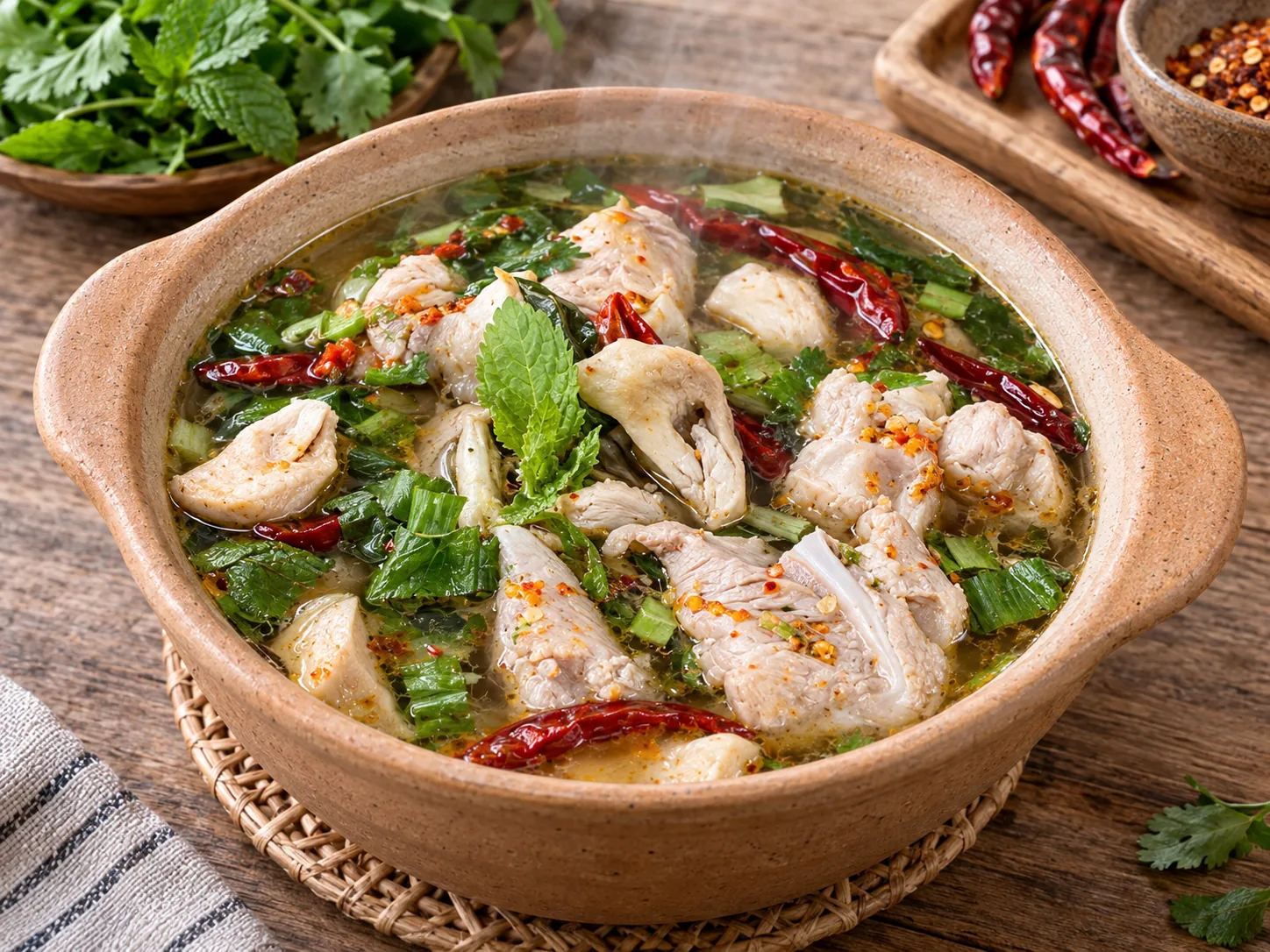
Tom Saep ต้มแซ่บกระดูกอ่อน · Hot-and-Sour Pork Soup
Tom saep is an Isan hot-and-sour soup. This version uses soft pork rib or cartilage, simmered with lemongrass, galangal, kaffir lime leaf, and roasted chili, then finished with lime and herbs such as cilantro and sawtooth coriander. The broth is clear, sharp, and seriously hot. Eat it with sticky rice. “Saep” is the Isan word for that tingling, spicy-sour finish.

Grilled & Street Food
Gai Op Fang ไก่อบฟาง · Straw-Roasted Chicken
A whole chicken is seasoned with salt, garlic, and pepper, often stuffed with lemongrass, then wrapped and roasted under a mound of burning rice straw. The straw gives a light smoke, and the meat stays moist inside. Commonly associated with Isan. Eat it with sticky rice, som tum, and a chili dip.
Seafood · Regional
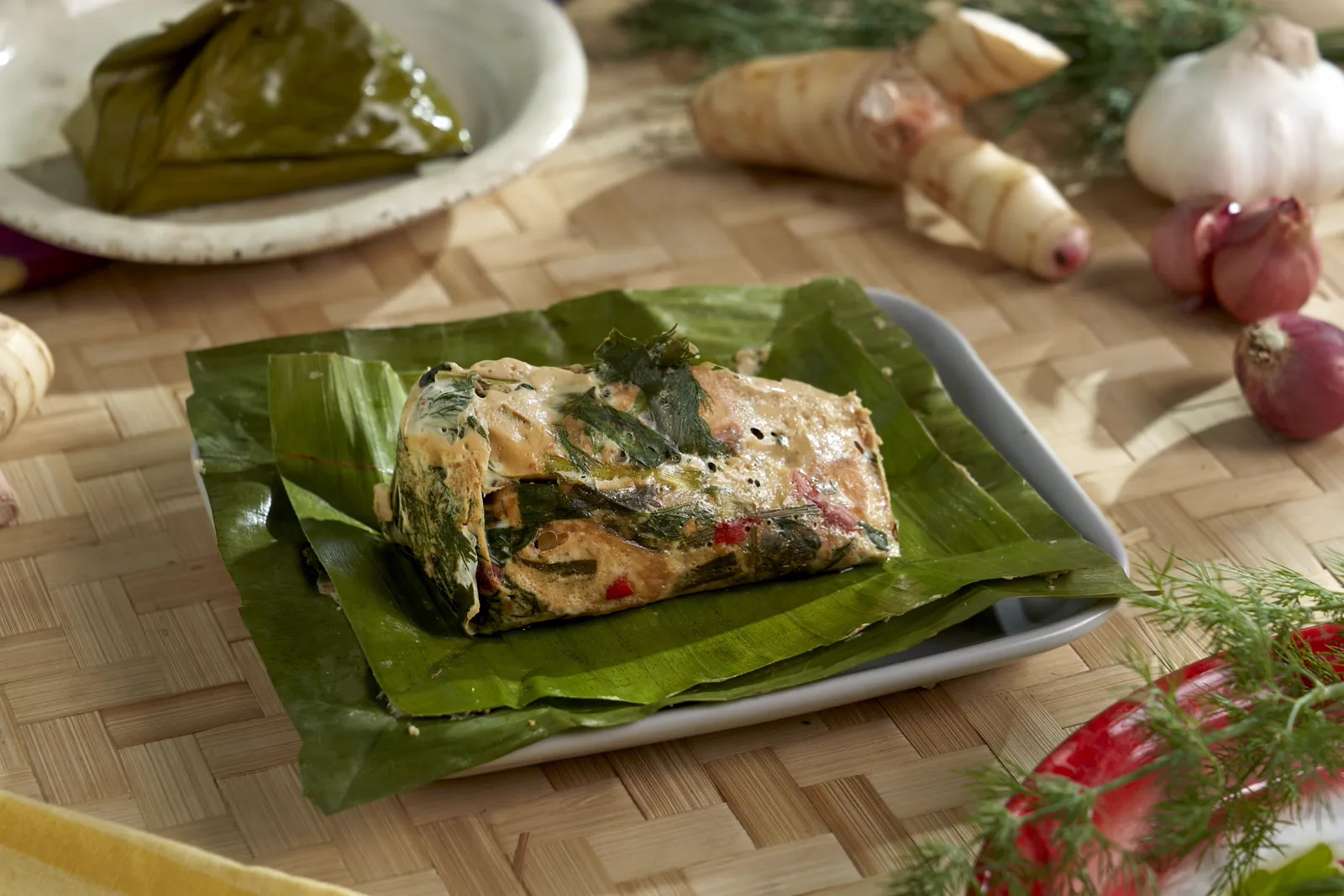
Mok Pla หมกปลา · Isan Fish in Banana Leaf
Fish is mixed with chili, herbs, and fermented fish seasoning, wrapped in banana leaf, and steamed or grilled. Isan mok is herbal and salty. The central dish Hor Mok Pla, below, is a coconut curry custard in a similar leaf cup. Eat mok pla with sticky rice, opening the parcel at the table so the leaf stays fragrant.
Central Thailand
17 dishes · Region guide
Thai Classics
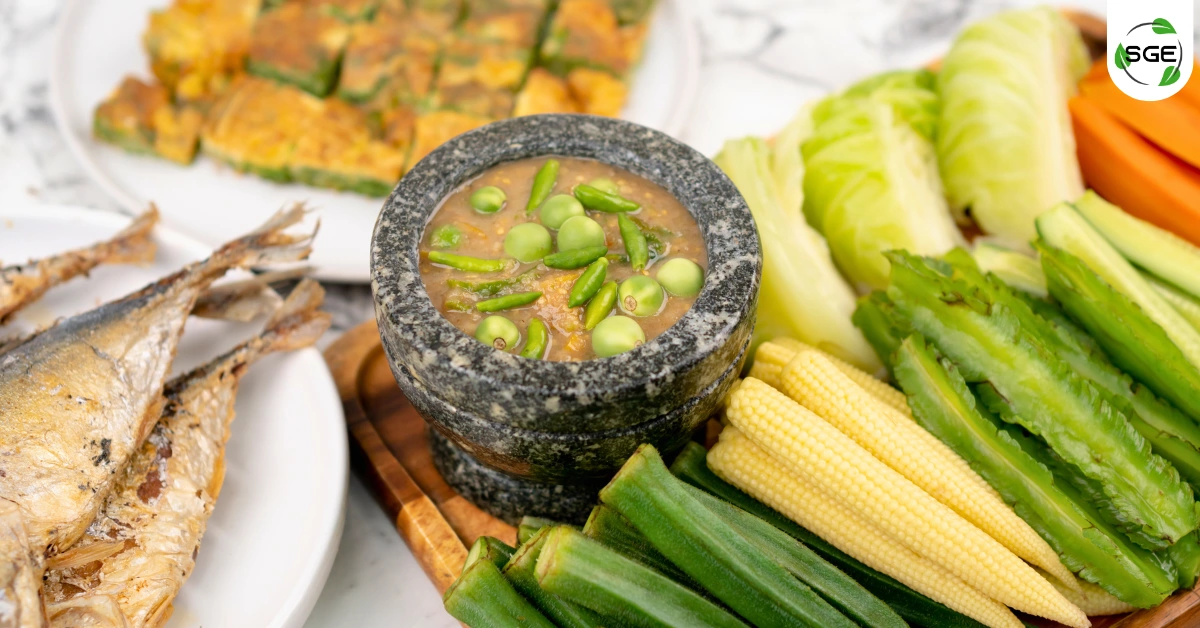
Nam Prik Kapi น้ำพริกกะปิ · Shrimp-Paste Chili Dip
Shrimp paste is pounded with garlic, chili, lime, and palm sugar into the central chili dip that anchors a proper Thai table. It arrives with a platter of raw and blanched vegetables, and often a fried fish, omelet, or stuffed omelet beside it. Eat a little dip with a vegetable and rice. The shrimp paste should taste rounded and salty.

Thai Classics
Nam Prik Long Ruea น้ำพริกลงเรือ · Coconut Chili Relish
A richer central relish: shrimp paste and chili cooked with coconut cream, salted egg, and often pork or shrimp, until the sauce is thick and slightly sweet. The name is the one used on menus; recipes vary by house. Serve it with a large vegetable platter and rice. It is sweeter and creamier than plain Nam Prik Kapi.

Seafood
Hor Mok Pla ห่อหมกปลา · Steamed Fish Curry
Fish is blended with red curry paste, coconut milk, and egg, then steamed in a banana-leaf cup until it sets like a soft custard. A spoon of coconut cream and a strip of kaffir lime leaf often finish the top. Eat it with rice, straight from the leaf. The Isan parcel Mok Pla is the herbal version; this one is coconut and curry.

Seafood
Pu Ja ปูจ๋า · Stuffed Crab
Crab meat is mixed with minced pork, then packed back into the shell and fried or steamed until the top is set and the edges crisp. It is a seafood-restaurant dish found along the coast and in Bangkok, with no single province to pin it on. Share the shell and eat it with a seafood chili sauce and rice. The crab should still taste sweet.

Thai Classics
Gaeng Jued Tao Hu Moo Sab แกงจืดเต้าหู้หมูสับ · Tofu and Pork Clear Soup
A clear soup of soft tofu and seasoned minced pork in a light broth, finished with garlic and spring onion. “Gaeng jued” means a mild soup, the quiet bowl on a Thai table next to something spicy. Eat it with jasmine rice as part of a shared meal. It should taste clean and lightly salty.
Curries
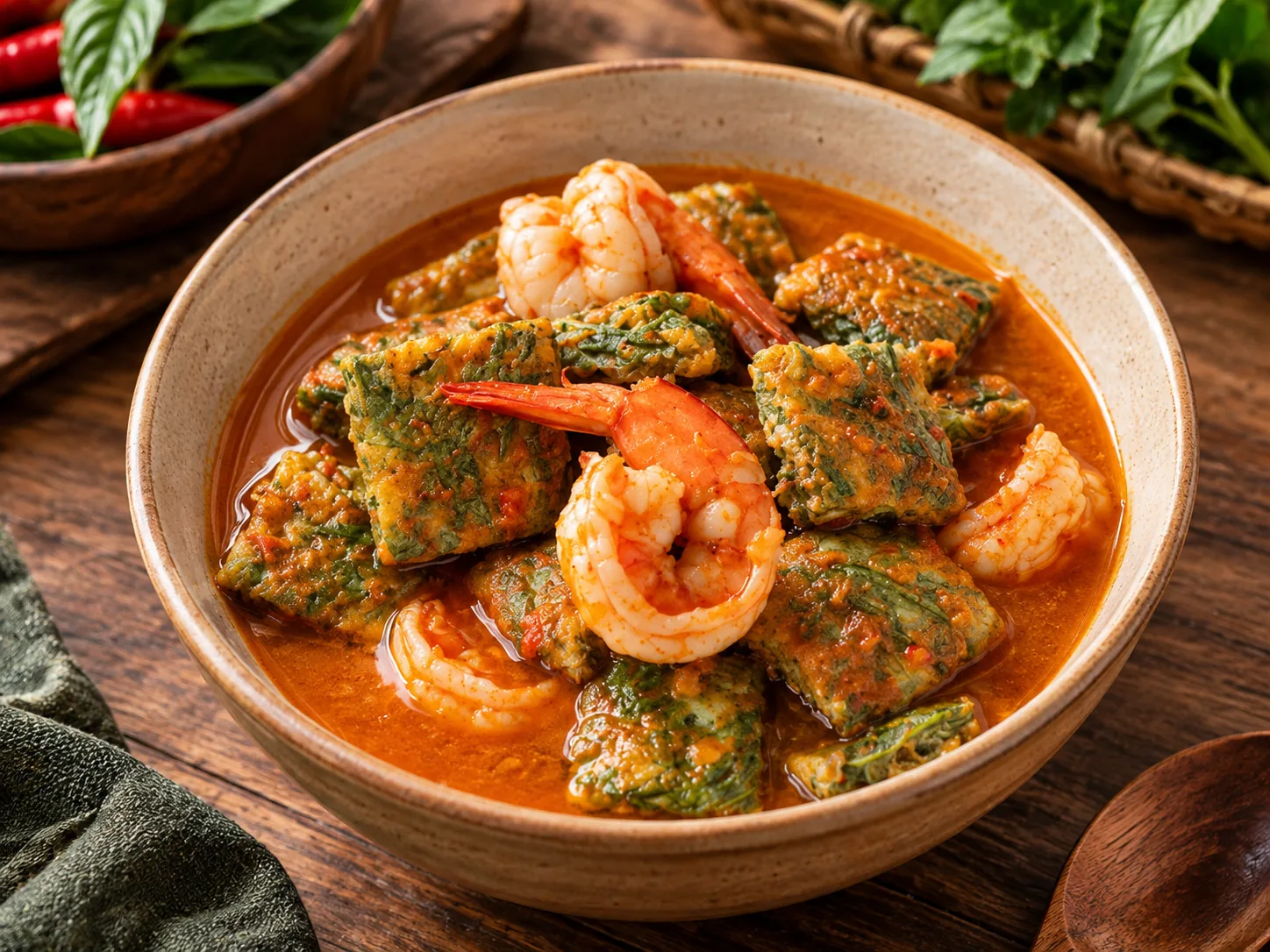
Gaeng Som Cha Om Kung แกงส้มชะอมกุ้ง · Sour Curry with Acacia Omelette
Central gaeng som is a sour curry of tamarind and chili, with no coconut milk, so the broth looks orange-brown. This version holds shrimp and pieces of cha-om omelette — climbing wattle fried with egg. The leaves taste slightly bitter against the sour curry. Eat it with rice. Southern sour curries, listed below, are turmeric-yellow and built differently.

Curries
Gaeng Phed Ped Yang แกงเผ็ดเป็ดย่าง · Red Curry with Roast Duck
Roast duck is simmered in red curry and coconut milk with Thai eggplant, kaffir lime leaf, and Thai basil. Many kitchens add pineapple, tomato, or grapes for a little sweetness against the duck fat. It is a restaurant classic of Central cooking. Serve it with jasmine rice. A plain chicken red curry is listed separately as Gaeng Phed Gai.
Thai Classics
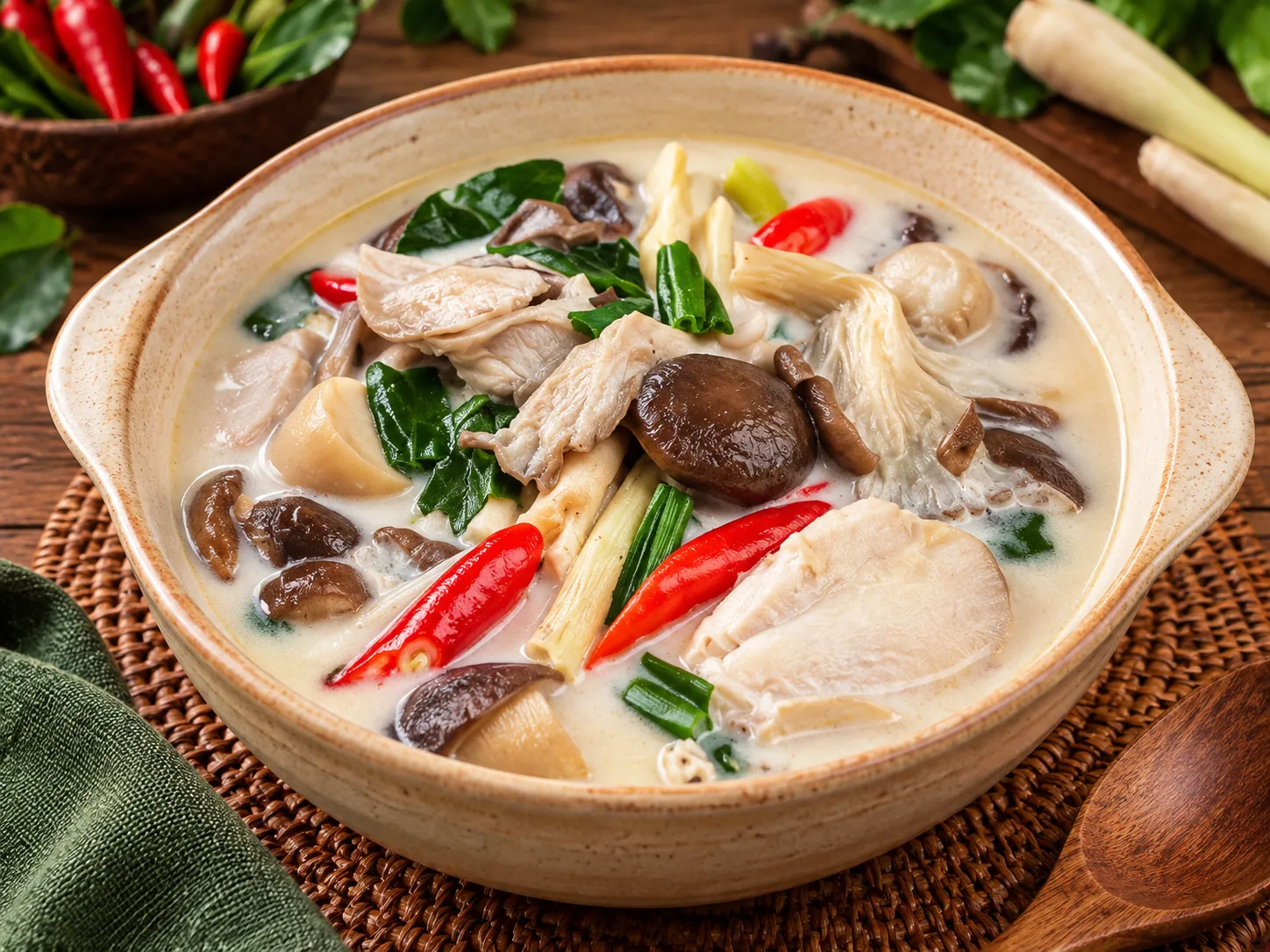
Tom Kha Hed ต้มข่าเห็ด · Mushroom Coconut Soup
The same coconut-galangal soup as Tom Kha Gai, made with mushrooms instead of chicken. Lemongrass, galangal, kaffir lime leaf, and lime keep the broth fragrant, and the mushrooms take on the coconut. It is a common meat-free bowl on Central menus. Eat it with rice. Ask for less chili if you want it as gentle as the chicken version above.
Thai Classics
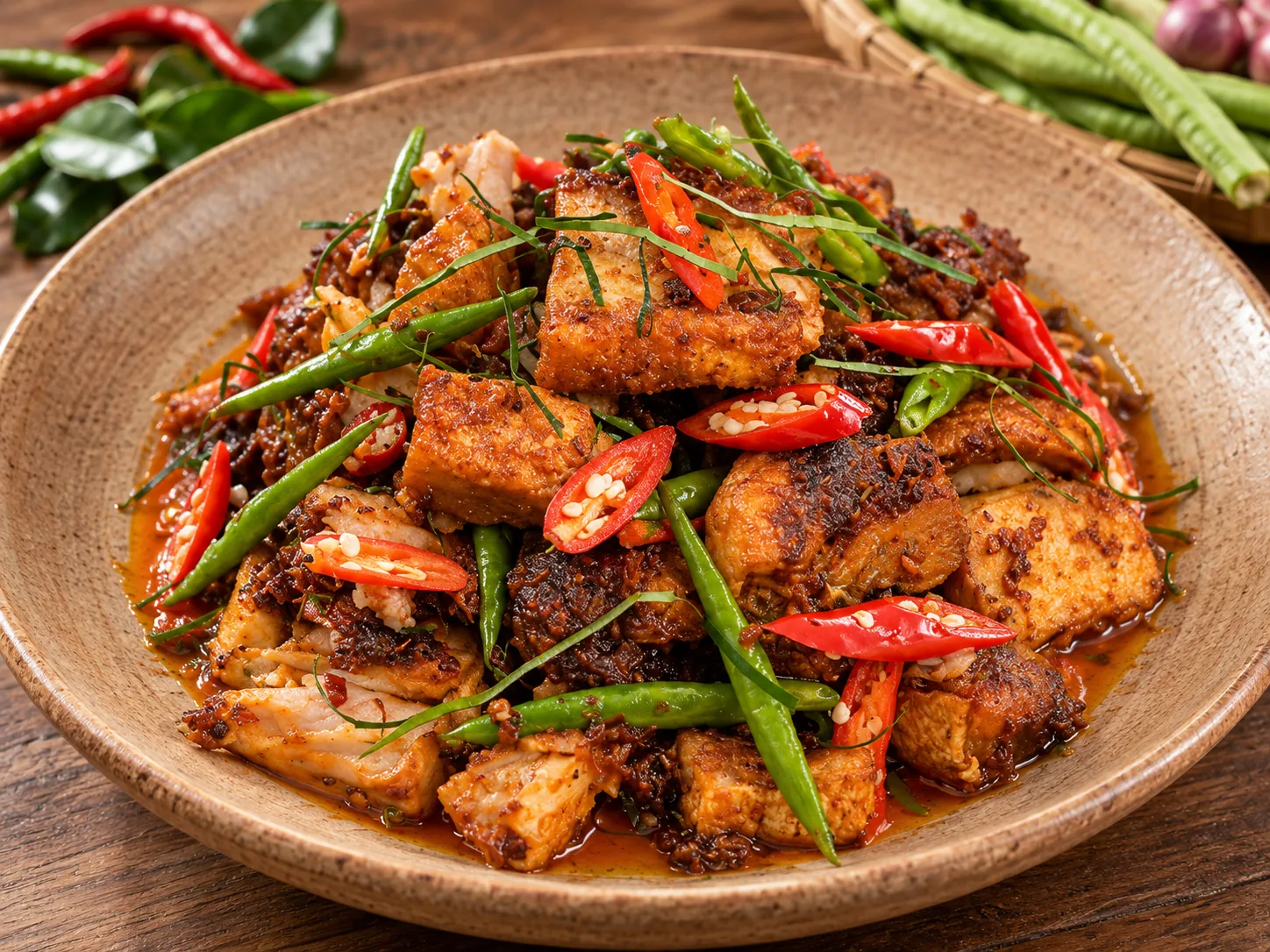
Pad Prik Khing ผัดพริกขิง · Dry Red-Curry Stir-Fry
Red curry paste is stir-fried with long beans and pork, catfish, or shrimp until the sauce clings and little liquid is left. Kaffir lime leaf is the scent you should notice. Despite the name, ginger is not the main flavor. Eat it with rice. It is drier than Pad Prik Gaeng, the saucier curry stir-fry listed below.

Thai Classics
Pad Kana Moo Krob ผัดคะน้าหมูกรอบ · Chinese Broccoli with Crispy Pork
Chinese broccoli is flash-fried with crispy pork belly, garlic, and a salty sauce of oyster sauce or yellow bean. The stems should stay crisp and the pork should still crack. It is a Chinese-Thai plate you will see on Central and Bangkok menus. Eat it with rice and prik nam pla if you want chili.
Thai Classics
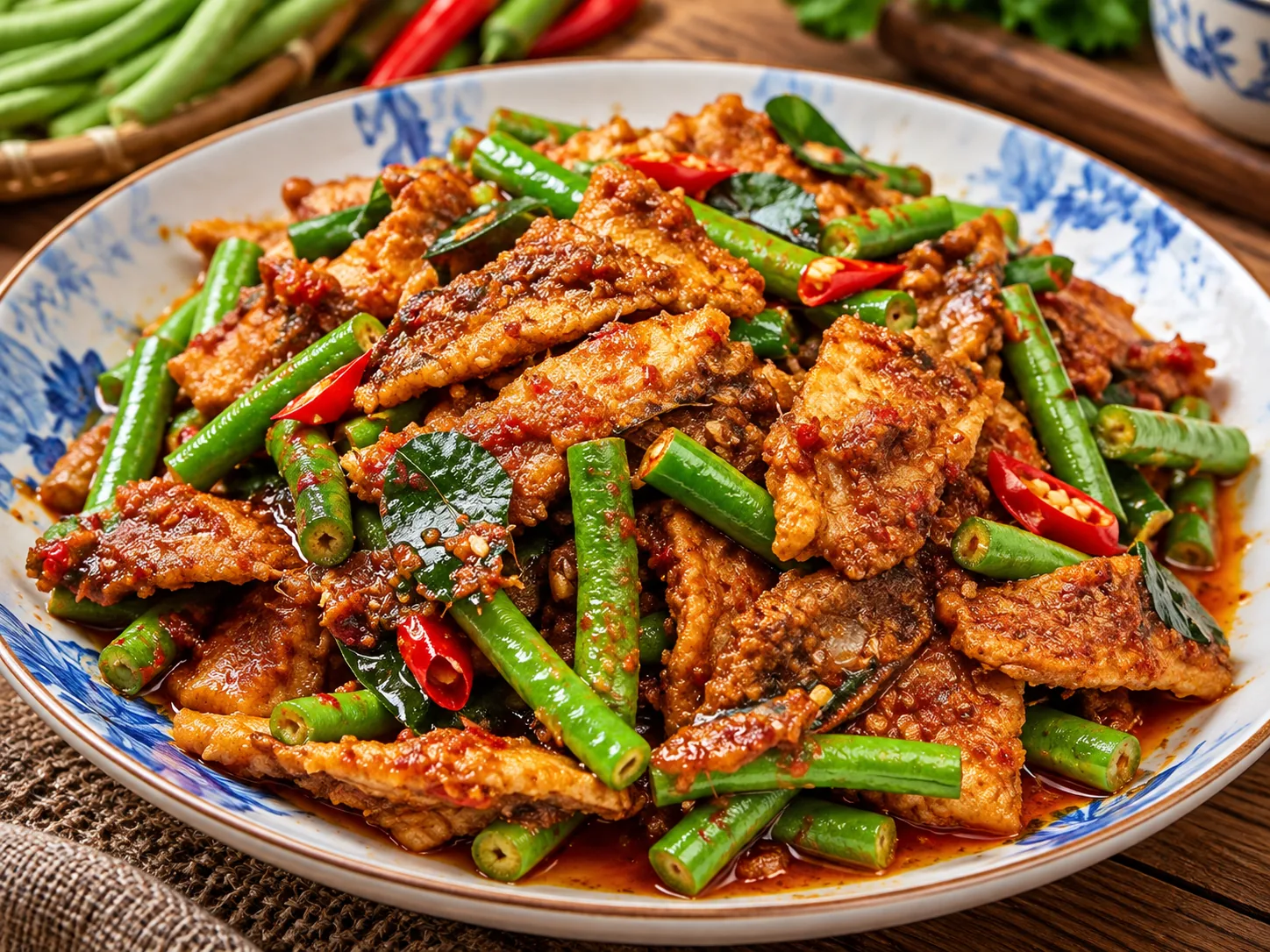
Pad Prik Gaeng Moo ผัดพริกแกงหมู · Pork Stir-Fried with Curry Paste
Pork is wok-fried with red curry paste and vegetables — often long beans, Thai eggplant, or bamboo — so the paste coats everything in a moist, savory sauce. Kaffir lime leaf and basil are common finishes. It is a weeknight Central stir-fry, eaten with rice. Compared with Pad Prik Khing, the sauce stays a little looser.
Curries
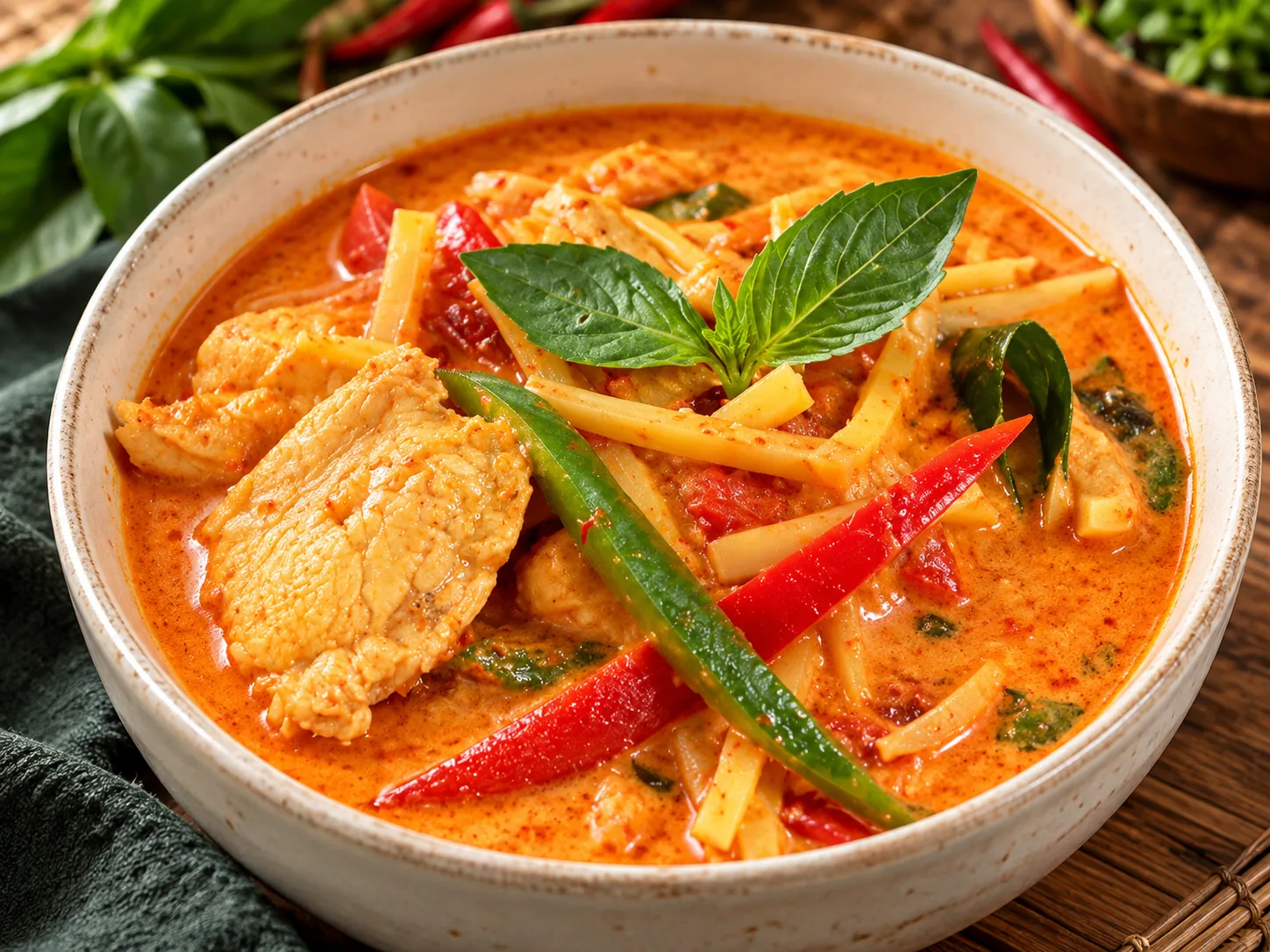
Gaeng Phed Gai แกงเผ็ดไก่ · Red Curry with Chicken
Chicken simmers in red curry paste and coconut milk with Thai eggplant, kaffir lime leaf, and Thai basil. This is the standard red curry on Central menus. Gaeng Phed Ped Yang, above, is the roast-duck version of the same curry family. Green curry is brighter and more herbal; this one is rounder and a little deeper. Serve it with jasmine rice.
Seafood
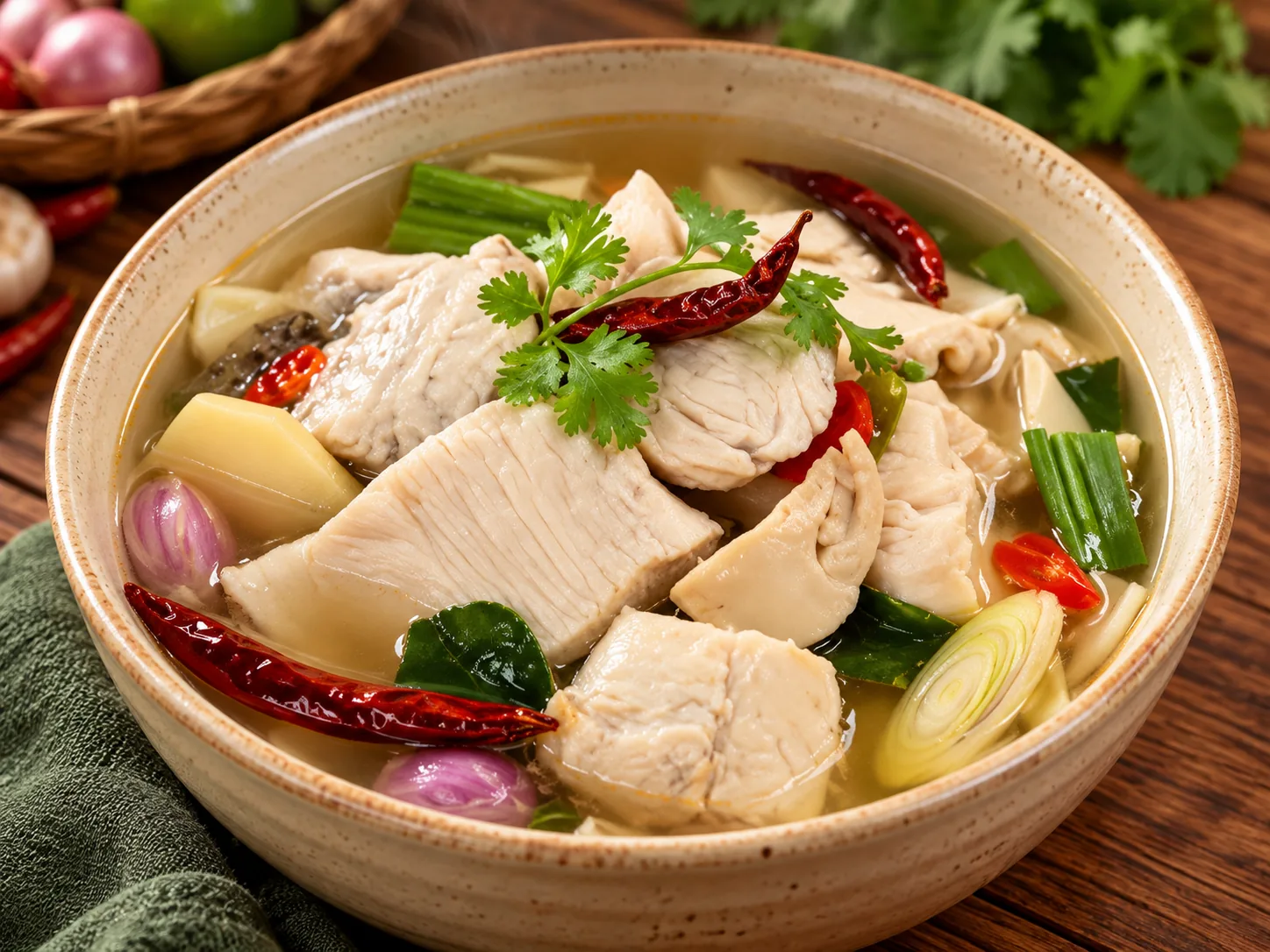
Tom Yum Pla ต้มยำปลา · Hot-and-Sour Fish Soup
Fish replaces shrimp in the familiar tom yum broth of lemongrass, galangal, kaffir lime leaf, chili, and lime. The bowl is often clear, with pieces of fish and sometimes mushrooms or tomato. Tom Yum Goong, listed above, is the shrimp bowl. Eat this one with rice. The broth should taste sharp and fragrant, with the fish still tender.

Seafood
Chu Chee Pla ฉู่ฉี่ปลา · Fish in Thick Red Curry
Fried fish — a steak or a whole fish — is covered in a reduced red curry and coconut sauce that clings rather than pools. Shredded kaffir lime leaf is the usual finish, and you should smell it before you taste the chili. It is a Central seafood curry, richer than a bowl of gaeng. Share it with rice. The fish skin should stay crisp under the sauce.

Seafood
Pla Kapong Neung Manao ปลากระพงนึ่งมะนาว · Steamed Sea Bass with Lime
Sea bass is steamed until the flesh just turns opaque, then dressed with lime, fish sauce, garlic, and fresh chili. Cilantro and Chinese celery usually finish the top. It is a seafood-house classic across Thailand. Eat it with rice while the fish is still hot. The lime should taste sharp, and the fish should stay moist. Gaeng Som Pla Kapong, in the Southern section, is this fish cooked in a sour curry.

Seafood
Goong Chae Nam Pla กุ้งแช่น้ำปลา · Shrimp in Fish Sauce
Fresh shrimp — often still translucent, sometimes briefly blanched — are bathed in a sharp dressing of fish sauce, lime, crushed garlic, and bird’s-eye chili until the meat turns opaque at the edges and takes on the salt. The name means “shrimp soaked in fish sauce,” and that is exactly what you get: a cold, bright plate that wakes the palate before the richer dishes arrive. Good kitchens use sweet, firm prawns and pour the dressing just before serving so the shrimp stay plump, not soggy. Cilantro, Chinese celery, and sliced chili usually finish the top; some tables add raw garlic for extra punch. Order it at a Bangkok or Central seafood house, share it with rice, and eat it while the lime still smells sharp. If you like Pla Kapong Neung Manao, this is the shrimp cousin of the same sour-salty family.
Thai Classics
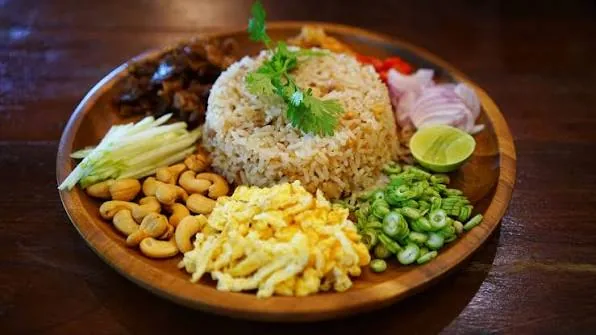
Khao Kluk Kapi ข้าวคลุกกะปิ · Shrimp-Paste Fried Rice
Rice is fried with shrimp paste until it smells savory and a little funky, then served with a ring of sides: sweet pork, shredded green mango, omelette strips, cucumber, lime, chili, and raw shallot or long bean. Mix them in yourself. It is a Central one-plate meal. The shrimp paste should be fragrant, and the mango keeps the plate bright.
Southern Thailand
15 dishes · Region guide
Curries · Regional
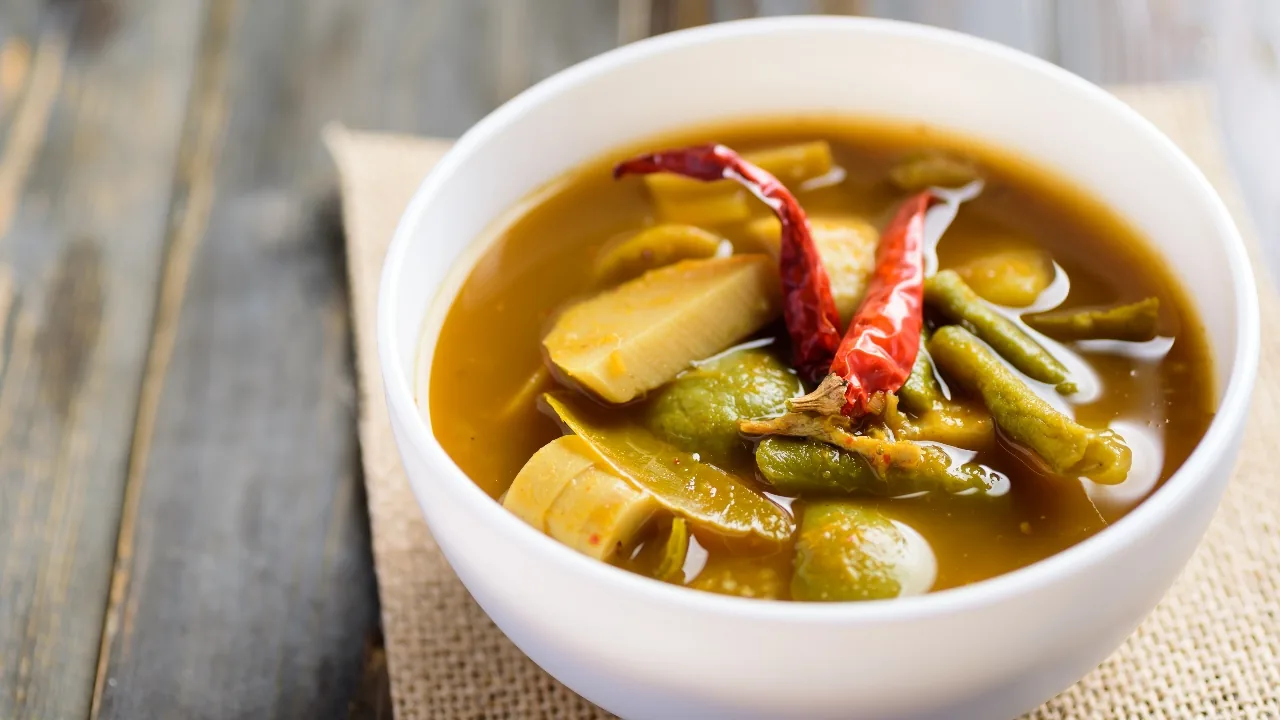
Gaeng Tai Pla แกงไตปลา · Fermented Fish-Innard Curry
A Southern curry seasoned with tai pla, a fermented sauce made from fish innards, plus chili, turmeric, and vegetables such as bamboo, eggplant, and morning glory. Fish or prawn often goes in the pot. The smell is strong and the taste is salty, hot, and deeply savory. Commonly associated with the South. Eat it with rice, in small spoonfuls at first.

Curries · Regional
Gaeng Lueang Pla แกงเหลืองปลา · Southern Yellow Curry with Fish
Fish and vegetables simmer in a Southern curry colored with turmeric and soured with tamarind. Chili stays present, and the gravy is thinner than a coconut restaurant curry. English menus sometimes use “yellow curry” for a mild potato curry; this Southern bowl is sharper and more herbal. Eat it with rice.

Regional Specialties
Kua Kling Moo คั่วกลิ้งหมู · Dry Southern Pork Curry
Minced pork is dry-fried with a Southern curry paste of chili, turmeric, lemongrass, and garlic until the pan is almost dry. Kaffir lime leaf is stirred in at the end. There is no coconut soup around it. This is one of the hottest everyday dishes in the South. Eat it with a lot of rice, and with a bland vegetable if you need a pause.

Regional Specialties
Kua Kling Nuea คั่วกลิ้งเนื้อ · Dry Southern Beef Curry
The beef version of kua kling: minced beef cooked down with the same Southern paste until it fries in its own seasoning. Turmeric, chili, and kaffir lime leaf define it. It is drier and hotter than a coconut curry. Serve it with rice. If the pork version is already on the table, this one tastes deeper and a little more robust.

Regional Specialties
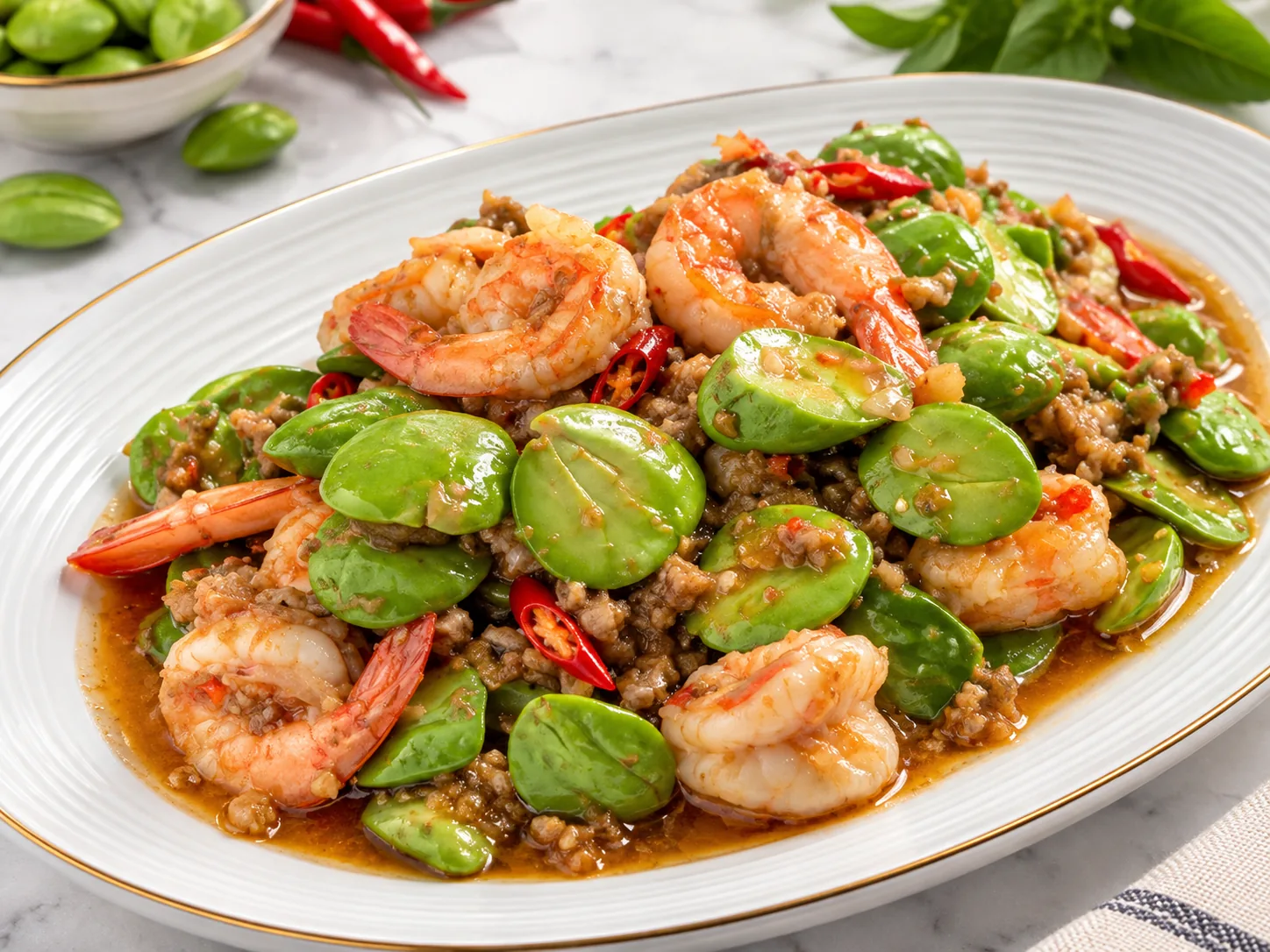
Pad Sataw Goong ผัดสะตอกุ้ง · Shrimp with Stink Beans
Stink beans — sataw — are stir-fried with shrimp, chili, and garlic, often with a spoon of curry paste. The beans are bitter and pungent, which is the point, and the shrimp keeps the plate sweet. It is a Southern stir-fry, eaten with rice. The Pad Sataw Kapi below uses shrimp paste instead of fresh shrimp as the main seasoning.
Regional Specialties
Pad Sataw Kapi ผัดสะตอกะปิ · Stink Beans with Shrimp Paste
The same stink beans, stir-fried with shrimp paste, chili, and garlic until the paste coats them. Pork or dried shrimp sometimes joins the pan; the shrimp paste is the seasoning that matters. It is saltier and funkier than the shrimp stir-fry. Eat it with plenty of rice. A little bitter bean goes a long way.
Regional Specialties
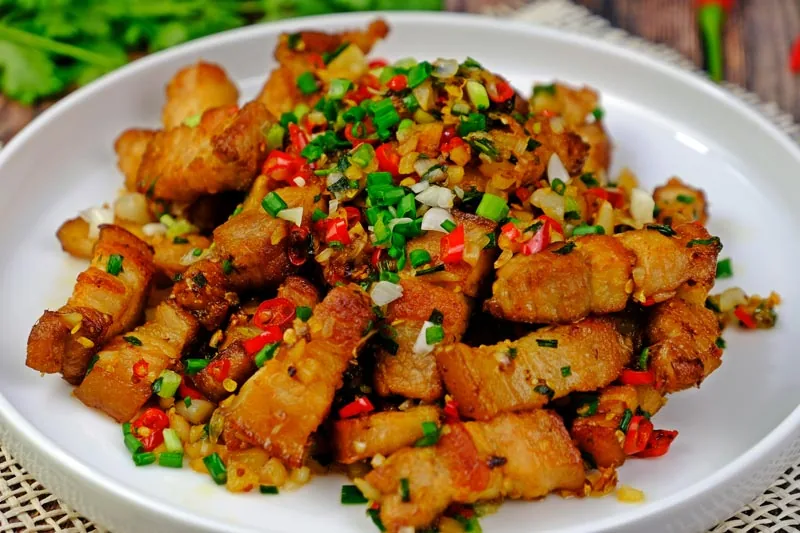
Moo Kua Kluea หมูคั่วเกลือ · Salt-Fried Pork
Pork is fried with salt, garlic, and often turmeric or white pepper until the pieces are dry, fragrant, and deeply salty. It is a Southern home dish, simple on purpose, and commonly eaten with rice and a sharp chili dip or fresh vegetables. The salt is the seasoning. A few bites are enough beside a hotter curry.

Grilled & Street Food
Gai Gor Lae ไก่กอและ · Pattani Spiced Grilled Chicken
Chicken is basted with a coconut-milk curry of dried spices and grilled, turned often, until the skin turns deep red and glossy. The name comes from Malay “golek,” to turn. Commonly associated with Pattani, and recorded in Thailand’s national intangible cultural heritage inventory for that province. Eat it with sticky rice. The taste is sweet, salty, and fragrant.

Regional Specialties
Gai Tom Khamin ไก่ต้มขมิ้น · Turmeric Chicken
Chicken is simmered with turmeric, garlic, and salt until the meat is tender and the broth turns yellow. It is a quiet Southern dish, often served with rice and a chili dip so you can add heat yourself. The turmeric should taste warm and clean. A useful plate when the curries on the same table are very hot.
Seafood · Regional
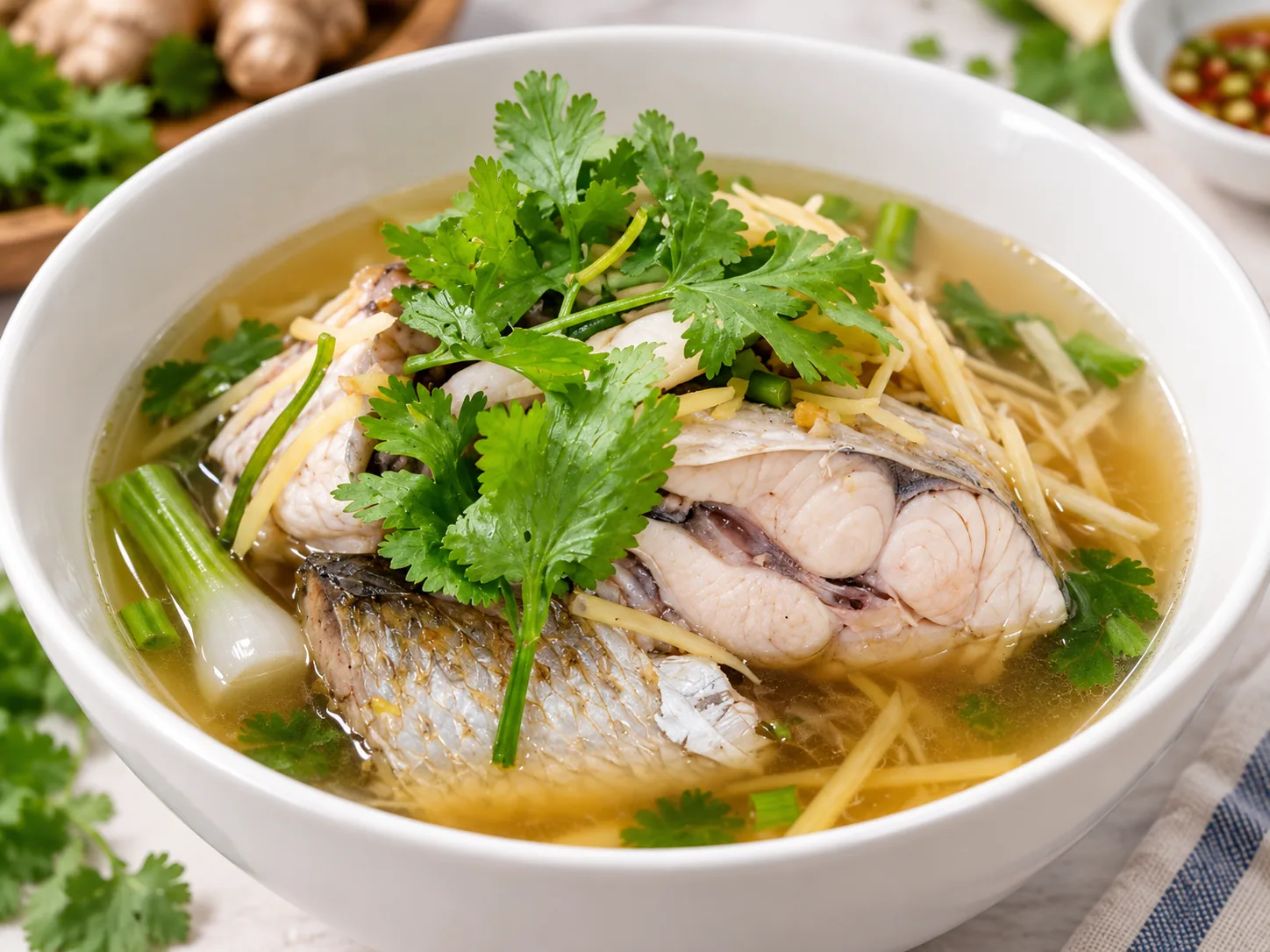
Tom Som Pla Krabok ปลากระบอกต้มส้ม · Sour Mullet Soup
Grey mullet (pla krabok) is simmered in a sour Southern soup with tamarind or another souring agent, chili, and herbs. Coastal kitchens know the fish; the soup tastes bright and savory. Eat it with rice. The fish should stay intact in the bowl.
Seafood · Regional
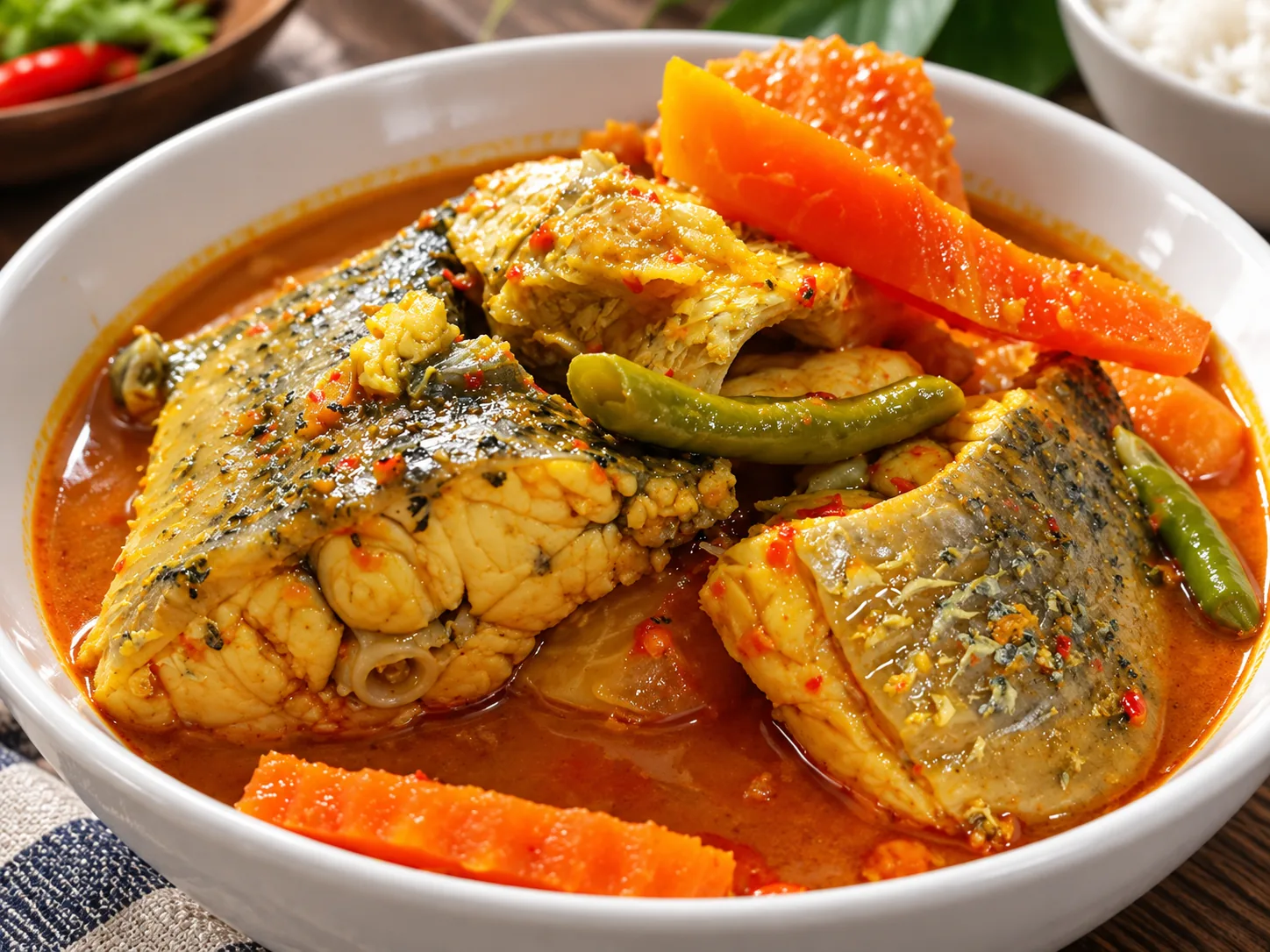
Gaeng Som Pla Kapong แกงส้มปลากะพง · Southern Sour Curry with Sea Bass
Sea bass is cooked in a Southern sour curry with chili and a sour note from tamarind, often with vegetables. Gaeng Lueang is the turmeric-yellow fish curry. Central Gaeng Som Cha Om Kung is the version with acacia omelette. Eat it with rice. The fish should taste clean against the sour broth.
Regional Specialties
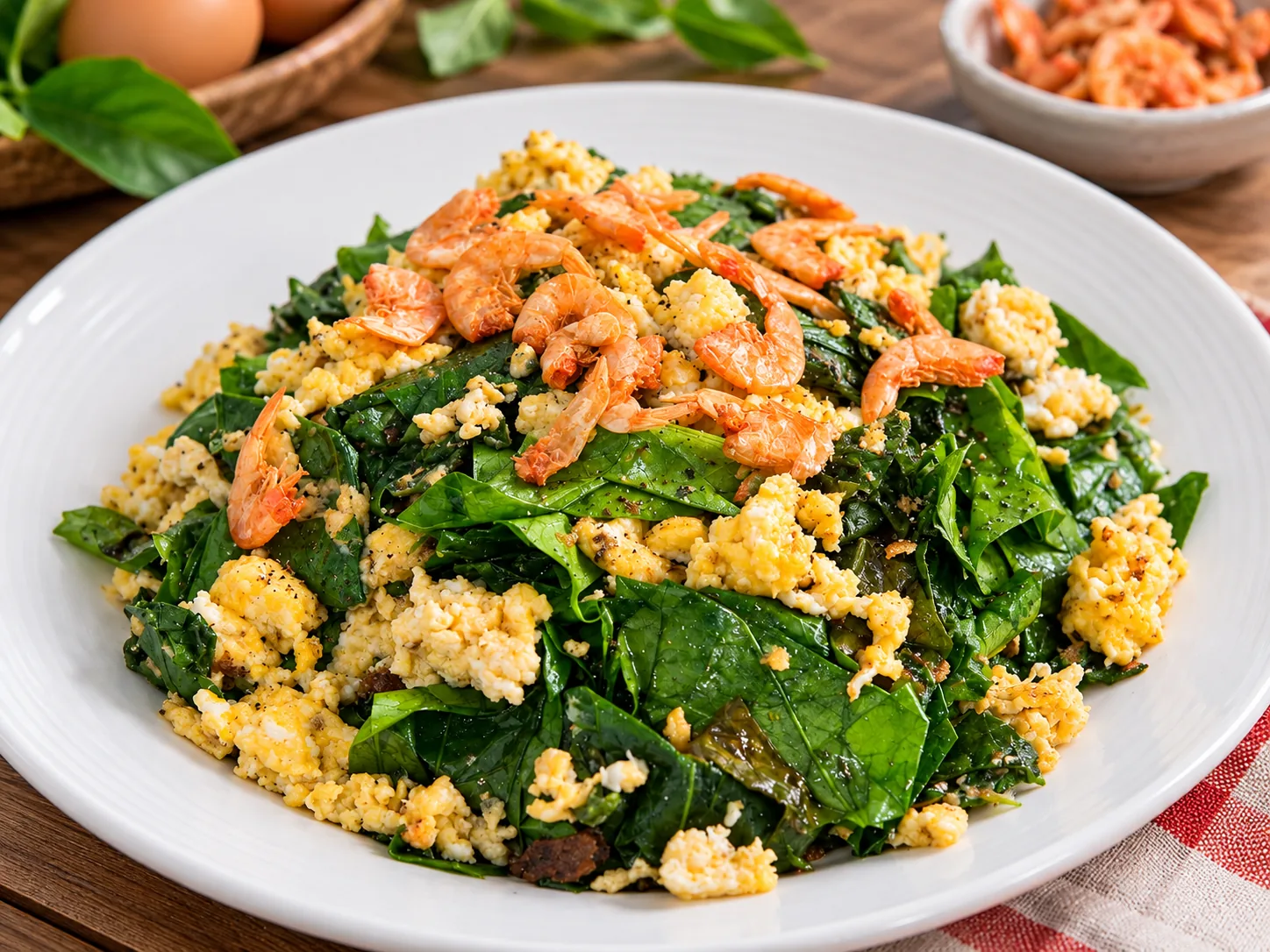
Bai Liang Pad Khai ใบเหลียงผัดไข่ · Liang Leaves with Egg
Liang leaves, from the melinjo tree, are stir-fried with egg, garlic, and often dried shrimp. The leaves taste gently sweet and a little nutty, and the egg binds them into a soft scramble. Commonly associated with Southern Thailand, where the plant is a market staple. Eat it with rice. It is one of the milder plates in a Southern meal.
Regional Specialties
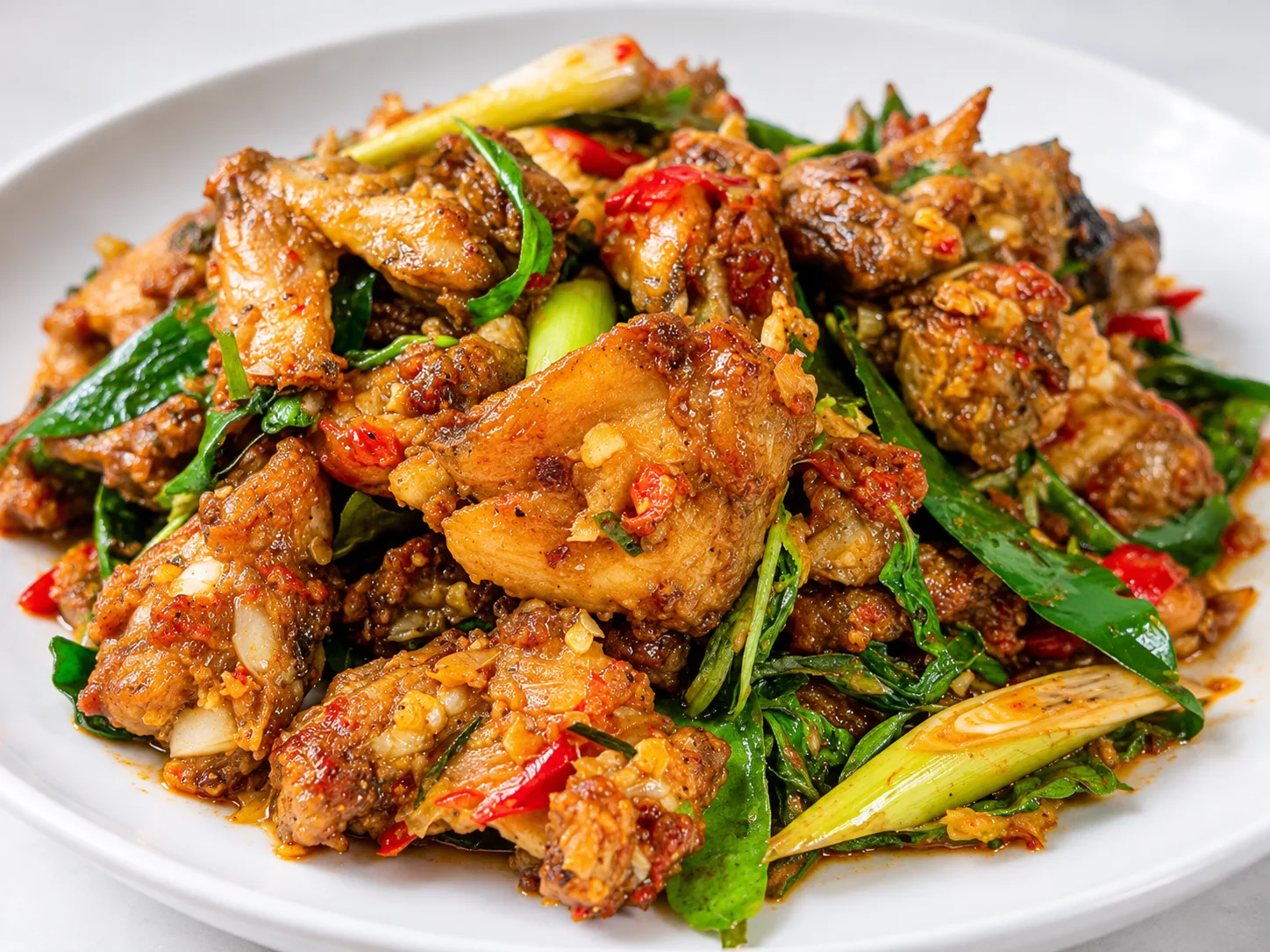
Pad Phed Kop ผัดเผ็ดกบ · Spicy Stir-Fried Frog
Frog is stir-fried with red curry paste, Thai eggplant, kaffir lime leaf, and basil until the sauce is thick and hot. It is eaten in rural kitchens across Thailand, including Southern ones, so it is not a single-region dish. The meat is mild; the curry paste carries the heat. Serve it with rice.

Salads & Spicy
Yam Budu ยำน้ำบูดู · Budu Salad
Budu, the Southern fermented anchovy sauce, is mixed with lime, palm sugar, and chili into a dressing for vegetables, herbs, and often seafood. The salad tastes salty and pungent first, then sour. It is a Southern table dish, eaten with rice. If you already like fish sauce, budu is the deeper, darker cousin.
Regional Specialties
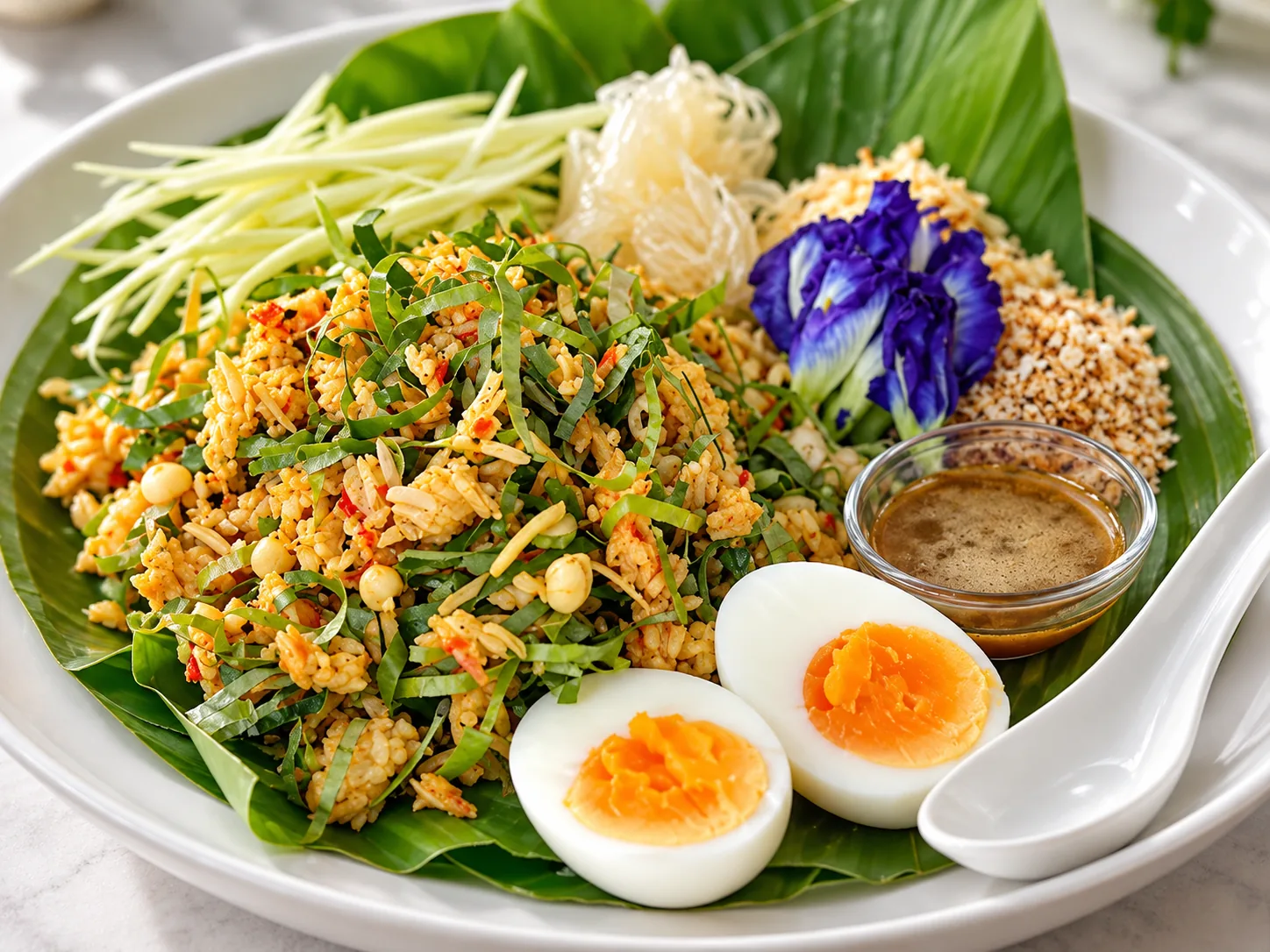
Khao Yam ข้าวยำ · Southern Rice Salad
Cooked rice is served with budu and a tray of very fine herbs and vegetables: kaffir lime leaf, lemongrass, bean sprouts, and often pomelo, dried shrimp, or toasted coconut. You dress and mix it yourself. Commonly associated with Southern Thailand, and often eaten as a light meal. The budu is salty; the herbs keep it fresh.
Thai Everyday Food
10 dishes · How to order
Noodles
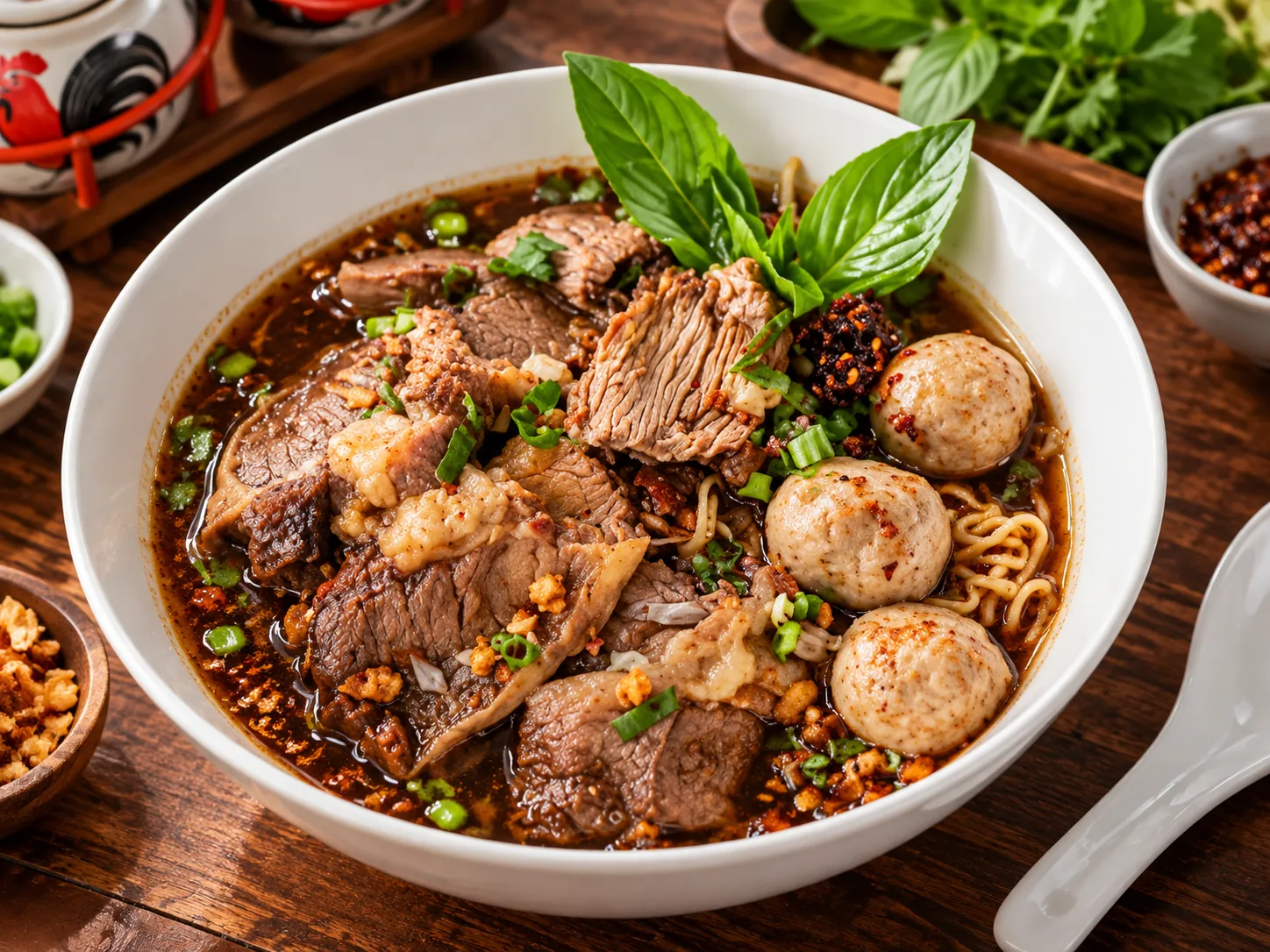
Boat Noodles ก๋วยเตี๋ยวเรือ · Kuay Teow Reua
Rice noodles in a small bowl of dark, concentrated broth, often seasoned with spices and pork or beef blood, and topped with meat, meatballs, and a few greens. The name refers to vendors who sold them from boats; today they are a shop and street dish commonly associated with Bangkok and Ayutthaya. People order several bowls. Add chili vinegar and sugar to taste.

Noodles
Tom Yum Noodles ก๋วยเตี๋ยวต้มยำ · Kuay Teow Tom Yum
A noodle-shop bowl: rice noodles in a tom yum broth with pork, fish balls or shrimp, roasted chili, lime, and crushed peanuts. It is the everyday cousin of the soup Tom Yum Goong. Shops across Thailand serve it. Say whether you want sen lek (small noodles) or sen yai (wide), and how spicy. The broth should taste sour and chili-hot, with lime at the end.

Noodles
Rad Na ราดหน้า · Noodles with Gravy
Wide rice noodles are seared, then covered with a light gravy of pork or seafood and Chinese broccoli, thickened just enough to coat. It is a Chinese-Thai shop dish, common in Bangkok and Central towns. Ask for the noodles to be fried first if you want a little char under the gravy. A mild plate when you want noodles without a sweet sauce.
Noodles
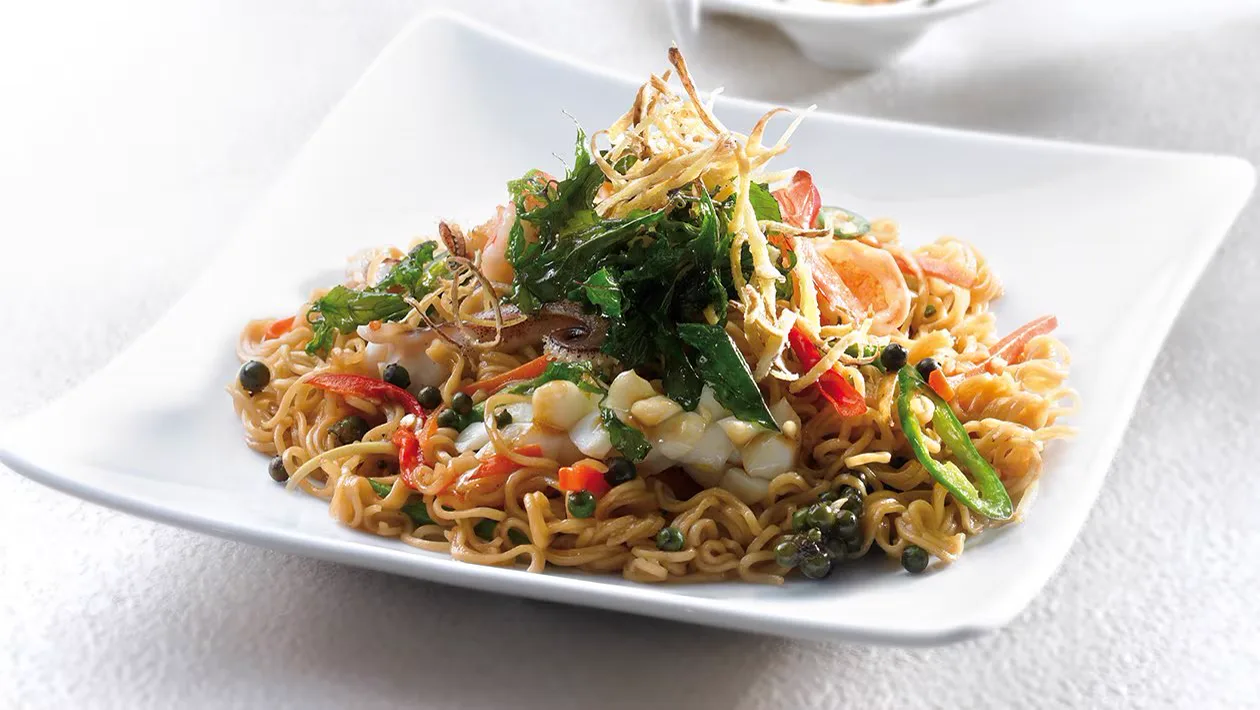
Pad Kee Mao ผัดขี้เมา · Spicy Basil Noodles
Wide rice noodles are stir-fried with garlic, fresh chili, holy basil, and pork, chicken, or seafood. English menus often call it drunken noodles. It should taste hot and herbal, closer to Pad Kra Prow than to Pad See Ew, which is the milder soy-seared noodle listed above. Eat it as a one-plate meal. Say “mai phet” if you need the chili pulled back.
Thai Classics
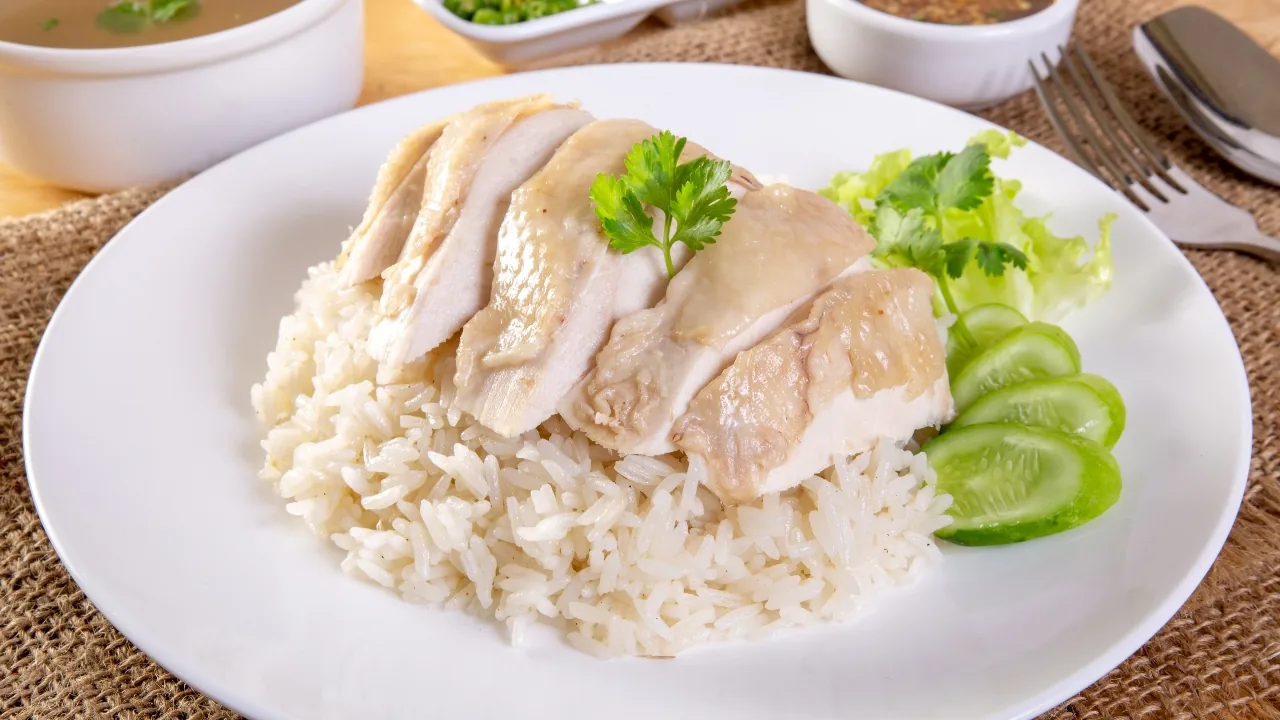
Khao Man Gai ข้าวมันไก่ · Chicken Rice
Poached chicken is served over rice cooked in chicken broth and a little fat, with a ginger-and-fresh-chili sauce and a cup of clear broth on the side. It is a Chinese-Thai everyday plate, especially common at Bangkok shops. The chicken should be silky, the rice fragrant, and the sauce sharp. Cucumber cools the plate. A reliable lunch when you want something mild.
Thai Classics
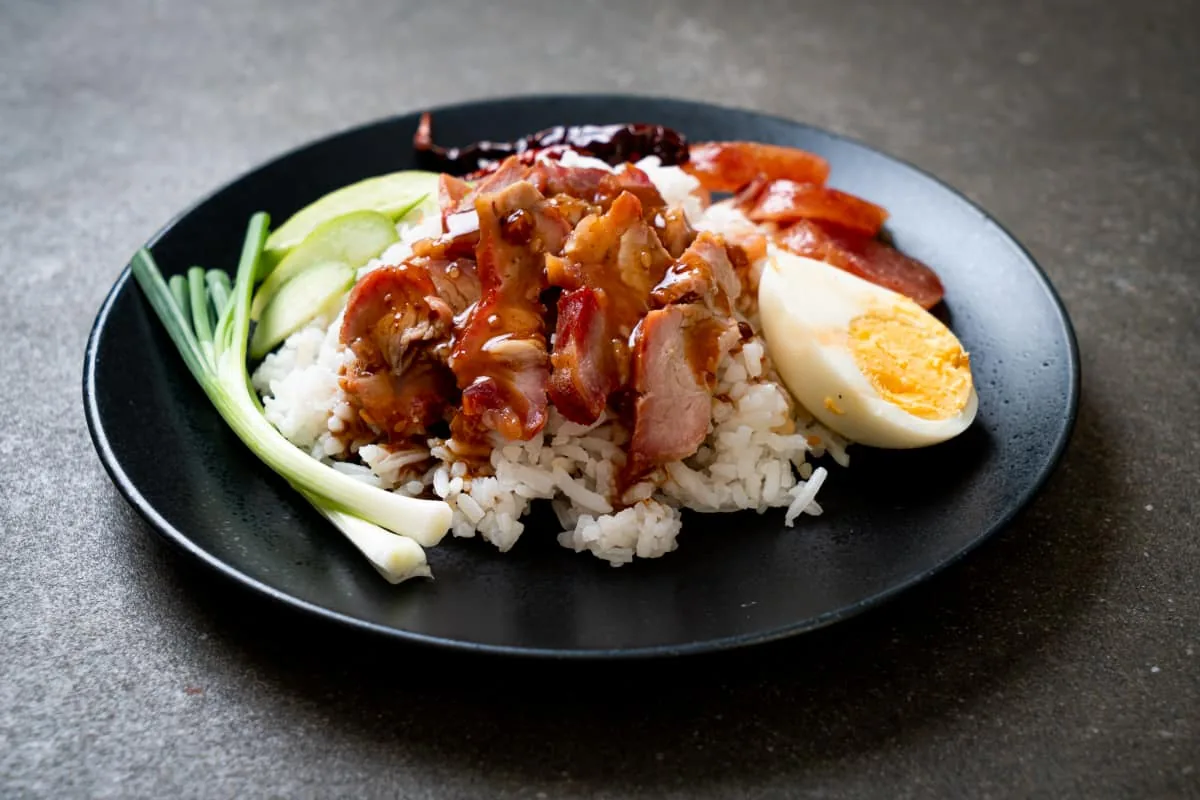
Khao Moo Daeng ข้าวหมูแดง · Red Pork Rice
Barbecue red pork is sliced over rice and finished with a sweet gravy. Cucumber and sometimes a boiled egg sit on the side. It is a Chinese-Thai one-plate meal sold from morning into the afternoon. The pork should be tender and reddish, the sauce light rather than heavy. Add chili vinegar if you want a sharp note.
Thai Classics
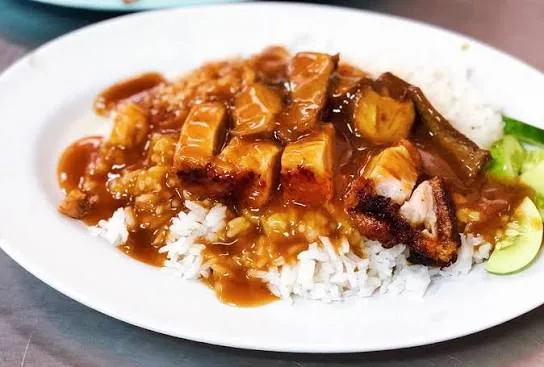
Khao Moo Krob ข้าวหมูกรอบ · Crispy Pork Rice
Crispy pork belly is chopped over rice with a spoon of gravy and a side of chili-vinegar. The skin should crack; the meat underneath stays moist. Shops often sell it beside red pork, and you can ask for both on one plate. A Chinese-Thai everyday dish found across the country. Eat it while the skin is still loud.
Thai Classics
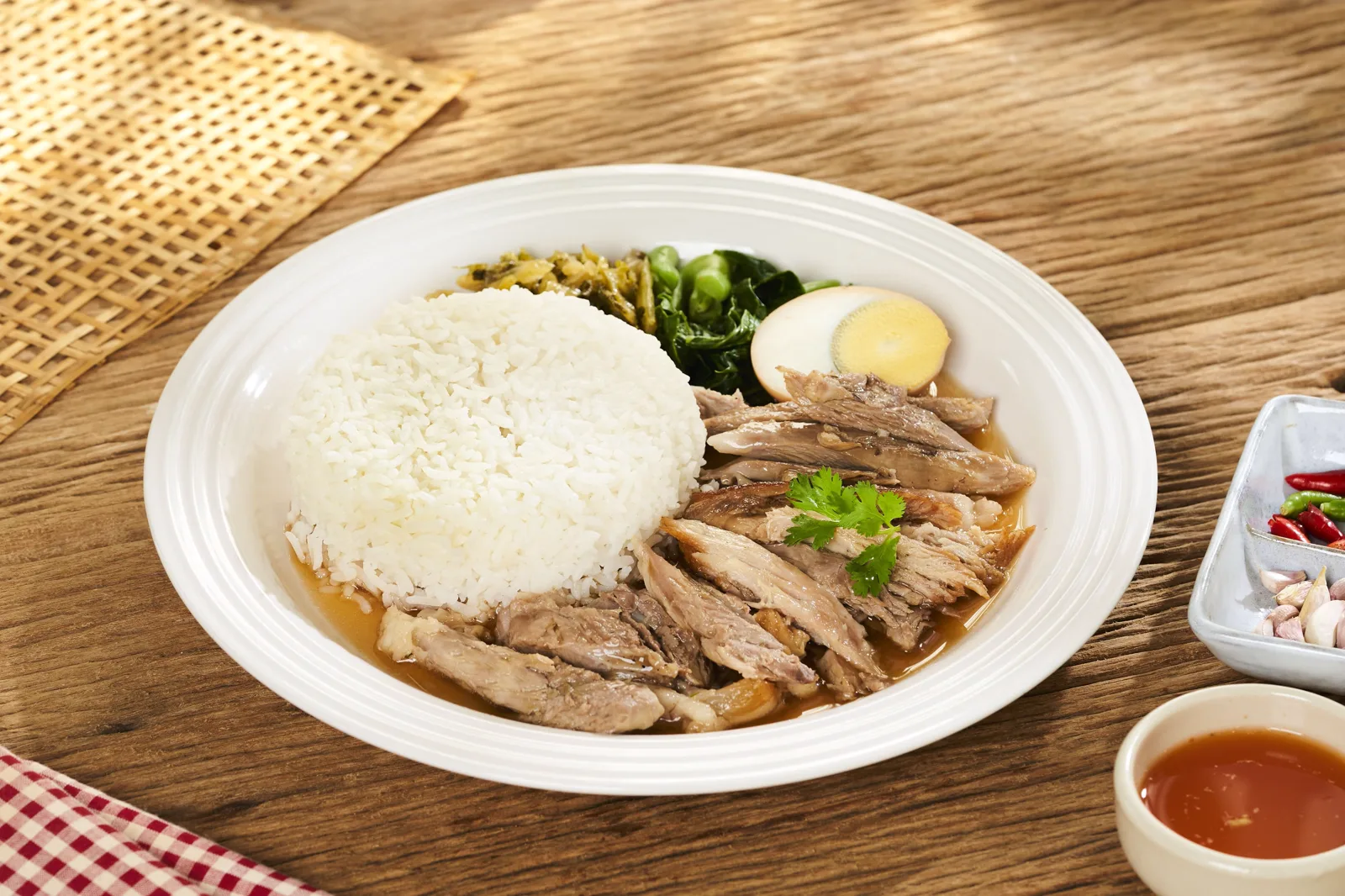
Khao Kha Moo ข้าวขาหมู · Pork-Leg Rice
Pork leg is stewed with sweet soy, garlic, and warm spices until it falls apart, then served over rice with pickled mustard greens and, in many shops, a hard-boiled egg. The sauce is dark and slightly sweet. It is a Chinese-Thai plate you can eat for lunch almost anywhere. The skin should be soft, the meat moist, the pickle sharp.
Thai Classics
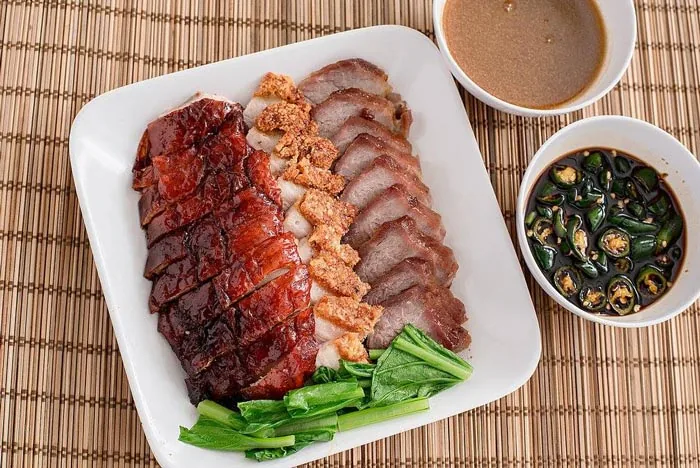
Khao Na Ped ข้าวหน้าเป็ด · Roast Duck Rice
Roast duck is sliced over rice and coated with a light gravy, often with pickled greens or cucumber beside it. Chinese-Thai shops specialize in it, and the duck should have crisp skin and moist meat. It is an everyday plate, not a banquet dish. A bowl of clear soup sometimes comes with the rice. Mild, unless you add the chili on the table.

Thai Classics
Jok Moo โจ๊กหมู · Pork Rice Porridge
Rice is simmered until it breaks into a smooth porridge, then topped with pork, often an egg, ginger, and spring onion. It is breakfast and late-night food across Thailand. The porridge should taste of stock, not of raw starch, and the ginger keeps it fresh. Add pepper and chili vinegar at the table. A gentle bowl when you want something warm and plain.
Snacks and Street Food
11 dishes · Bangkok street food
Grilled & Street Food
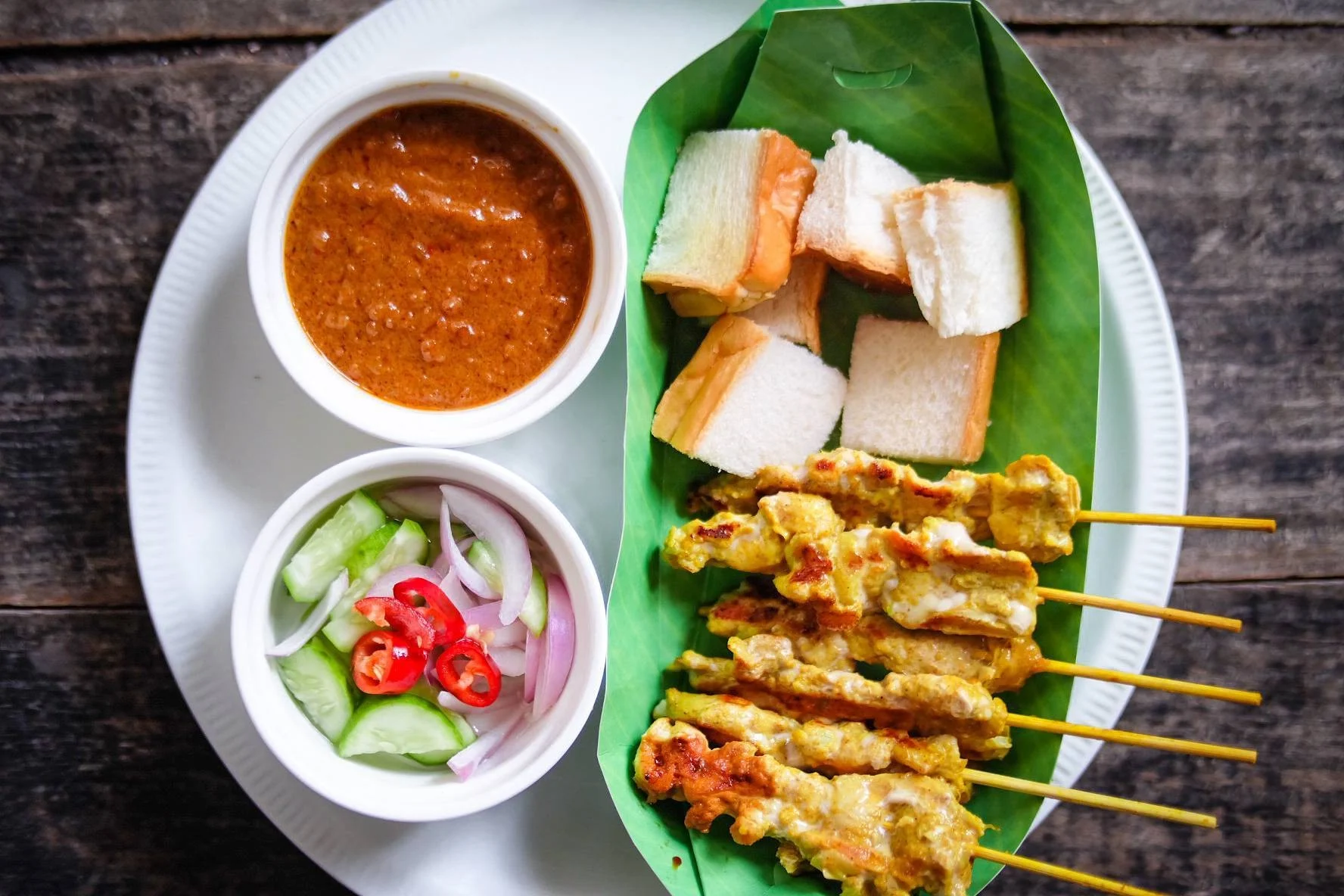
Moo Satay หมูสะเต๊ะ · Grilled Pork Skewers
Pork is marinated with turmeric and spices, threaded on skewers, and grilled over charcoal. The plate comes with peanut sauce and a cucumber relish. Night markets and roadside carts sell it by the stick. The meat should taste lightly smoky, and the sauce should be nutty rather than only sweet.
Grilled & Street Food
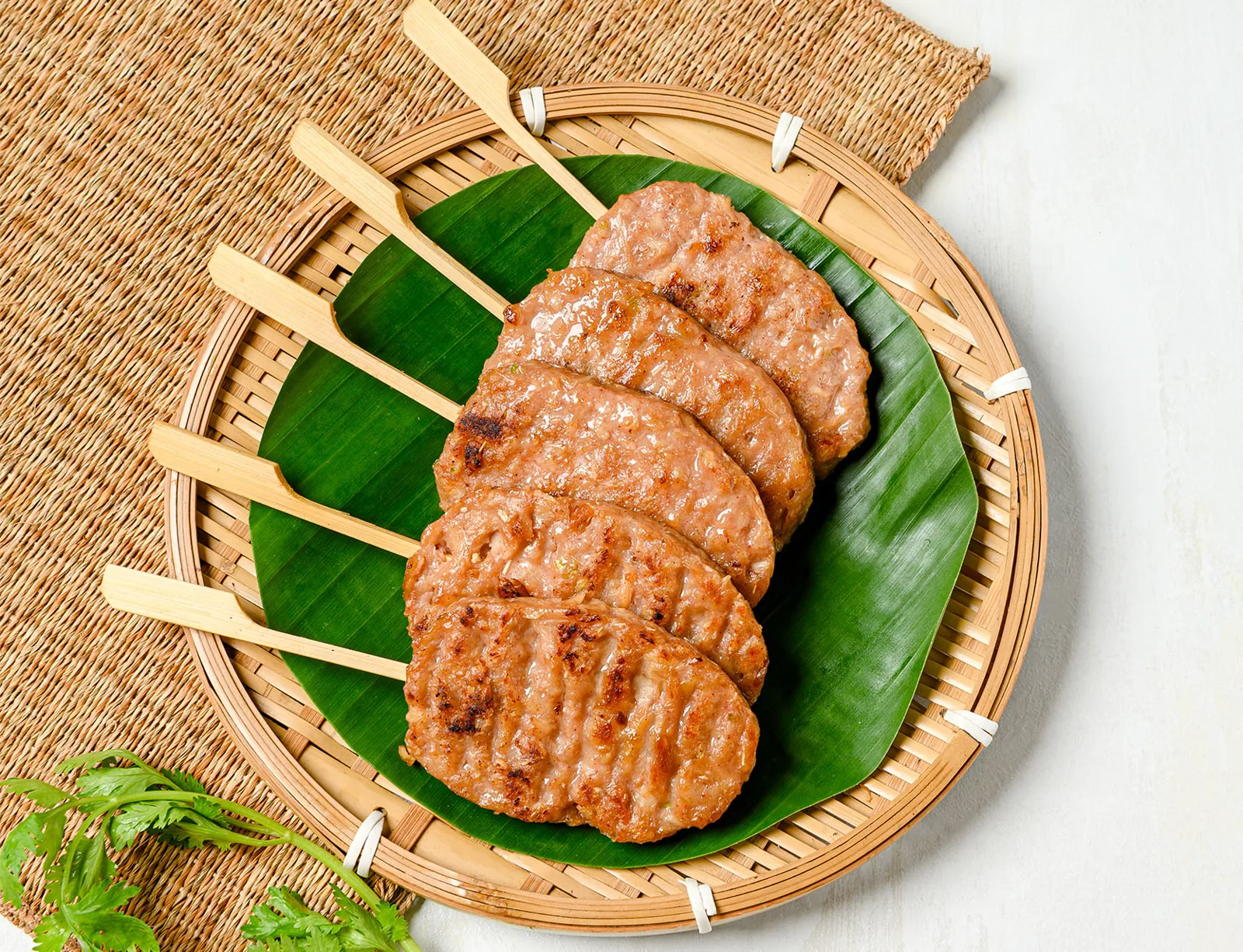
Moo Ping หมูปิ้ง · Grilled Pork Skewers
Thin slices of pork are marinated with garlic, coriander root, pepper, and a little sugar, then grilled on sticks. Night markets sell them by the skewer, usually with sticky rice. The dip is a sweet chili sauce. Moo Satay, listed above, comes with peanut sauce; moo ping is the garlicky, slightly sweet skewer you eat on the way home.
Grilled & Street Food
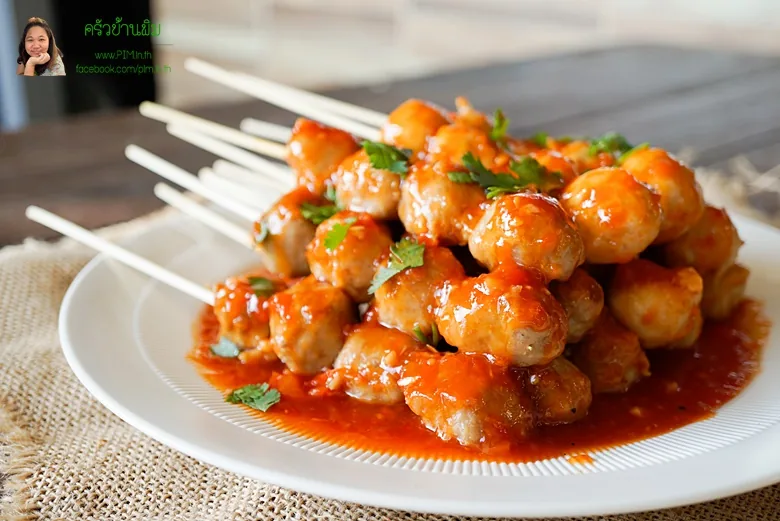
Luk Chin Ping ลูกชิ้นปิ้ง · Grilled Meatballs
Pork, beef, or fish balls are threaded on sticks and grilled until the outside spots. The inside stays bouncy. A sweet chili dip is the usual partner, and the cart is a standard night-market stop. Eat them hot, off the stick. They are a snack, not a full meal, unless you keep going back for another stick.
Grilled & Street Food
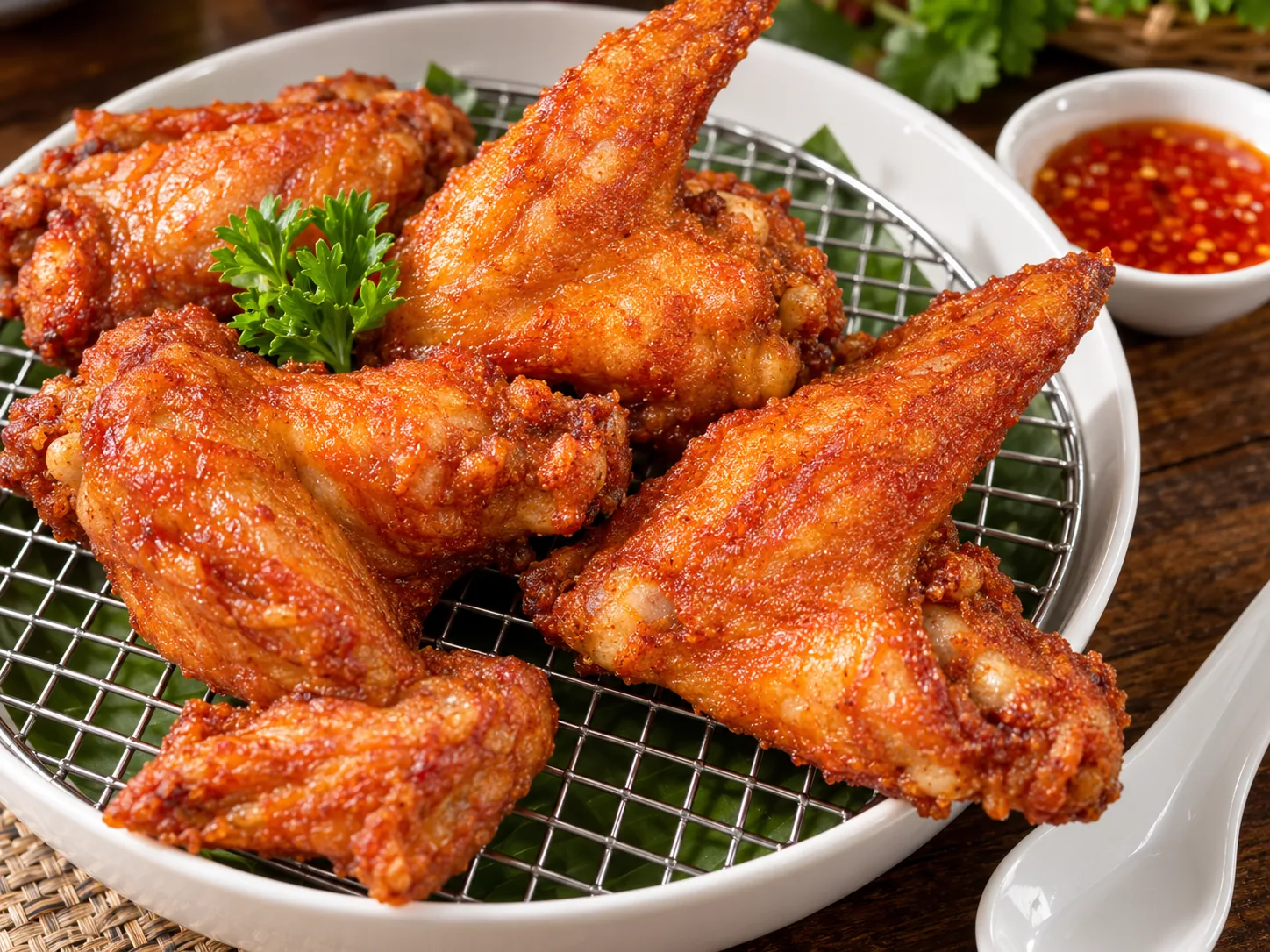
Peek Gai Tod ปีกไก่ทอด · Fried Chicken Wings
Chicken wings are deep-fried until the skin is crisp. Some stalls toss them with fried garlic or a fish-sauce glaze; others leave them plain and offer a sweet chili dip. They show up at markets, grill carts, and with cold drinks. Eat them while the skin still cracks. A simple snack, salty rather than spicy.
Seafood
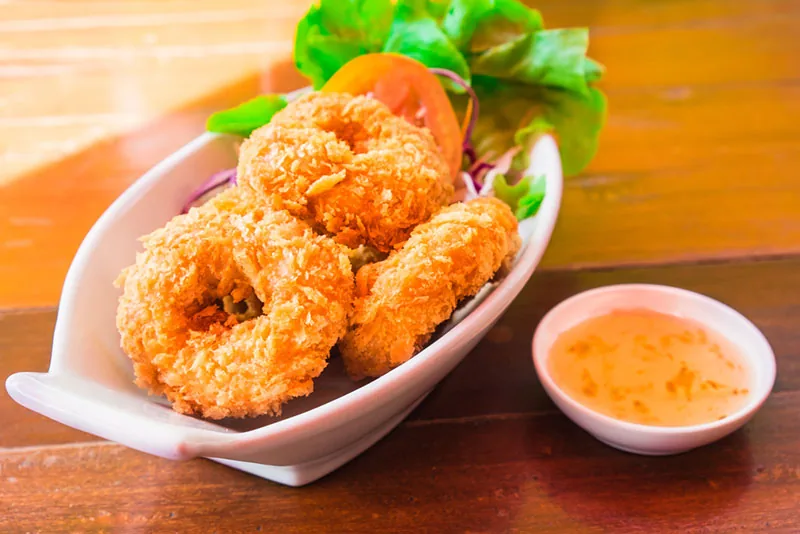
Tod Mun Goong ทอดมันกุ้ง · Fried Shrimp Cakes
Shrimp is pounded with curry paste and fried into small cakes that should bounce when you bite them. A sweet chili sauce or cucumber relish comes alongside. Tod Mun Pla, listed above, is the fish version with long beans; these are shrimp, sweeter and a little finer. Eat them hot, as a snack or a shared starter.

Seafood
Goong Chup Pang Tod กุ้งชุบแป้งทอด · Batter-Fried Shrimp
Whole shrimp are coated in a light batter and fried until the crust is pale gold and the shrimp inside stay sweet. A sweet chili dip is the usual sauce. You will find them at street stalls and on seafood menus. The tail is the handle. They should taste of shrimp first, and of batter second.
Grilled & Street Food
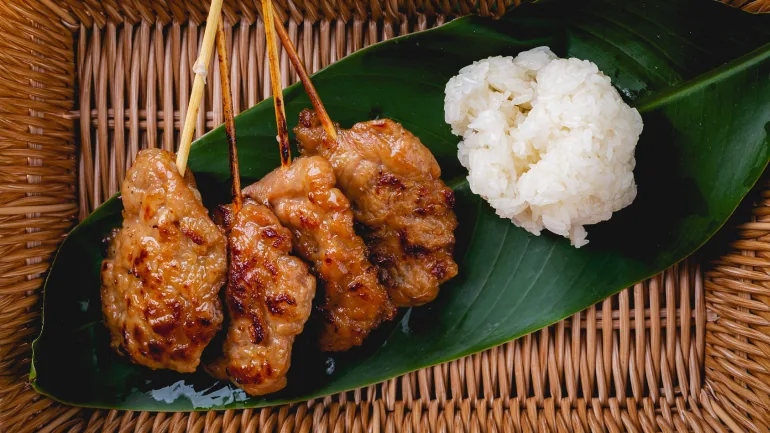
Khao Niao Moo Ping ข้าวเหนียวหมูปิ้ง · Sticky Rice with Grilled Pork
This is how moo ping is usually eaten: a warm parcel of sticky rice and a few garlic-marinated pork skewers, often with a small bag of sweet chili sauce. Morning markets and school-gate carts sell it as breakfast or a snack. The rice should be fresh and steamy, the pork still juicy. It is a pairing, sold as one order.

Seafood · Street Food
Hoy Tod หอยทอด · Crispy Mussel Omelette
Mussels or oysters are fried with egg and batter into a crisp, lacy pancake, often with bean sprouts in the pan. A sweet chili sauce, sometimes with chili and lime, is served on the side. It is a classic street and shophouse snack in Bangkok and in coastal towns. Eat it while the edges are still brittle. The shellfish should taste fresh, not oily.
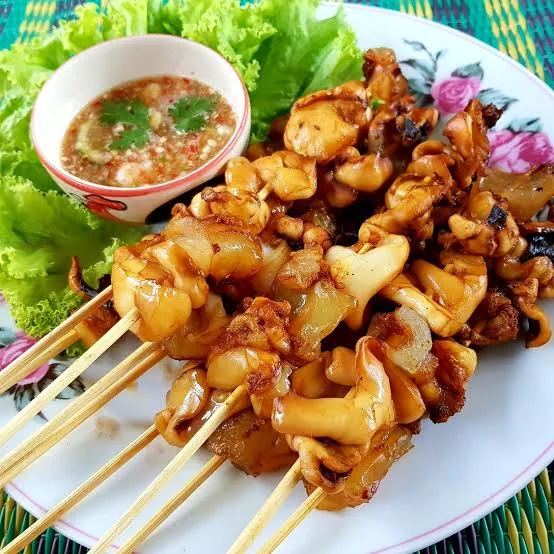
Seafood · Street Food
Pla Muek Yang ปลาหมึกย่าง · Grilled Squid
Whole squid is grilled over charcoal until the body scores and the edges char, then cut and served with a seafood sauce of chili, lime, fish sauce, and garlic. Night markets and beach stalls do it constantly. The squid should be tender, with a little smoke. Dip, don’t drown it. A snack you can share, or a light plate with rice.

Seafood · Street Food
Pla Pao ปลาเผา · Charcoal-Grilled Fish
A whole fish is salted, often stuffed with lemongrass, and grilled over charcoal until the skin blisters and the flesh stays moist. Beach stalls and seafood markets across Thailand sell it this way. The usual dip is seafood sauce: chili, garlic, lime, and fish sauce. Stalls often set it out with lettuce, herbs, and noodles or rice, so you can wrap a bite. The fish should taste of salt and a little smoke.
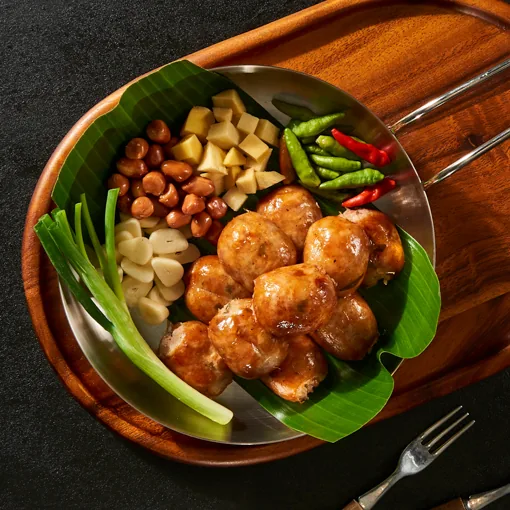
Grilled & Street Food
Sai Krok Isan ไส้กรอกอีสาน · Isan Fermented Sausage
Pork and cooked rice are fermented until the sausage tastes lightly sour, then grilled so the skin blisters. It is an Isan specialty sold at markets across Thailand. Eat it with sticky rice, fresh ginger, cabbage, and fresh chili. The sourness should be gentle and clean. Northern Sai Ua, above, is the herb sausage; this one is the sour one.