

- Home
- Stories & Insights
- Thai Culture
- Buddhism in Daily Life
Thai Culture & Traditions
Buddhism in Daily Life
พระพุทธศาสนาในชีวิตประจำวัน
Faith that lives in morning alms, neighborhood temples, quiet manners, and the year’s holy days — not only in golden halls, but in everyday moments.
A quieter strength
A Day Begins with Giving
เช้าวันใหม่กับการทำบุญBefore traffic thickens, many Thai days open with an act of generosity — food offered to monks walking their morning route.

You may see lines of monks with alms bowls at first light. Laypeople kneel, place rice and simple food into the bowls, then raise their hands in a wai. The monks do not thank with chatty words — the gift itself is the exchange.
This practice, often called tak bat (ตักบาตร), is not a tip or a transaction. It supports the monastic community and lets laypeople begin the day with merit — a calm intention to do good.
If you watch as a visitor: stand aside, keep voices soft, and never step over offerings or block the monks’ path. Photographs are usually fine from a respectful distance — never with flash in someone’s face.
“Not just in temples,
but in everyday moments.”
Community heart
The Wat as a Living Heart
วัด — ศูนย์กลางของชีวิตชุมชนA temple is more than a sightseeing stop. For many Thais, the wat is where life’s big moments still gather.
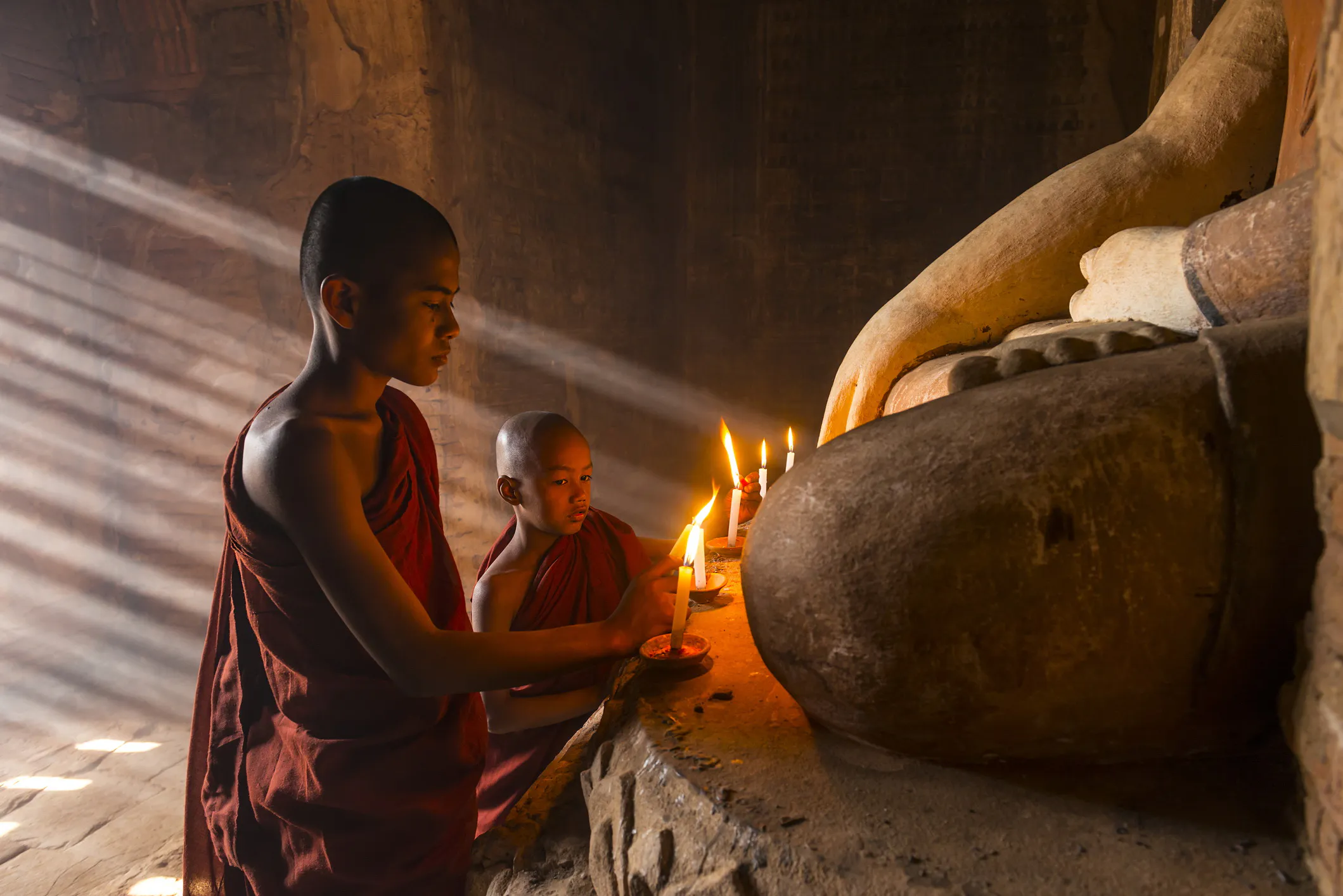
Neighborhood temples host ordinations, funerals, birthday blessings, and quiet evening chanting. Children learn manners here; elders find company; travelers find shade and gold leaf catching the last light.
Famous temples draw cameras. Local temples keep ordinary faith — slippers by the hall door, incense smoke, a grandmother teaching a child how to kneel. Both matter. When you visit, notice which kind of place you are in.
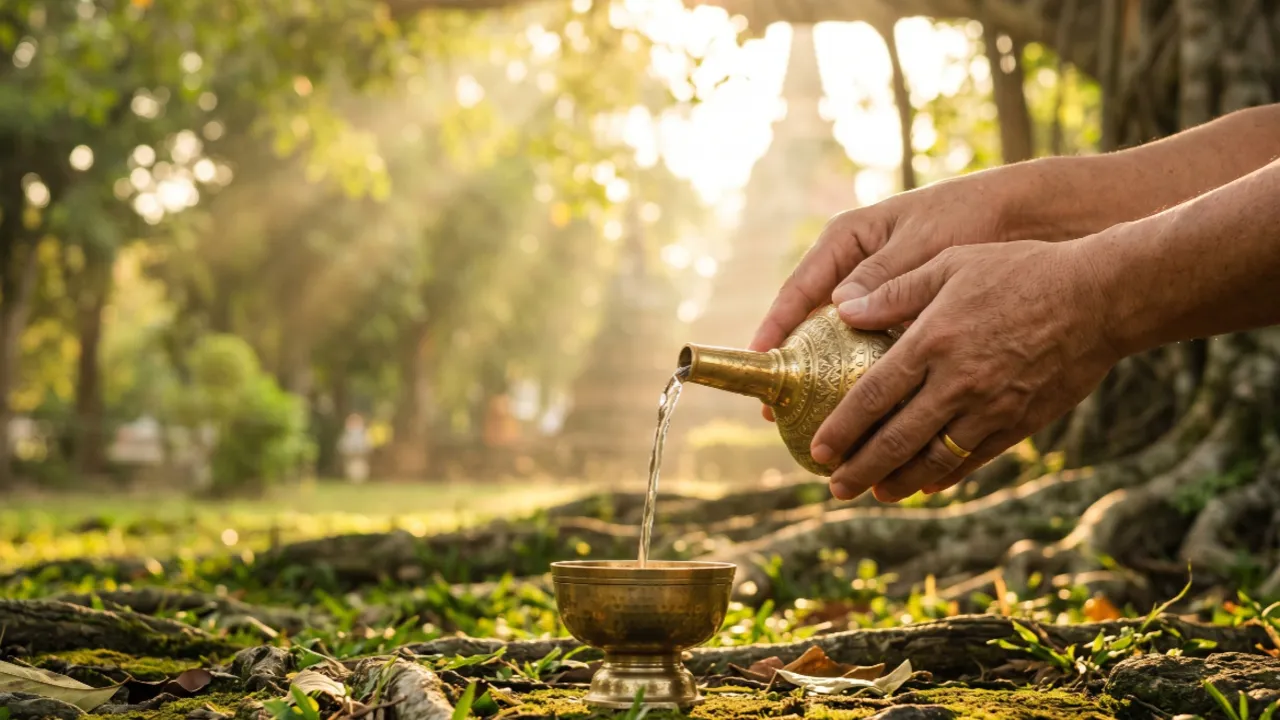
After merit-making, some people pour water — kruat nam — dedicating goodness to those who have passed, or to all beings. Small rituals, repeated gently, keep Buddhism woven into the week.
Tourist temple
วัดท่องเที่ยวGrand architecture, tickets or dress codes at the gate, heavy foot traffic. Still sacred — dress and behave as if it is.
Neighborhood wat
วัดชุมชนQuieter courtyards, local ceremonies, fewer English signs. Ask before photographing people mid-ritual.
Forest / retreat
วัดป่า · สถานปฏิบัติEmphasis on meditation and silence. Follow posted rules closely; this is practice space, not a park.
Ideas you will meet
Beliefs Woven into Daily Speech
แนวคิดที่พบได้ในชีวิตประจำวันYou do not need a philosophy degree. A few living ideas help you read Thai kindness, patience, and temple life more clearly.
Merit
บุญ · กุศลDoing good — giving, helping, keeping precepts — is said to brighten the mind. Temple visits and alms are familiar ways people “make merit.”
Karma
กรรมActions have consequences. In everyday talk it is less “fate” and more a reminder to choose carefully how you treat others.
Metta
เมตตาLoving-kindness — the soft tone behind a smile, a soft voice, and the wish that others be well. You feel it in Thai hospitality.
Impermanence
อนิจจังThings change. This idea underlies calm acceptance at funerals, and the quiet advice not to cling too hard to what passes.
Practical respect
How to Visit a Temple with Care
มารยาทเมื่อเข้าวัดThese habits matter more than knowing every ritual name. Follow them and you will almost always be welcome.
- Cover shoulders and knees Light scarves and long trousers help. Many temples lend wraps at the gate — use them gratefully.
- Remove shoes Leave footwear outside the ordination hall or Buddha image room. Socks are fine.
- Mind your feet Do not point soles at a Buddha image or a monk. Sit with legs folded to the side when possible.
- Keep the head lower Avoid towering over seated monks or climbing on sacred platforms for photos.
- Photos with restraint No flash during chanting; never use a Buddha image as a joke prop or selfie throne.
- Women and monks In Theravada custom, monks do not take items hand-to-hand from women — place offerings where indicated, or pass via a cloth.
- Quiet voices Temples are for worship and rest. Soft steps, soft talk.
- Give freely, without pressure Donation boxes are voluntary. You do not owe a fee to “be blessed” by a stranger with incense.
For the curious
Ways to Learn More Gently
แนวทางศึกษาอย่างสุภาพIf you want to go deeper than sightseeing, start small. Observation and respect open more doors than rushing into advanced practice.
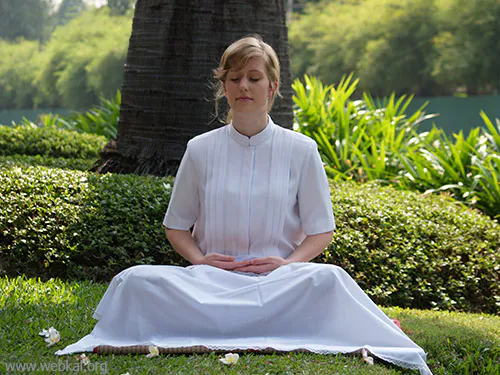
Some temples and retreat centers welcome visitors for short sitting periods. Wear modest clothes — often white for longer practice days — and follow the schedule without turning it into content for social media.
Reading a clear introduction to Theravada Buddhism helps, especially books aimed at newcomers. Pair reading with what you see: alms routes, Wan Phra crowds, candlelight on holy nights.
Cultural workshops can also open a door — flower offerings, basic chanting context, or temple arts — when they are taught with care rather than as costume play.
Watch a Wan Phra
วันพระLunar holy days bring more people to the wat. Arrive early, dress modestly, and observe without interrupting offerings.
Sit briefly
นั่งสมาธิสั้นๆTen quiet minutes in a hall can teach more than an hour of rushing between chedis. Leave before you feel restless and loud.
Join with care
เรียนรู้ผ่านวัฒนธรรมExplore respectful cultural experiences on our workshops & culture page — and choose hosts who emphasize meaning over spectacle.
You do not need to convert, chant perfectly, or claim enlightenment. Curiosity held with humility is already a good beginning.
Through the year
Important Buddhist Days
วันสำคัญทางพระพุทธศาสนาในรอบปีThailand follows the lunar calendar for most Buddhist holy days, so Gregorian months shift slightly each year. Below is the usual order through a Thai year — useful for travelers who want to understand the rhythm of faith.
-
Year-round · Lunar fortnights
Wan Phra (Uposatha)
วันพระRecurring holy days on the lunar calendar — often full moon, new moon, and quarter moons. Many people visit temples, keep precepts more carefully, and offer food. Not always a public holiday, but a steady heartbeat of the year.
Weekly rhythm -
February – March
Makha Bucha
มาฆบูชาMarks the gathering of 1,250 disciples who came to hear the Buddha without being summoned. Temples fill for evening candle circumambulation (wien thien). A national holiday in Thailand.
Public holiday -
May
Visakha Bucha
วิสาขบูชาThe most important day: commemorating the Buddha’s birth, enlightenment, and passing — all remembered on the full moon of the sixth lunar month. Expect packed temples, flowers, incense, and quiet night walks with candles.
Public holiday · Highest day -
July
Asalha Bucha
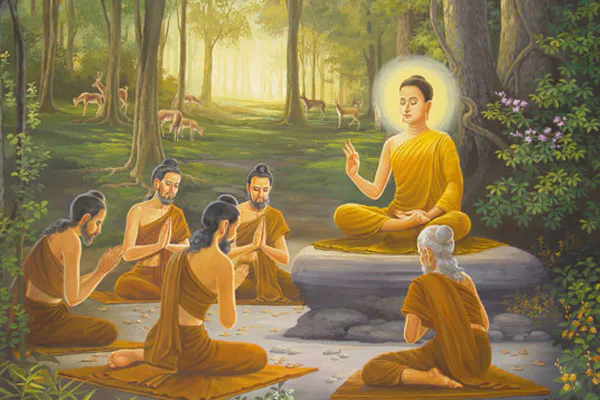
อาสาฬหบูชาCelebrates the Buddha’s first sermon at the Deer Park — the turning of the Wheel of Dhamma — and the birth of the Sangha. Another major holiday with temple rites and candlelight.
Public holiday -
July · Day after Asalha
Khao Phansa
เข้าพรรษา · เริ่มต้นพรรษาBuddhist Lent begins. Monks remain in one monastery for the rains retreat. Laypeople often offer candles, robes, and resolve to reduce drinking or keep precepts more carefully for the season.
Public holiday · Lent begins -
October
Ok Phansa
ออกพรรษา · สิ้นสุดพรรษาThe rains retreat ends. Temples feel festive again; some regions hold boat processions or special alms. A moment of release after three months of restraint.
End of Lent -
October · Day after Ok Phansa
Tak Bat Devo
ตักบาตรเทโวRemembers the Buddha’s descent from Tavatimsa heaven. In many places, monks walk down a temple stair or hillside while laypeople offer alms in long lines — a beautiful morning to witness respectfully.
Special alms -
October – November · One lunar month
Kathina
ทอดกฐินA joyful season of offering robes and support to monasteries that completed the rains retreat. Communities choose a day within the month; expect processions, music in some regions, and crowded merit-making.
Robes offering season
Dates move with the moon. Check Thailand’s official holiday calendar each year before you plan temple visits around Makha, Visakha, Asalha, or Khao Phansa.
Keep exploring
Back to Thai Culture
From morning alms to festival nights — manners, dress, and living traditions that help you meet Thailand more gently.