ThailandLover Contact

หนองบัวลำภู

Nong Bua Lamphu

Lotus Marsh of Upper Isan

In the quiet heart of upper Isan, Nong Bua Lamphu gathers lotus marshes, Phu Phan foothills, and the memory of a fortified town once named for blooming lotus walls — a province of slow fields and deep roots.

01

Geography & Climate

High Plains & Phu Phan Edge

Nong Bua Lamphu sits in upper northeastern Thailand — about 3,859 square kilometres and roughly 520–610 kilometres from Bangkok by road, depending on the route. Udon Thani opens to the north and east, Khon Kaen to the south, and Loei to the west.

Most of the land is a high Isan plain averaging around 200 metres above sea level — rice country and open sky — while the east lifts into the Phu Phan Range and wooded ridges such as Phu Phan Noi and Phu Kao–Phu Phan Kham. Six districts share the map: Mueang Nong Bua Lamphu, Non Sang, Si Bun Rueang, Na Klang, Suwannakhuha, and Na Wang.

The climate is tropical savanna monsoon. Cooler, clearer days settle from about November to February; March to May is the hot stretch; rains green the paddies from roughly May through October.

Best time: November – February for cool, dry days and clear Phu Phan views; May – October for deep green fields and quieter green-season travel.

Nong Bua Lamphu landscape

02

History & Heritage

From Lotus Fortress to Young Province

Nong Bua Lamphu’s story runs far deeper than its young provincial seal. Local memory reaches more than nine centuries, and the long formal name — Mueang Nong Bua Lum Phu Nakhon Kheuan Khan Kap Kaew Bua Ban — already paints the place: a lotus-marsh city of jewelled fortress walls. Prehistoric settlement shows at sites such as Non Phrao and Non Don Klang in Non Sang, while for centuries the town sat in the orbit of Sri Satana Khanahut (Vientiane).

In 1759 (B.E. 2302), Phra Wo and Phra Ta led settlers from Vientiane to raise walls, moats, and watchtowers here — declaring the fortified lotus city independent of the Lao court. In 1767 (B.E. 2310), King Siribunyasan of Vientiane sent armies to reclaim it; fighting dragged on for years around Phu Phan Kham until Vientiane, with Burmese help, took the town. The founders fled south toward Champasak and later Don Mot Daeng (today’s Ubon Ratchathani). In 1778 (B.E. 2321), under King Taksin of Thonburi, Chao Phraya Chakri marched north, drove Vientiane’s forces back, and brought the Emerald Buddha home to Siam — a campaign that still ties this marsh fortress to Thailand’s Lao frontier.

Administrative names shifted with the Bangkok kings. In 1890 (B.E. 2433) the town was briefly renamed Mueang Kamutthasai; by 1906 (B.E. 2449) Nong Bua Lamphu returned, and in 1907 (B.E. 2450) it was reduced to a district under Udon Thani. On 1 December 1993 (B.E. 2536) it rose again as Thailand’s 74th province — six districts carved from Udon Thani: Mueang Nong Bua Lamphu, Non Sang, Si Bun Rueang, Na Klang, Suwannakhuha, and Na Wang.


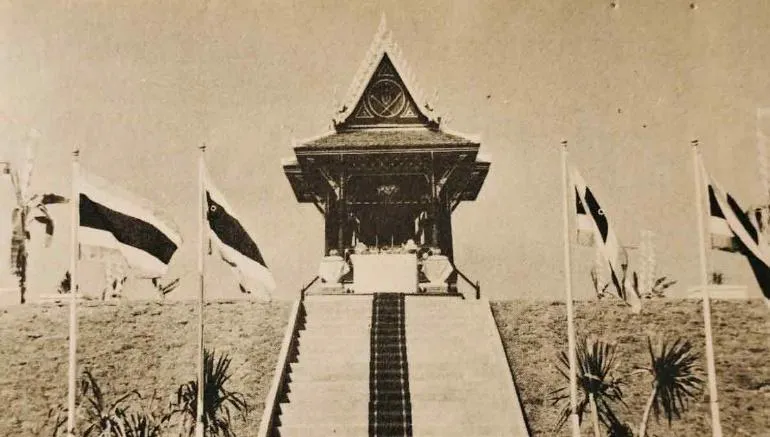
Nong Bua Lamphu heritage

03

Top Attractions

Places Not to Miss

Cave temples, Phu Phan ridges, fossil beds, and reservoir villages — places that shape a Nong Bua Lamphu journey, listed A to Z.

Ban Tha Lat

Ban Tha Latบ้านท่าลาด · คลังปลาแห่งที่ราบสูง

A fishing village on the Ubol Ratana reservoir shore that calls itself the fish pantry of the plateau. Come for pla som sai diao — fermented fish wrapped in torn banana-leaf strips — and the floating sadung rafts where families still live and work on the water.

Location · Nong Ruea Subdistrict, Mueang Nong Bua Lamphu

Fossil Shell Museum

Fossil Shell Museumพิพิธภัณฑ์หอยหิน 150 ล้านปี · ไดโนเสาร์โนนทัน

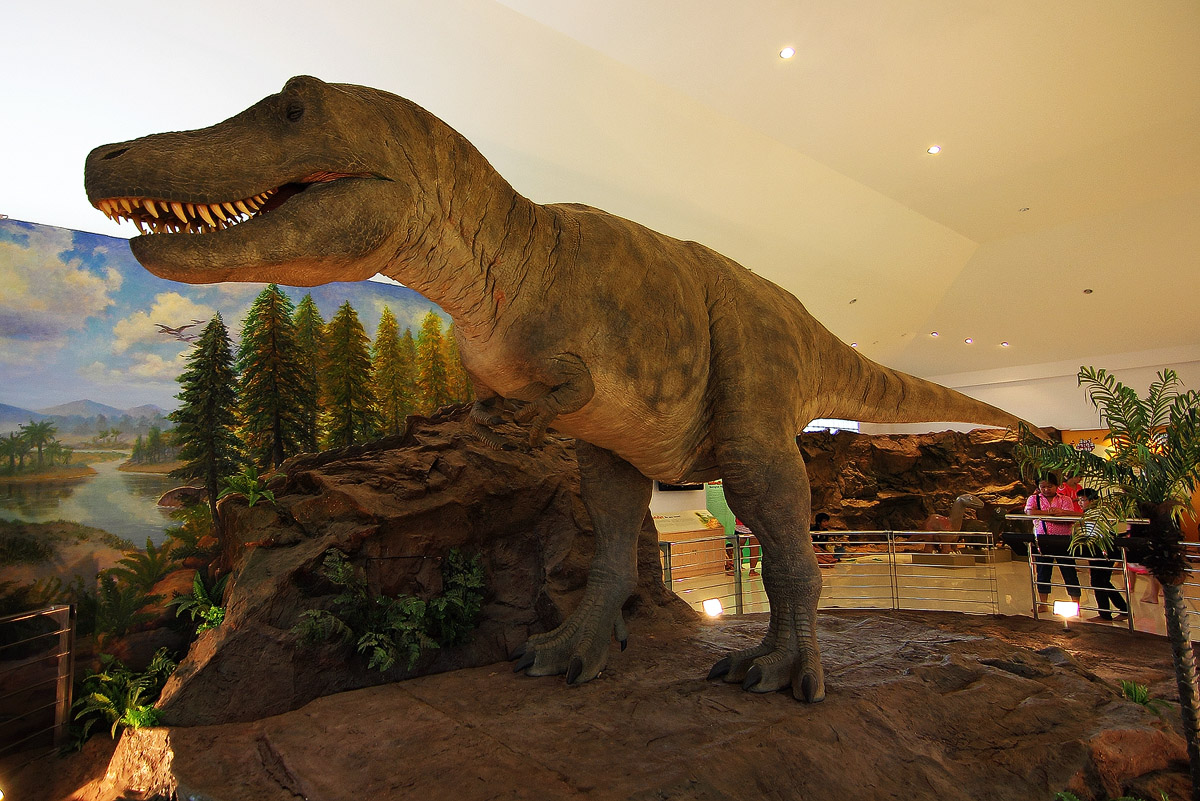
A site museum at an old sandstone quarry where bivalve fossils about 150 million years old surfaced in 1994 — plus dinosaur finds from Ban Huai Duea. Six indoor zones run from solar system to Jurassic hunters; outdoors, an animatronic Siamotyrannus isanensis model anchors the open-air dinosaur park.

Location · Ban Huai Duea, Mueang Nong Bua Lamphu District

Huai Pha Wang Reservoir

Huai Pha Wang Reservoirอ่างเก็บน้ำห้วยผาวัง

A blue bowl of about 530 rai tucked among hills — roughly 2.4 million cubic metres of water and cool evening air. Rafts, birds skimming the surface, and Phu Cham Noi on the rim make it an easy nature pause outside town.

Location · Mueang Nong Bua Lamphu District

Phu Kao–Phu Phan Kham National Park

Phu Kao–Phu Phan Kham National Parkอุทยานแห่งชาติภูเก้า-ภูพานคำ

About 322 square kilometres of Phu Phan ridges, dipterocarp forest, and the northern shore of Ubol Ratana Lake. November paints the dry forest gold; Hor Sawan cliff decks, Phu Phan Kham’s mountain gap, Tad Fa waterfall, and prehistoric rock-art caves such as Tham Suea Tok and Tham Pha Lai reward a full day.

Location · Non Sang District (park HQ by Ubol Ratana Lake)

Phu Phan Noi

Phu Phan Noiภูพานน้อย

A Phu Phan ridge only about six kilometres from the city — dry forest, herbs, camping clearings, and a night panorama of town lights. Late rains bring a sea of mist over the plains; bike trails and short walks fill the forest zone.

Location · Nong Bua Subdistrict, Mueang Nong Bua Lamphu District

Suwannakhuha Cave

Suwannakhuha Caveถ้ำสุวรรณคูหา · วัดถ้ำสุวรรณคูหา

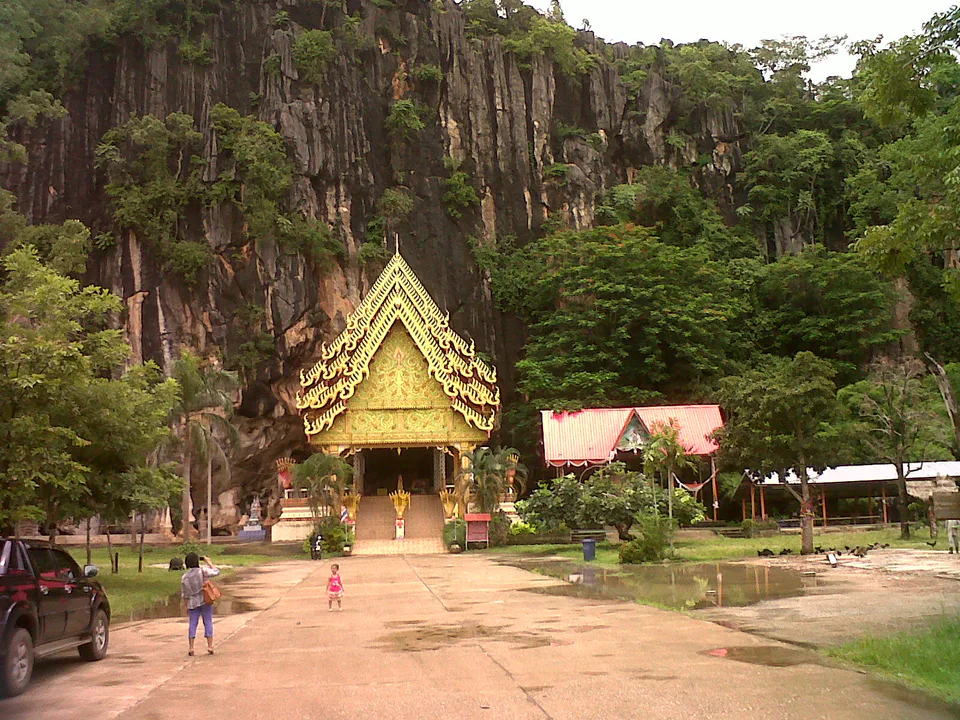
A sacred cave complex on Highway 210 holding Lan Xang-era faith — including a statue linked to King Chaiyachetthathirat of Vientiane — plus side chambers such as Tham Chaeng, Tham Mue, and Tham Kaew. History, cool stone, and quiet merit in one stop.

Location · Ban Khuha Phatthana, Suwannakhuha District

Tao To Waterfall Forest Park

Tao To Waterfall Forest Parkวนอุทยานน้ำตกเฒ่าโต้ · ช่องน้ำจั่น

A forest oasis of strange sandstone shapes and a strong cascade — fullest June to October — on the historic Phu Phan Kham pass once fought over by Phra Wo and Phra Ta. Pair the falls with nearby Chao Pu Lup shrine; ask rangers before swimming.

Location · Mueang Nong Bua Lamphu District (Highway toward Udon Thani)

Wat Tham Erawan

Wat Tham Erawanวัดถ้ำเอราวัณ · ถ้ำช้าง

A cave temple high in a karst that looks like a kneeling elephant — climb about 600 concrete steps to a giant Buddha at the mouth, then walk lit chambers of dripstone, star-shaft skylights, and the Nang Phom Hom legend. About 47 km from town near the Loei border; bring water for the ascent.

Location · Ban Pha In Plaeng, Na Wang District

Wat Tham Klong Phen

Wat Tham Klong Phenวัดถ้ำกลองเพล · หลวงปู่ขาว อนาลโย

A forest cave wat revived in 1958 (B.E. 2501) when Luang Pu Khao Analayo of Ajahn Mun’s lineage made it his rains retreat until 1983. Natural rock halls hold his statue, the ancient two-faced “klong phen” drum, and Buddha images; two kilometres on, his memorial museum and chedi complete the pilgrimage.

Location · Non Than Subdistrict, Mueang Nong Bua Lamphu District

Wat Tham Pha Cho

Wat Tham Pha Choวัดถ้ำผาเจาะ

A cliff pierced by a natural cave “drilled” through the mountain — Buddha images on the summit terrace, wide views over Ban Pha Cho and Na Wang, and a local tale of a yaksa’s basket tied to Phra That Phanom lore. Paths are steep and gorge-like; move carefully.

Location · Ban Pha Cho, Thep Khiri Subdistrict, Na Wang District

04

Local Flavours & Food

Som Tam Trays, Fish Laab & Duck Heat

Nong Bua Lamphu eats with Isan heat on the table — som tam in every shade, fish and duck laab, clay-pot noodles, and reservoir pla som from Ban Tha Lat when you want the plateau’s fish pantry on a plate. Garden rooms and pond huts slow the meal down; night pubs and steak houses keep the chilli going after Phu Phan days. Start with the fifteen tables below; hours can change, so check before you go.

Where to Eat

Tables Worth the Detour

Som tam trays, fish and duck laab, clay-pot noodles, garden rooms, and easy steaks — Nong Bua Lamphu’s tables, listed A to Z. Hours can change; tap Location for the latest pin.

Don Khi Som Tam

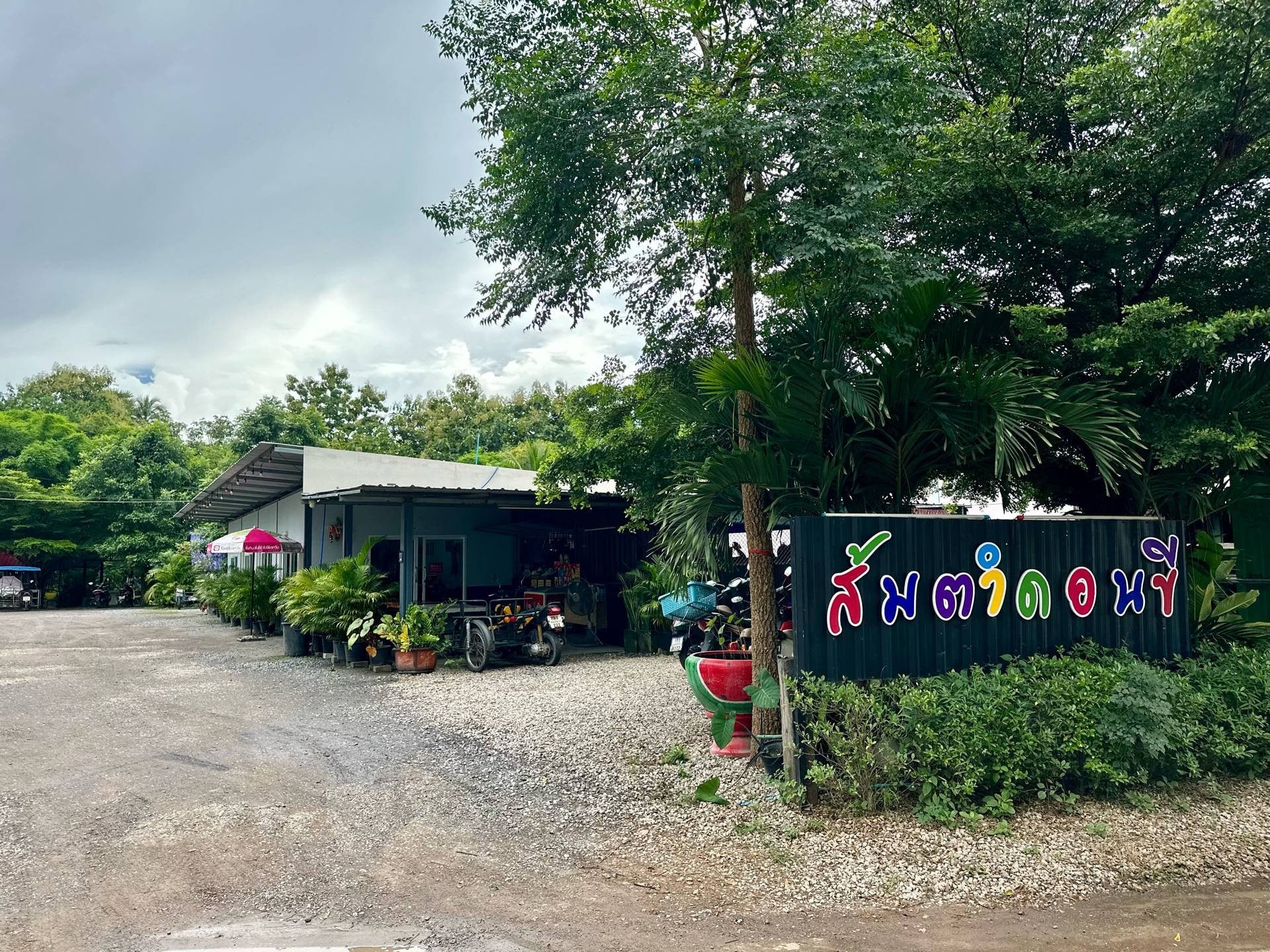
Don Khi Som Tamส้มตำดอนขี

Daily · check hours

A full-tray Isan house that rarely lets anyone leave hungry — som tam in many styles, bamboo-shoot curry, grilled little chicken, apple snails, and tom super with generous sides.
Locals call it a crawl-out meal; come ravenous, or share across the table when the room is packed.

Location · Mueang Nong Bua Lamphu District

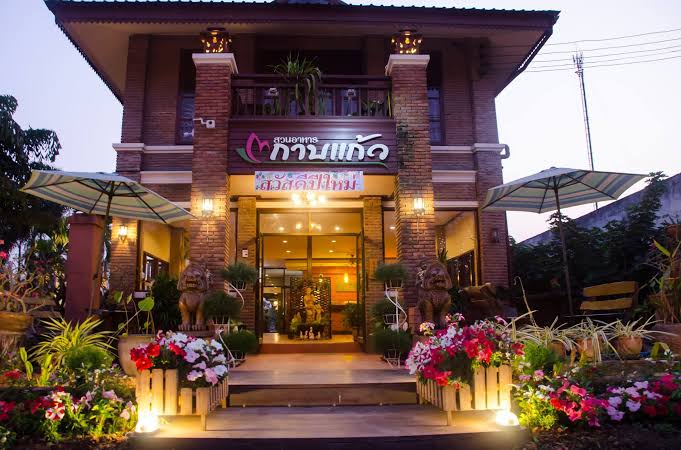
Kab Kaew Garden Restaurant

Kab Kaew Garden Restaurantสวนอาหารกาบแก้ว

Daily · lunch kitchen; garden dining from evening

A garden Thai room that feels like a resort at noon and opens wider as a suan ahan after dark — free-range chicken fried or in tom yum when the kitchen can spare a bird.
Ask for the house gai ban plates; other Thai classics keep pace with the garden air.

Location · Mueang Nong Bua Lamphu District

Kuaitiao Mo Din

Kuaitiao Mo Dinก๋วยเตี๋ยวหม้อดิน

Daily · check hours

A clay-pot noodle and made-to-order stop prized for loaded yen ta fo — fresh toppings, clean broth, and a price that still feels generous.
Crispy-pork rice is the second order when you want crunch after the soup bowl.

Location · Mueang Nong Bua Lamphu District

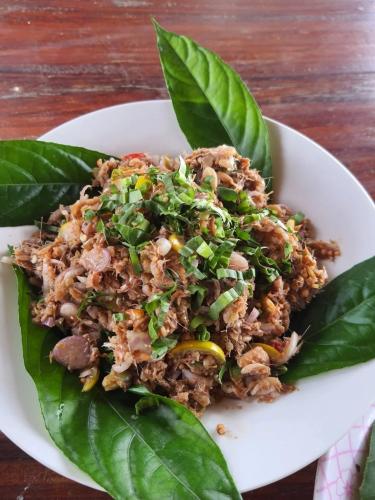
Laab Ped Non Sombun

Laab Ped Non Sombunลาบเป็ดโนนสมบูรณ์

Daily · about 12:00–21:00

Home-style Isan duck laab made by the owners themselves — sharp, warm, and true to the province’s duck-laab habit — with tom, fry plates, and duck noodle soup on the side.
The room feels like a friend’s house; open from noon into the evening.

Location · Non Sombun, Mueang Nong Bua Lamphu District

Laab Pla Lung Sak

Laab Pla Lung Sakลาบปลาลุงศักดิ์

Daily · check hours

Wooden field pavilions outside town — no air-con, open breeze, and Thai–Isan plates with fried Nile tilapia that locals praise with sticky rice.
Come for a quiet countryside table when city heat feels too close.

Location · Outskirts of Mueang Nong Bua Lamphu

Lung Tum Saep Sadeut

Lung Tum Saep Sadeutลุงตั้มแซ่บสะเดิด หนองบัวลำภู

Daily · check hours

A small, heartfelt som-tam stall with friendly service and village-room energy — salted-egg corn tam and tam mua lead the spicy list.
Double the corn tam when the sweet-heat balance hits; prices stay neighbourhood-kind.

Location · Mueang Nong Bua Lamphu District

Pak Poet Som Tam Branch 1

Pak Poet Som Tam Branch 1ส้มตำปากเปิด สาขา 1 · ท่าเดื่อดอนขี

Daily · check hours

An easy roadside Isan stop at the Ban Tha Duea Don Khi red light — pla ra som tam with crisp papaya, sweet grilled fish, and chicken on the charcoal.
Unfussy room, strong flavour; useful when you are already on the Don Khi food run.

Location · Tha Duea Don Khi traffic light junction, Mueang Nong Bua Lamphu

Parinya Restaurant

Parinya Restaurantปริญญาเรสเตอรองท์ หนองบัวลำภู

Daily · check hours

A well-known fusion–Thai room with open air, parking, and karaoke when the table turns festive — long-bean tam, tom yum pla khang, Chinese-plum sea bass, fish cakes, and prawns in tamarind sauce.
Book when the group wants a louder night without leaving town.

Location · Mueang Nong Bua Lamphu District

Phiao On Laab Pla Wang Muen

Phiao On Laab Pla Wang Muenร้านเพี้ยอ่อนลาบปลาวังหมื่น

Daily · check hours

A spacious Isan fish house between Loei and Khon Kaen — fried fish, fish tom, and fish laab in true home-kitchen heat.
Pull over when the highway run needs a proper sticky-rice table and fast service.

Location · On the Loei–Khon Kaen corridor, Nong Bua Lamphu

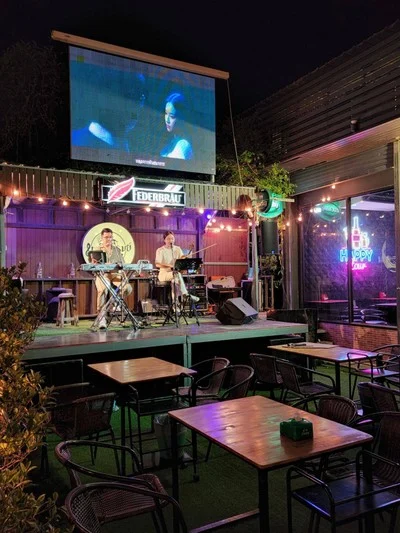
Phloen Phirom

Phloen Phiromเพลินภิรมย์

Daily · evenings · live music

A pub-and-restaurant hybrid with indoor and outdoor seats, parking out front, and live music after dark — fish-sauce prawns, thick seafood tom yum, and glass-noodle yum for sharing.
Come when dinner wants chilli, cold drinks, and a soundtrack.

Location · Mueang Nong Bua Lamphu District

Phon Khlai Steak

Phon Khlai Steakผ่อนคลายสเต็ก

Daily · check hours

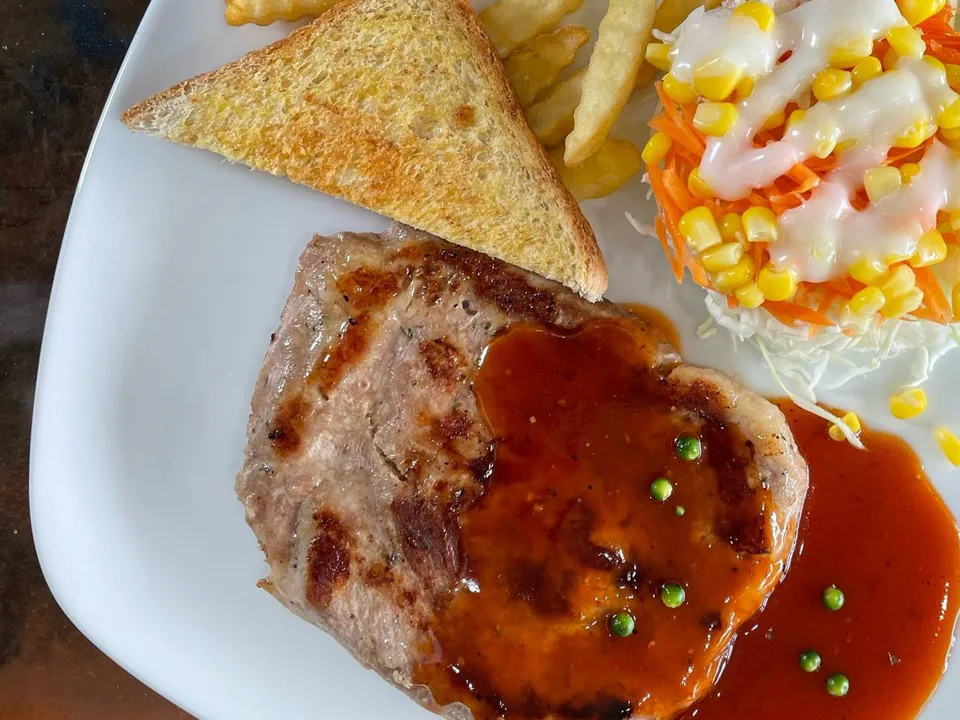
A bigger, busier steak room after expansion — pork, chicken, and fried-fish steaks in generous portions, with yum plates to cut the richness.
Local-friendly prices and full plates; useful when the day was caves and Phu Phan and the night wants something familiar.

Location · Mueang Nong Bua Lamphu District

Sawan Ban Na

Sawan Ban Naสวรรค์บ้านนา

Daily · check hours

Little huts stepping into a pond — café calm with Thai–Isan heat: salted-egg corn tam, seafood yum, santol tam, basil prawn rice, and fresh prawns with lotus stem.
Seafood comes clean and plentiful; order a pla ra yum when you want to sip the dressing.

Location · Mueang Nong Bua Lamphu District

Som Tam Boonrod

Som Tam Boonrodส้มตำบุญรอด หนองบัวลำภู

Daily · check hours

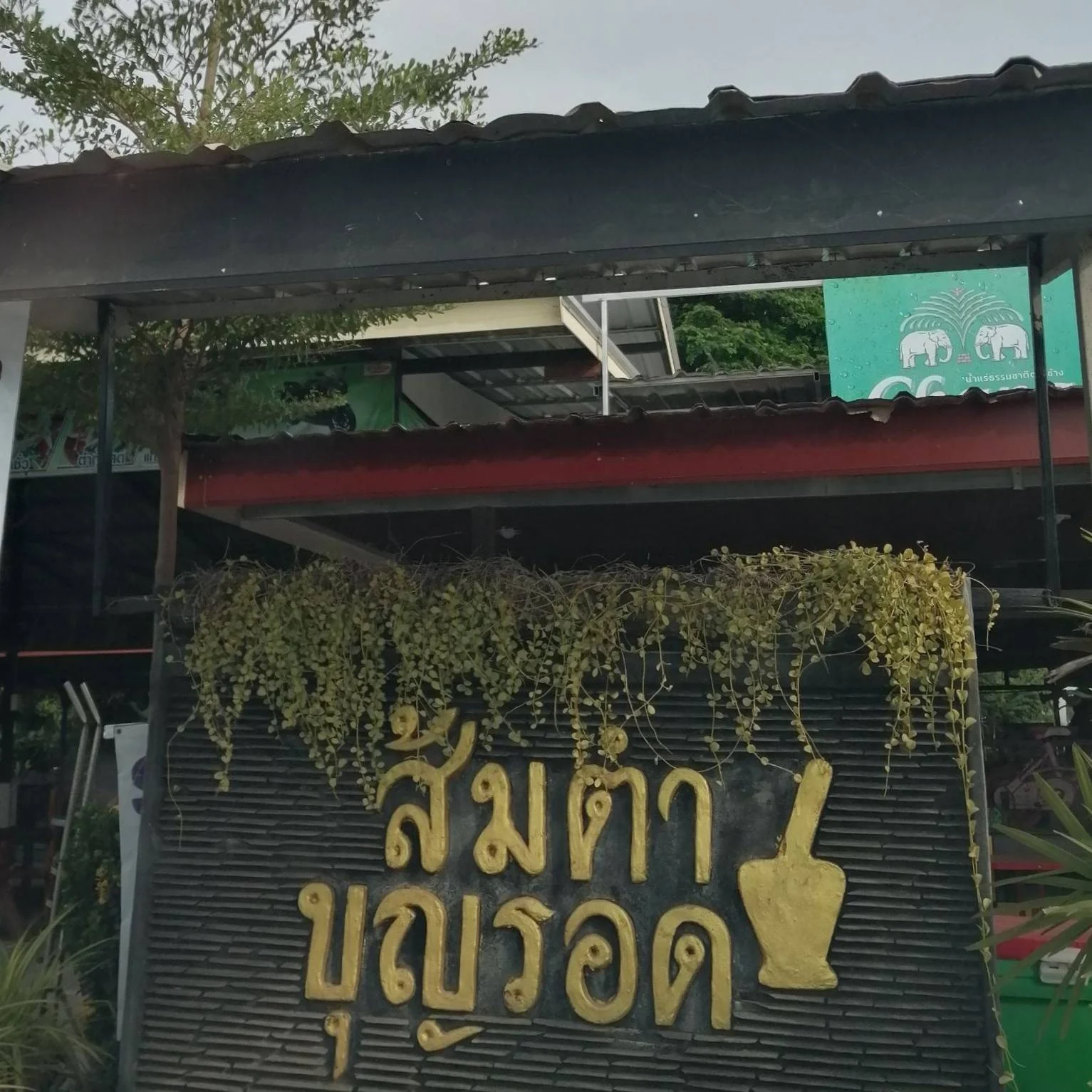
An Isan favourite that grew from a small stall into a larger room without losing the heat — crab tam that locals call deeply nua, and charcoal fish that arrives sweet and fresh.
Come for the classic som-tam-and-pla-phao pairing that still defines the province’s night table.

Location · Mueang Nong Bua Lamphu District

Tum Home

Tum Homeตุ้มhome

Daily · check hours

A clean, simple Thai–Isan room for everyday plates — fried pla som, fried beef, mixed vegetables with prawns, duck laab, hor mok, and tom yum pla khang.
Finish with mixed fruit when you want a soft close after chilli.

Location · Mueang Nong Bua Lamphu District

Wang Ngoen–Wang Thong Khoi Laab

Wang Ngoen–Wang Thong Khoi Laabร้านวังเงิน-วังทองก้อยลาบ

Daily · check hours

A one-page Isan menu and a big seating hall — try jangko (pork or beef wok’d with oyster sauce, lemongrass, and makrut lime leaf), pork om, and olive som tam in Lao style.
Village heat, strange-name specials, and a room built for crowds.

Location · Mueang Nong Bua Lamphu District

05

Souvenirs from Nong Bua Lamphu

Rice-Water Cloth, Mam & Reservoir Fish

Nong Bua Lamphu packs soft power into a bag — Ban Na Kham Hai cloth softened in Phua Long rice water, mudmee cotton bags, mam and sausages from Phu Kao Food, and som khai pla from the Ubol Ratana shoreline. Fill the fabric side first, then leave room for a sealed snack pack and a small herbal bottle before you leave the plateau.

  • Ban Na Kham Hai handwoven clothผ้าทอพื้นเมืองบ้านนาคำไฮ · เทวาผ้าไทย · ผ้าฝ้ายหมักน้ำซาวข้าวผัวหลง The province’s textile soft power — cotton (and silk) from Ban Na Kham Hai, led by brands such as Taywa Thai Cloth. Yarn is soaked in water from Phua Long, the local sticky-rice variety, so the cloth turns soft, smooth, and bright — without the dull tone of mud-ferment dyeing. Two-faced mudmee–kheet pieces and natural dyes make the best yardage to bring home.
  • Cotton mudmee bagsกระเป๋าผ้าฝ้ายมัดหมี่ · ด่านช้าง · เก่ากลอย Handwoven cotton mudmee cut and sewn into modern shoulder bags by makers in Dan Chang (Na Klang) and Kao Kloi. Local pattern, everyday carry — an easy craft gift that still reads as Nong Bua Lamphu.
  • Fried insect snacksแมลงทอด · จิ้งหรีด · สดิ้ง · ดักแด้ Ready-to-eat packs of fried crickets, stink bugs (sadung), and silkworm pupae — high-protein Isan snacks that travel well. Pick sealed bags from souvenir counters when you want a crunchy plateau bite for the road.
  • Herbal black-hair shampoo & tonerแชมพูสมุนไพรผมดำ · โทนเนอร์สมุนไพร Hair and skin care from local herbs — black-hair shampoo and facial toner bottled for everyday use. Small, light, and distinctly Nong Bua Lamphu when you want a non-edible gift.
  • Mam & Isan sausagesหม่ำ · ไส้กรอกหมู/เนื้อ · ภูเก้าฟู้ด Fermented mam (pork or beef) and Isan sausages from souvenir shops and processors such as Phu Kao Food — plus glass-noodle pork recipes built for travel. Vacuum packs keep the chilli and garlic loud until you open them at home.
  • Mudmee silk & mi kheet clothผ้าไหมมัดหมี่ · ผ้าหมี่ขิด Community looms across the province still weave mudmee silk and mi kheet with local motifs — from Ban Na Kham Hai’s two-sided pieces to silk-kheet groups such as Ban Pho Kham in Na Klang. Choose a length, a sin, or a shawl when you want pattern as the gift.
  • Som khai plaส้มไข่ปลา · ของฝากท้ายเขื่อนอุบลรัตน์ A signature OTOP ferment from communities below Ubol Ratana Dam — fish roe cured to a mellow sour, ready to fry or steam. Pair with Ban Huai Bong pla som (sai diao and other styles) when you want the reservoir’s fish pantry sealed for the journey home.

06

Local Culture & Vibe

Rockets, Rice Soul & Heet Sip Song

Nong Bua Lamphu’s year still turns on Heet Sip Song Khlong Sip Si — the twelve Isan rites that stitch rain, rice, and merit into one calendar. Rockets ask Phaya Thaen for the wet season; giant khao ji and Mahachat sermons fill temple yards; after harvest, communities bless the rice soul on the threshing floor. Come for a festival and you meet the province at its most itself: devout, communal, and proudly plateau Isan.

  • Bun Bang Fai — Rocket Festivalประเพณีบุญบั้งไฟ · บุญบั้งไฟล้าน Each year in the sixth lunar month (usually May–June), Nong Bua Lamphu Municipality and districts such as Si Bun Rueang raise bang fai and bang fai lan under Heet Sip Song — asking for rain and binding the community. Spectacular rocket processions, parade floats, Pha Daeng–Nang Ai troupes, folk play, and free concerts fill grounds such as King Naresuan Stadium; the Ministry of Culture still lists it among the province’s signature rites.
  • Bun Khao Ji Yak — Giant Grilled Sticky Riceประเพณีบุญข้าวจี่ยักษ์ In Suwannakhuha District, communities gather at Wat Tham Suwannakhuha to keep Bun Khao Ji Yak alive — merit through sharing giant grilled sticky-rice cakes, often paired with gold-leaf homage to Luang Pho Phra Chaiyachetthathirat in the cave. A winter–early-year temple day of generosity, faith, and local pride.
  • Bun Khun Lan — Rice-Soul Blessingประเพณีบุญคูณลานสู่ขวัญข้าว After the harvest, villages honour Mae Phosop and call the rice soul back to the threshing floor — Bun Khun Lan Su Khwan Khao. Alms, sermons, rice-pounding or threshing shows, bai sri rites, and mor lam keep the farmer’s calendar alive; communities such as Wat Si Sa-at in Na Klang still stage the rite with provincial culture support.
  • Bun Pha Wet — Mahachat Sermon Meritประเพณีบุญผะเหวด The annual listening to the Mahachat (Vessantara Jataka) — Bun Pha Wet — remains a deep Isan merit day in Nong Bua Lamphu. Districts such as Non Sang, and communities including Kha Yai in Mueang, host processions and full-day sermons that stitch soft-power tourism to living Heet Sip Song faith.
Nong Bua Lamphu culture

07

Travel Info & Getting There

Plan Your Journey

How to reach Nong Bua Lamphu from Bangkok, and how to move around once you arrive.

From Bangkok

By air

Nong Bua Lamphu has no commercial airport. Fly into Udon Thani (UTH) — about 46 km and roughly 45–60 minutes southwest on Highway 210 — with frequent Bangkok hops of about 60–70 minutes from Don Mueang and Suvarnabhumi (Thai AirAsia, Nok Air, Thai Lion Air, Thai Airways, and others). After landing, vans and coaches from Udon’s bus terminal run into Nong Bua Lamphu for about 50–80 baht; a chartered airport car is about 700–1,200 baht. Rent a car at UTH if Wat Tham Erawan, Phu Phan ridges, and the fossil museum are on your list — Highway 210 is mostly four lanes toward Loei.

By car

About 520–610 km from Bangkok depending on the road. The classic run is Highway 1 (Phahonyothin) to Saraburi km 107, then Highway 2 (Mittraphap) through Nakhon Ratchasima, Khon Kaen, and Udon Thani; peel onto Highway 210 through Nong Wua So into town — about 608 km and roughly 7–8 hours with stops. A shorter plateau cut leaves Khon Kaen on Highway 2109 past Nam Phong and Ubol Ratana Dam into Non Sang — about 559 km. Another option is Highway 228 via Chaiyaphum and Si Bun Rueang — about 518 km. Keep the wheels for Erawan Cave, Suwannakhuha, and Phu Phan Noi; town hotels usually have parking.

By train

There is no passenger railway into Nong Bua Lamphu. Take the Northeastern Line from Krung Thep Aphiwat to Udon Thani (about 6–9 hours depending on the train — overnight sleepers land near dawn), then continue by van, coach, or taxi about 45–60 minutes on Highway 210. Book berths ahead for cool-season and Bun Bang Fai weekends on the SRT D-Ticket app; Grab or a songthaew finishes the last hop from Udon station to the bus terminal if you are not hiring a car.

By bus

Air-conditioned coaches from Bangkok’s Mo Chit 2 (Chatuchak) cover about 520–580 km in roughly 7–9 hours and drop at Nong Bua Lamphu Bus Terminal — with some services continuing to Na Wang, Suwannakhuha, or toward Sangkhom. Transport Co (999), Sawasdee Isan, and other Isan operators share the corridor — morning seats and many evening overnight runs that land near dawn. Book ahead for long weekends and rocket-festival week; vans from Udon Thani remain the easy short hop if you flew or trained there first.

Getting around

The town centre is compact for songthaews, motorbike taxis, and walking between the lotus marsh, markets, and nearby wats. Grab can be thin. For Wat Tham Erawan (about 47 km toward Loei on Highway 210), Wat Tham Klong Phen, Phu Phan Noi, Tao To waterfall, Suwannakhuha Cave, and the fossil museum, rent a car at Udon Airport or hire a local driver for the day — public transport does not thread the cave-and-ridge circuit easily. Scooters hire if you are confident on Isan roads; carry water for the Erawan steps.

Best time to visit

November – February brings cool, dry days, clear Phu Phan views, and easy temple walks — book early for long weekends. March – April is the hot stretch; start cave climbs early. May – October greens the paddies and fills Tao To waterfall; Bun Bang Fai (usually May–June, sixth lunar month) packs the provincial stadium — rooms vanish fast. Pair green-season travel with quieter weekdays if you want mist and empty trails.

Continue the Journey

Nearby Provinces