
Cathedral of Saint Annaอาสนวิหารนักบุญอันนา
One of the oldest Catholic churches on this Mekong bend, raised in 1926 for a Thai–Lao–Vietnamese parish. Twin towers rise above the river — architecture and multicultural faith in one stop.

 ThailandLover
Contact
นครพนม
Sacred Stupa by the Mekong
A slender Mekong province where Phra That Phanom rises above the river, Thai–Lao culture shares one shore, and the old kingdom of Sri Kotrabun still shapes the story of the land.
01
Geography & Climate
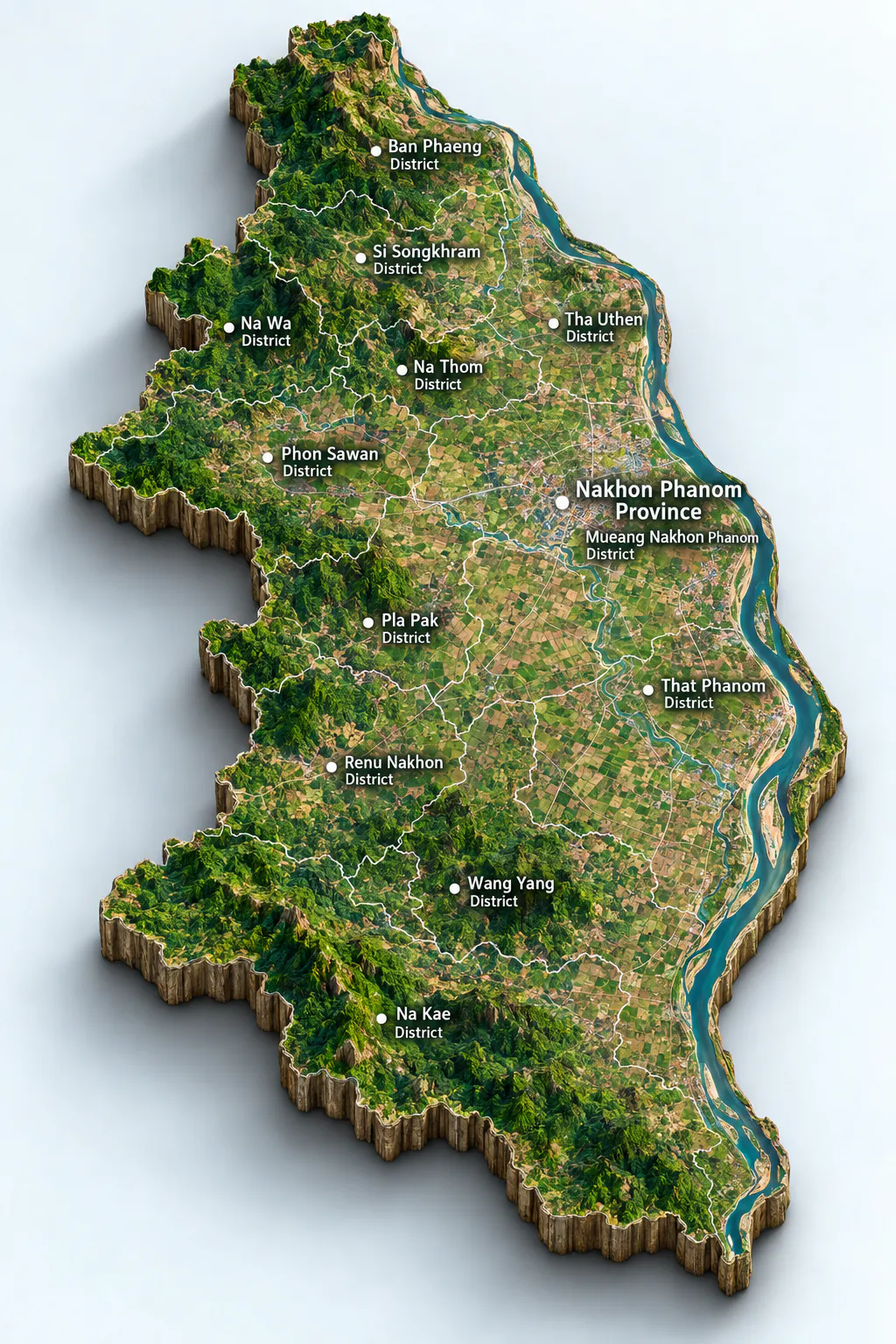
Nakhon Phanom stretches along the right bank of the Mekong in upper northeastern Thailand — about 5,513 square kilometres and roughly 175 kilometres of river frontier, some 740 kilometres from Bangkok. It meets Bueng Kan to the north, Mukdahan to the south, Sakon Nakhon to the west, and Laos’s Khammouane and Bolikhamxai provinces across the Mekong to the east.
Most of the province is open Mekong-valley plain, watered by short tributaries that fan inland from the great river. Upland forest lifts the north around Phu Langka and the south toward the Phu Phan foothills; the Songkhram and Oun rivers mark the wetter northern basin, while the flatter south is threaded by the Kum. The capital sits on the Mekong opposite Thakhek — a classic twin-shore gateway between Thailand and Laos.
The climate is tropical monsoon with one of Isaan’s wetter Mekong belts. Cooler, clearer days settle from about mid-October to mid-February; March to May is the hot stretch; rains and high water arrive from roughly mid-May through mid-October, when riverside life follows the rise of the Mekong.
Best time: November – February for cool dry air, clear Mekong promenades, and easy temple days; October for Illuminated Boat Procession season; May – October for green paddies, fuller rivers, and quieter green-season travel.
02
History & Heritage
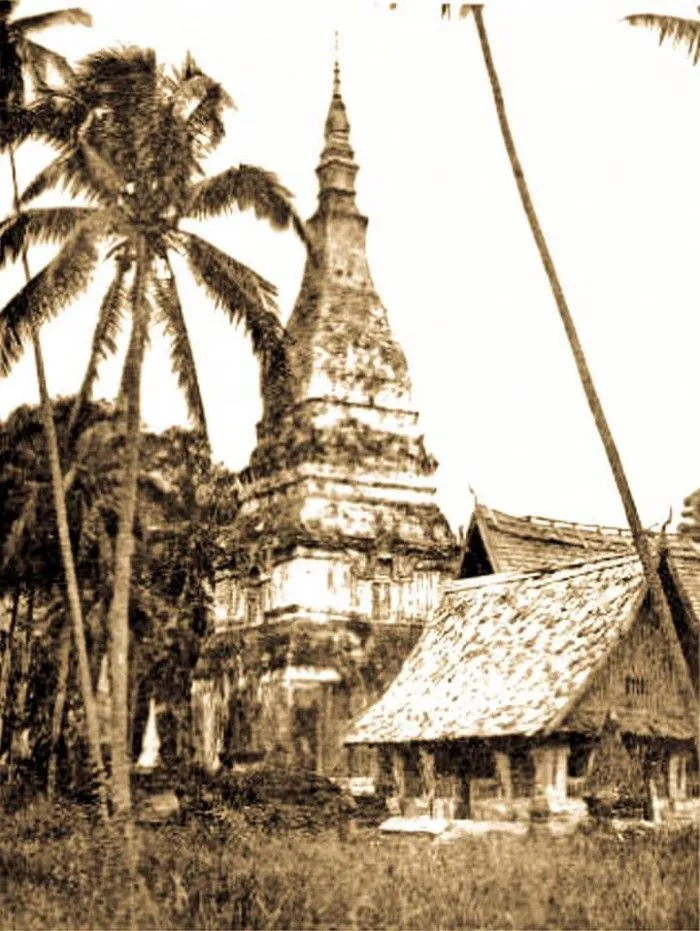
Long before the modern province, this Mekong bend was the heartland of Sri Kotrabun (Si Khottabun) — a flourishing riverside polity of the upper northeast. Local chronicle tradition, including the Urangkhaniphat legend of Phra That Phanom, remembers the Buddha visiting the realm and foretelling that after his parinirvana the city would move to a grove of bamboo, Marukknakhon — a name still echoed in temples and place-memory along both banks.
The first centre is said to have stood on the left (Lao) bank of the Mekong, south of the mouth of the Se Bang Fai, opposite today’s That Phanom. By about the 12th Buddhist century it was an independent kingdom; by the 16th it had fallen under Khmer sway, and by the 18th Sri Kotrabun had become a Lan Xang mueang luk luang — a royal-son city. Lan Xang kings founded a seat at the mouth of Huai Hin Bun, opposite present-day Tha Uthen, and the name of Sri Kotrabun lived on as a Mekong dependency.
The town kept moving with the river’s politics. Later it stood in a bamboo grove by Huai Si Mang on the Lao bank — the old city below today’s Thakhek. In 1754 (B.E. 2297), under Phra Nakharanurak, the settlement was renamed Marukknakhon because it no longer sat at a stream mouth but in that grove of bamboo. Around 1766 (B.E. 2309), after war along the Vientiane frontier, the city crossed to the Thai bank at Pak Bang Huak — today’s Wat Marukknakhon area in Don Nang Hong, That Phanom District. In 1778 (B.E. 2321) Thonburi armies under Chao Phraya Chakri and Chao Phraya Surasi took the Mekong towns down to Vientiane; Marukknakhon entered the Siamese orbit while still governing itself. The next year, under Phra Boromracha (Phromma), the seat shifted again to Ban Nong Chan, about four kilometres south of the present capital, and took the name Nakhon Buri Ratchathani.
In 1786 (B.E. 2329) King Rama I granted the lasting name Nakhon Phanom and placed the city under Rattanakosin. Nakhon keeps the dignity of an old royal town; Phanom — “mountain” — may honour Phra That Phanom itself, or the ridged Lao hinterland that once lay within the same Mekong world. The golden stupa at That Phanom remains the province’s living centre of faith — the sacred mountain of a river kingdom rewritten as a Thai province.
03
Top Attractions
Sacred stupas, Mekong nagas, Phu Langka trails, and riverside town landmarks — places that shape a Nakhon Phanom journey, listed A to Z.
One of the oldest Catholic churches on this Mekong bend, raised in 1926 for a Thai–Lao–Vietnamese parish. Twin towers rise above the river — architecture and multicultural faith in one stop.
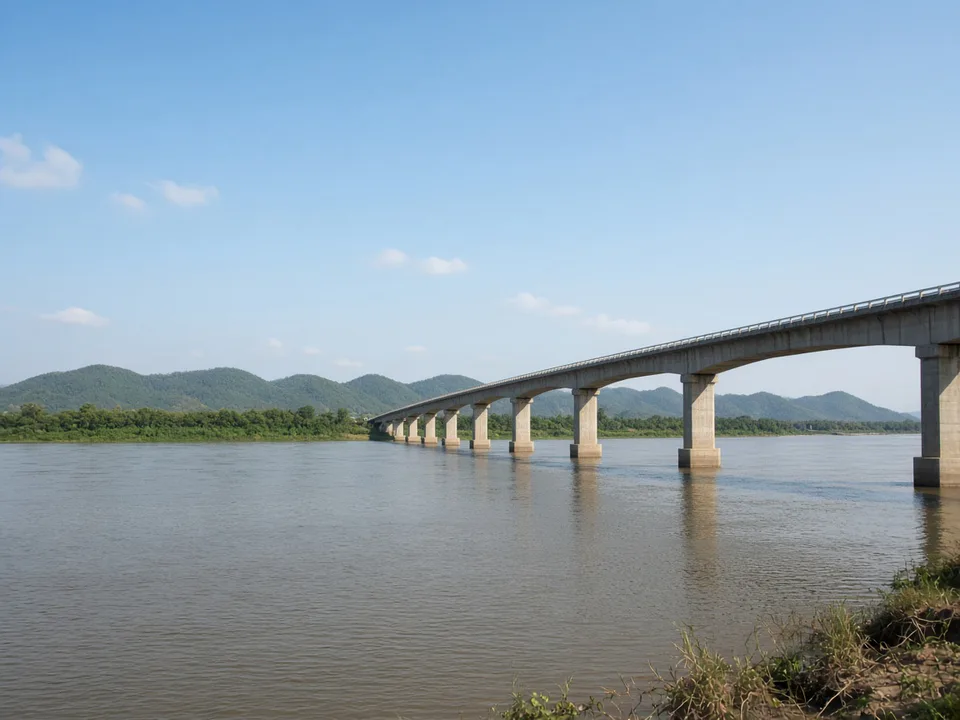
The third Thai–Lao Friendship Bridge links Nakhon Phanom to Khammouane’s Thakhek. Photograph the span from the Thai approach garden, or cross with a passport for a day on the Lao bank.

A yellow colonial mansion that once housed provincial governors, now a museum of civic and river history. Classic verandahs and an easy photo stop a short walk from the Mekong.

Built with Vietnamese support where Ho Chi Minh once lived in exile. The memorial and Ban Nachok house keep a Vietnamese garden feel — fruit trees, simple rooms, and Indochina history on Thai soil.

A one-to-two-hour evening boat — Thai temples and houses on one bank, Lao hills on the other. Catch the sun drop over the water; many boats pass Wat In Plaeng before the last light.

A 307-metre mesh tunnel on the riverside bike path — one of Thailand’s most distinctive Mekong cycling stretches. Ride through with the river beside you; mornings and late afternoons are softest.

A butter-yellow Renaissance-style building in green grounds — among the province’s favourite photo façades. Rare prints inside; the colonnade alone earns the postcard.
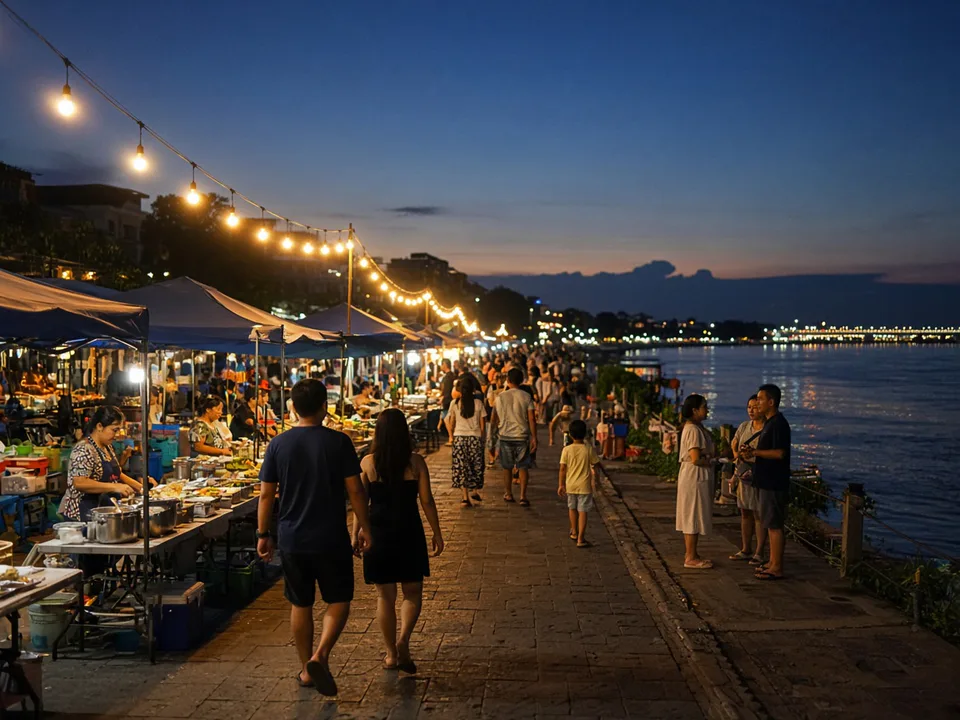
Friday-to-Sunday riverside market from Phaya Si Sattanakharat Plaza toward the clock tower. Short, breezy, and packed with snacks, crafts, and Mekong evening air.

A seven-headed brass naga — about 9,000 kg, six metres wide and fifteen high — watching the Mekong. Faith, sunrise, and night lights make this the city’s modern landmark.

The province’s largest modern chedi, raised as a Mount Meru form across more than twenty rai. Six floors hold practice halls and a museum; Sri Lankan relics crown the upper level.
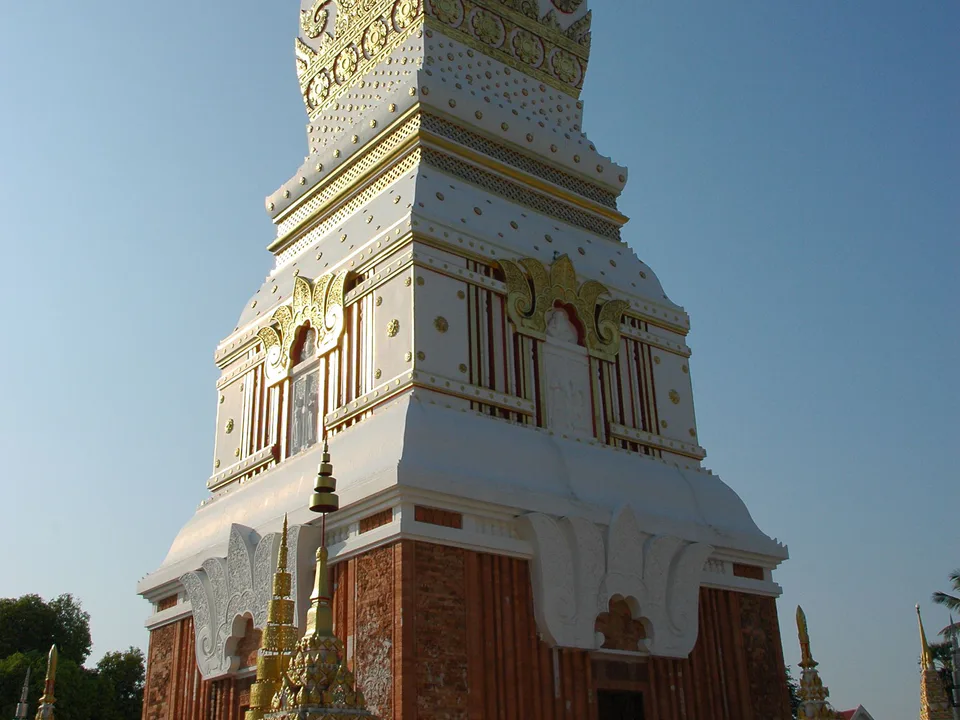
Isaan’s great riverside stupa — believed to enshrine the Buddha’s breastbone relics, and a pilgrimage heart for Thai and Lao devotees. Sunday-born worshippers claim it as their day chedi.
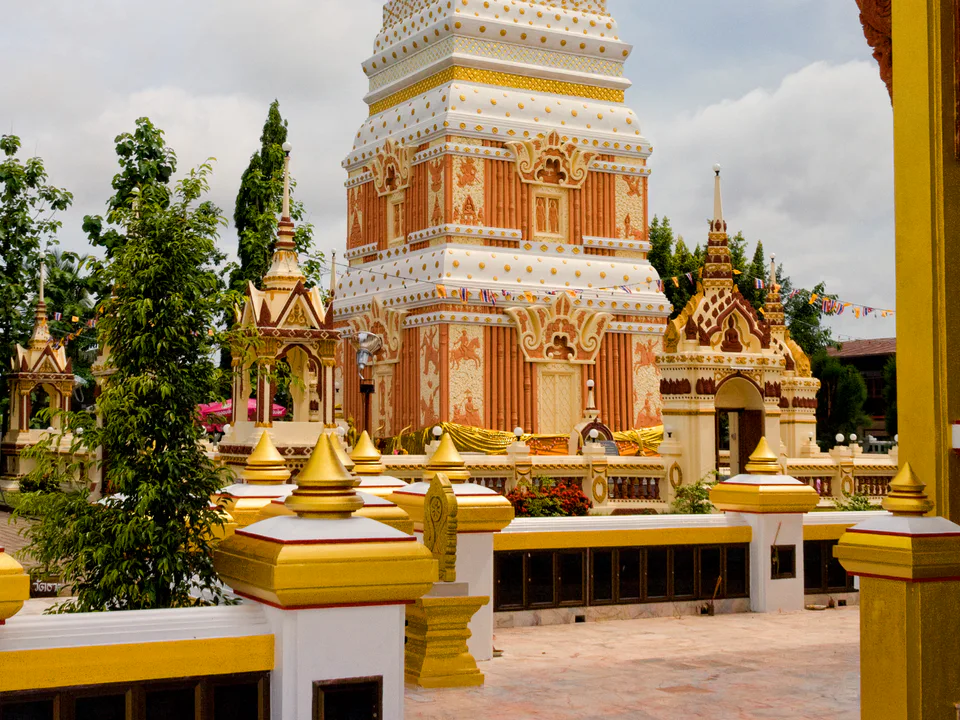
A soft-pink miniature of Phra That Phanom, built about 1917–1920 as Renu Nakhon’s district stupa and the Monday birth-day chedi. Relics and Tripitaka texts rest inside; OTOP stalls circle the courtyard.
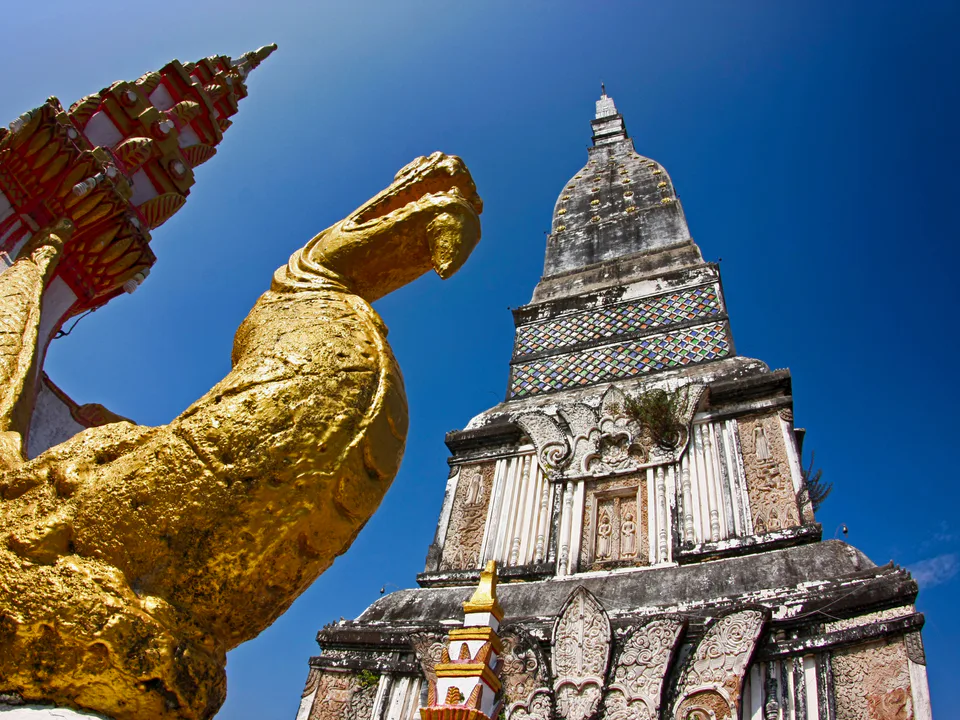
A That Phanom–style chedi from around 1911, holding arahant relics brought from Yangon. Friday-born pilgrims claim it as their day stupa — a calm stop north of the capital.

More than 30,000 rai of forest across Nakhon Phanom and Bueng Kan — ridge trails, waterfalls, and the summit chedi Kong Khao Si Boon Nao, built stone by stone by villagers.

A golden Mekong sand beach that appears only when the river drops — typically February to May. Walk the glittering bar under hard sun; it vanishes again when the monsoon returns.
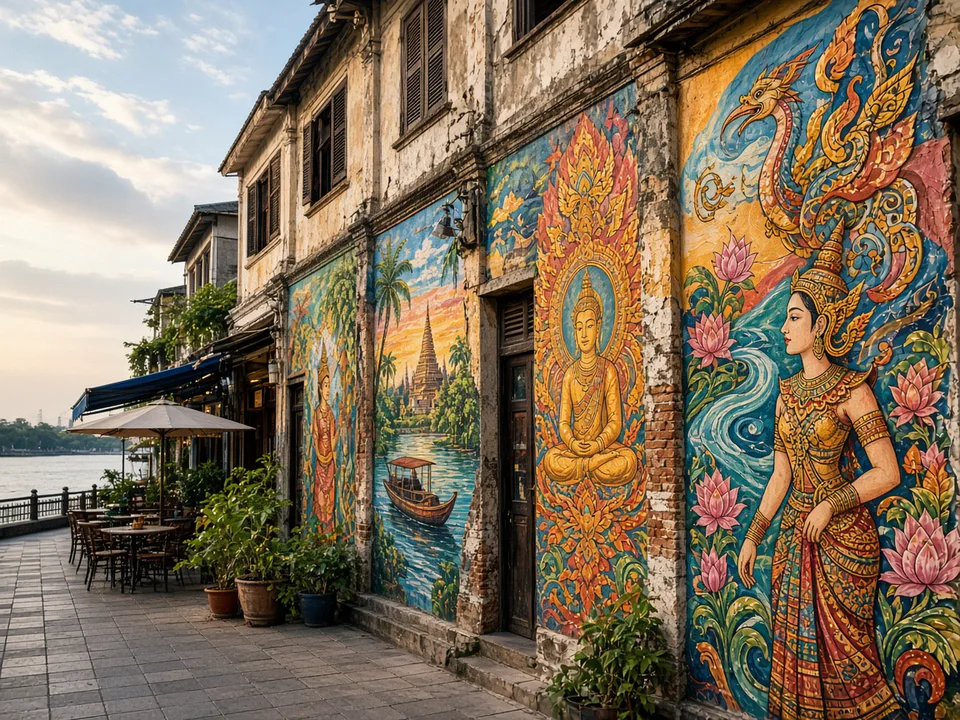
Murals on old riverside walls and lanes — a newer colour layer on Nakhon Phanom’s Mekong strip. Pair café stops with mural photos near the night market and clock-tower walk.

A four-tier fall fed by Huai Langka inside the Phu Langka forest. Rainy-season water and deep green are the show — cool air and spray against the Mekong plain.
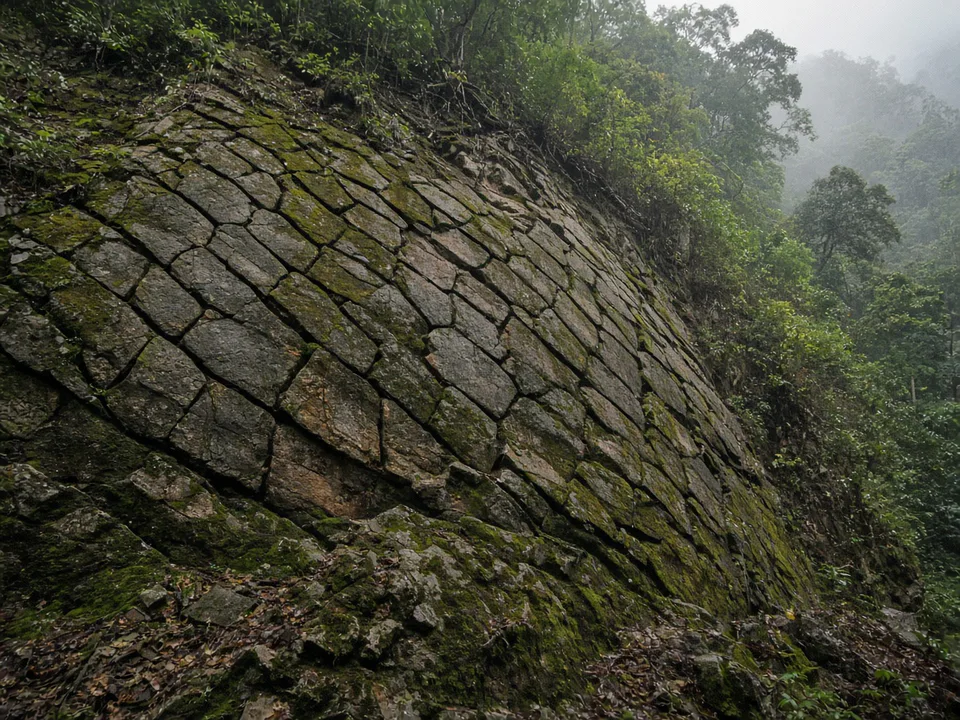
Sandstone sun-crack patterns that read like giant naga scales — Nakhon Phanom’s most talked-about Phu Langka hike. Moss, viewpoint chedis, and Mekong glimpses reward a guided half-day.

A soft-pink tower about fifty metres high — a landmark of Thai–Vietnamese friendship from the years of exile and return. Classic midday and dusk photo stop before the walking street.
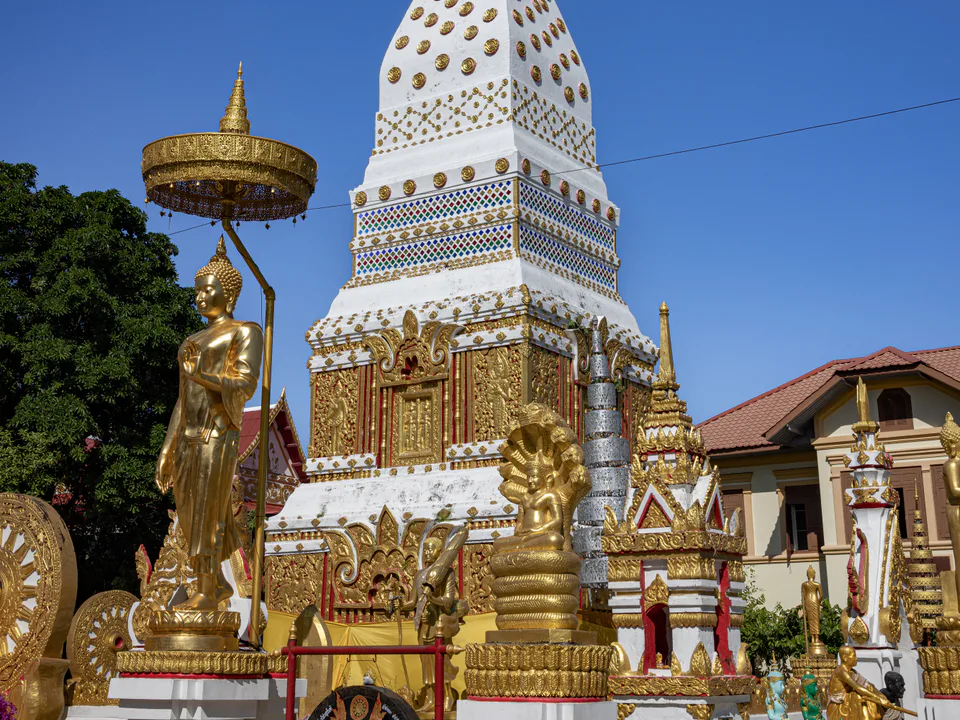
Also called Wat Ming Mueang — riverside home of Phra That Nakhon, the Saturday birth-day chedi. Late afternoon pairs temple and Mekong breeze.
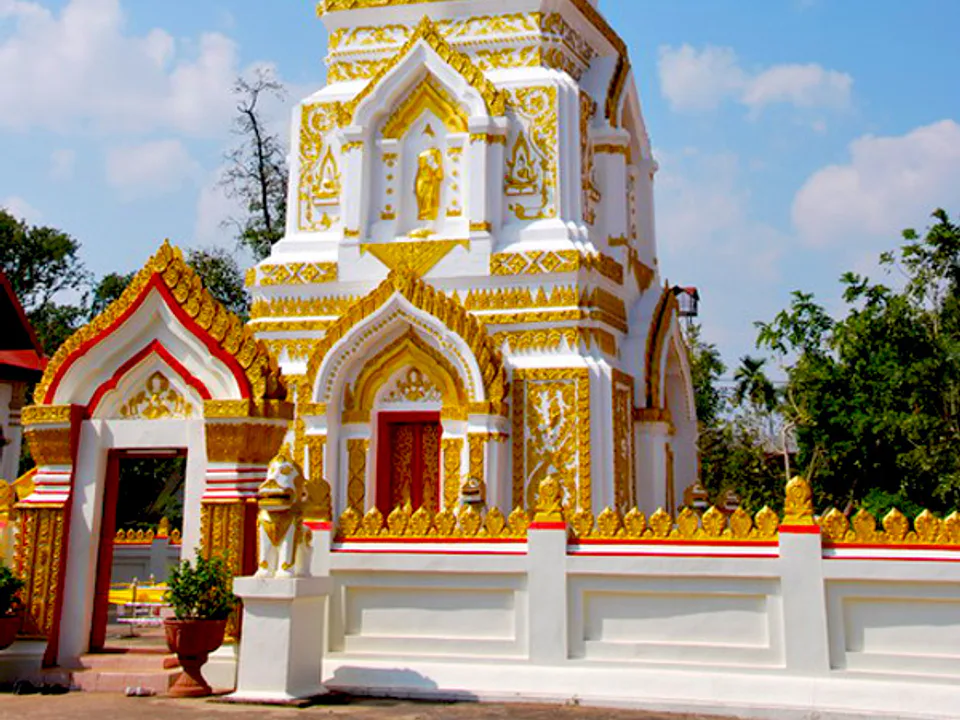
A That Phanom–style chedi restored in the early Bangkok era, holding relics and earth from the four holy sites. Na Wa’s fourth-month merit festival still draws the district here.
04
Local Flavours & Food
Nakhon Phanom eats between two kitchens that share one river — Vietnamese steam and herbs on one side, Isaan heat and Mekong fish on the other. Start the day with bánh cuốn (pak moh) and naem nueang, end it with pla jum or garlic-fried pla khang while Lao hills darken across the water. The tables below are where travellers begin; hours can change, so check before you go.
Thin steamed rice sheets stuffed with minced pork or egg — Nakhon Phanom’s everyday Vietnamese breakfast, dipped in sweet-sour sauce. Sri Thep and morning halls still set the city’s standard.
Fresh catch from the Mekong — pla jum hotpot, garlic-fried pla khang, steamed fish, and fish laab. Riverside rooms toward the Friendship Bridge are where the province tastes most like itself.
Grilled Vietnamese pork balls wrapped with herbs, greens, and rice paper — the dish travellers still name first after Phra That Phanom. Phon Thep and home-style Vietnamese kitchens keep the old formula.
Baguette, opla (skillet eggs), steamed rolls, and coffee dripped the Vietnamese way — a Mekong morning that still feels more Hanoi than Bangkok. Pair it with a riverside walk before the heat rises.
Where to Eat
Mekong fish houses, Vietnamese breakfast steam, naem nueang, civet-coffee cups, and riverside evenings — Nakhon Phanom’s tables, listed A to Z. Hours can change; tap Location for the latest pin.
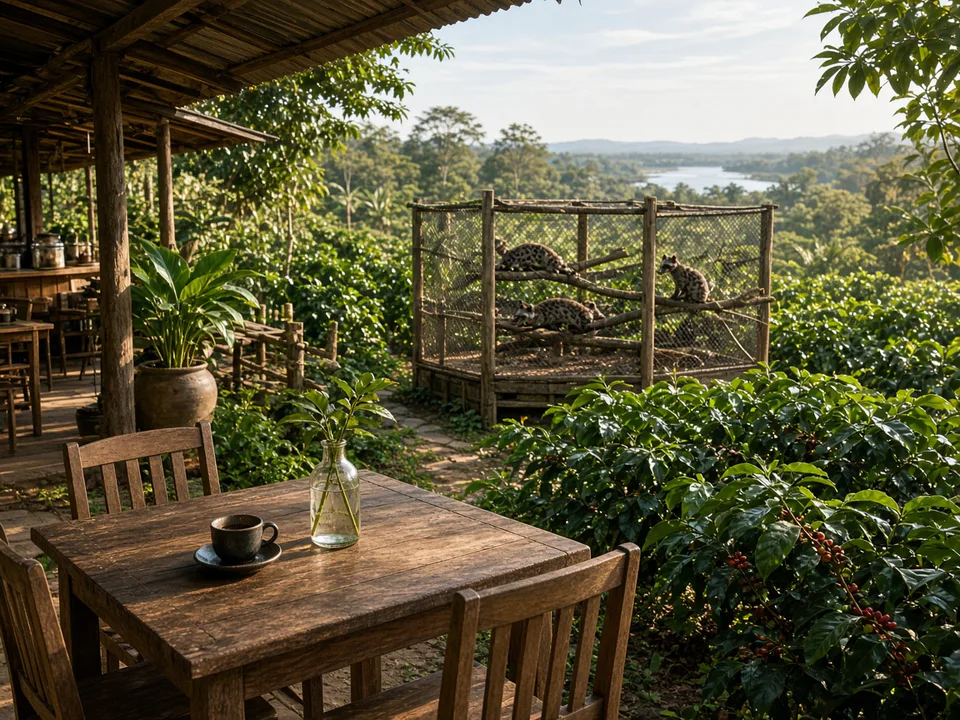
A civet-coffee farm and café where BlueGold raises one of Thailand’s largest herds of blue-gold civets.
Taste filtered cups on site and see how Isaan farming became a Mekong specialty stop between temple days and river dinners.
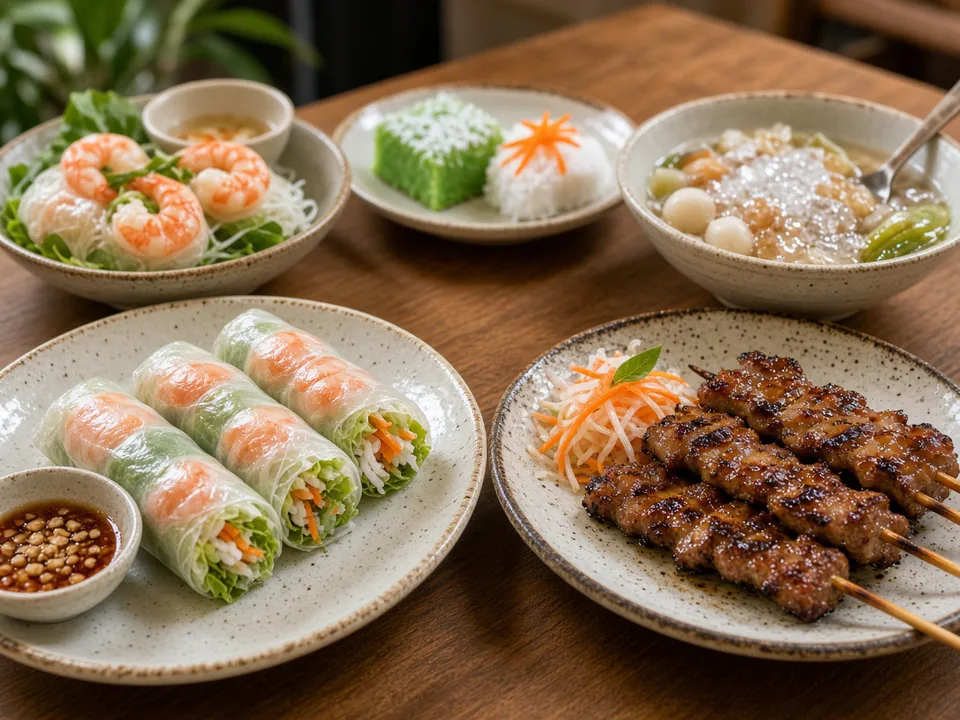
A long-running Vietnamese dining hall — big plates, fresh ingredients, and the Mekong-Vietnamese set locals still recommend.
Order fresh spring rolls, grilled pork, banh cuon sweets, shrimp miang, and pla tao when you want a full Vietnamese table without leaving town.
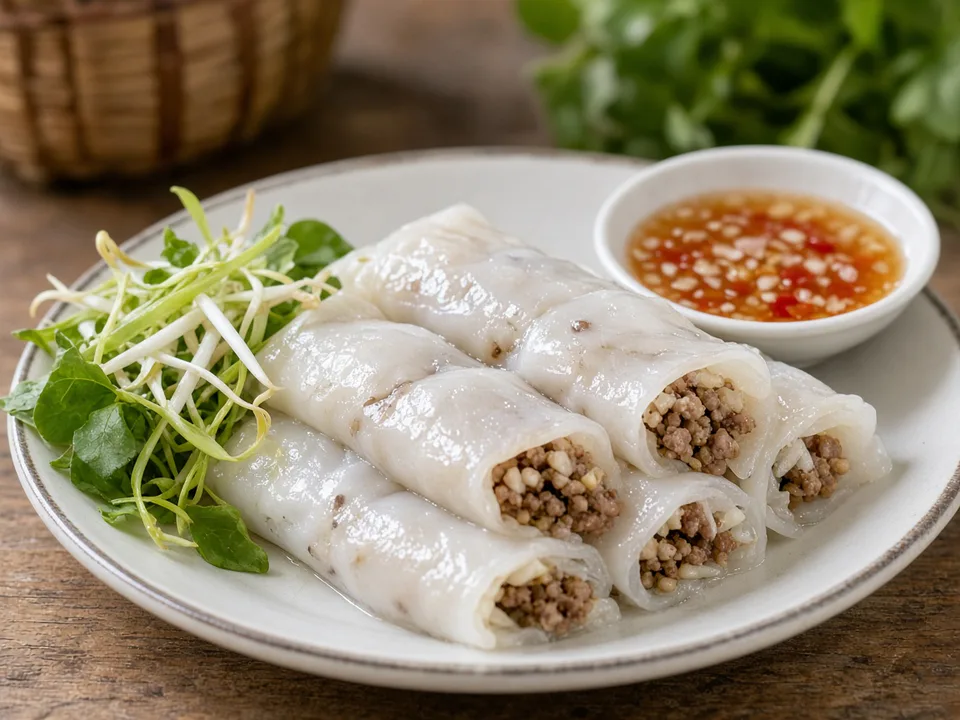
Opposite Sri Thep Hotel — the city’s best-known bánh cuốn (pak moh) counter for thin steamed rice sheets stuffed thick and served with sweet-sour dipping sauce.
Come for classic pak moh, egg versions, brown-rice or sesame sheets, and an extra plate of Vietnamese sausage; prices stay friendly and queues form early.
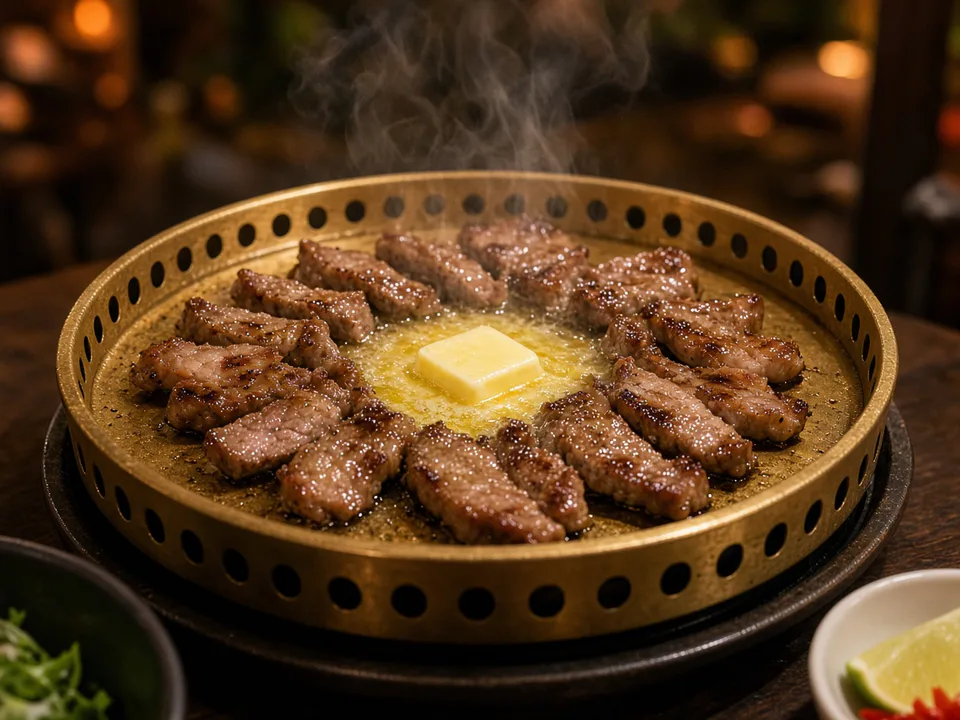
When travellers ask for fattened-beef grill in Nakhon Phanom, this big brass-pan room is the name that comes back.
Order a mixed kho khun set, let the meat hit the buttered pan, and share until the table is sweet with smoke.
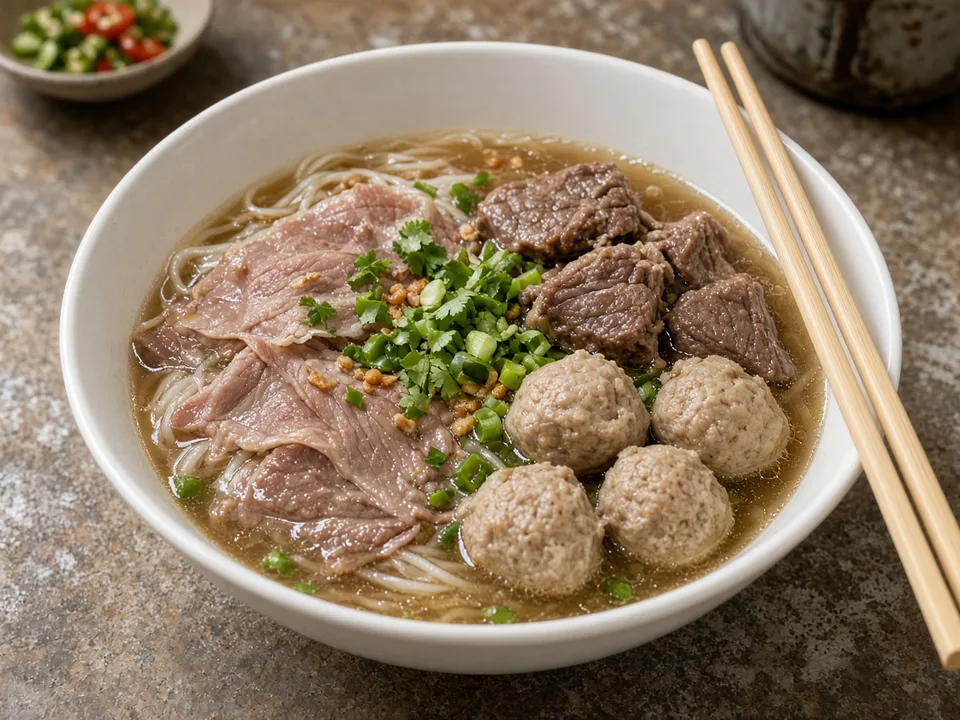
An old town beef-noodle house — thin-sliced meat, soft stewed beef, and clear broth that still tastes like a neighbourhood kitchen.
Order kao lao with stewed beef, fresh beef, and meatballs when you want a quick, honest bowl between Mekong walks.
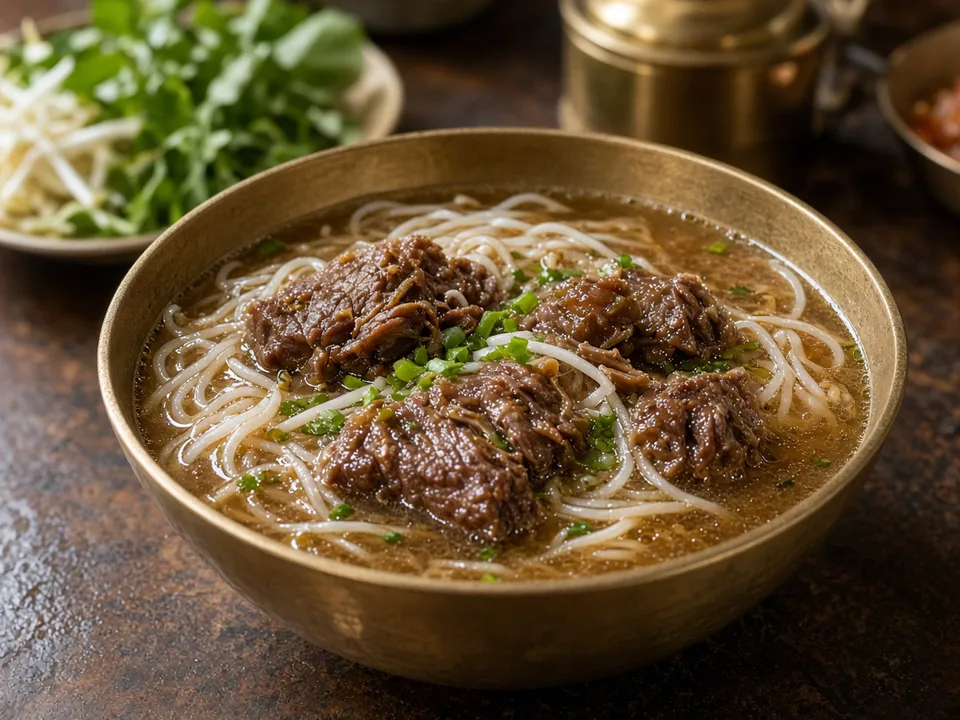
Beside Wat Pho Si — stewed beef and pork noodles from huge brass pots, with street parking and a loyal lunch crowd.
Ask for thin rice noodles with stewed beef; the broth is fragrant enough that many locals eat it unseasoned.
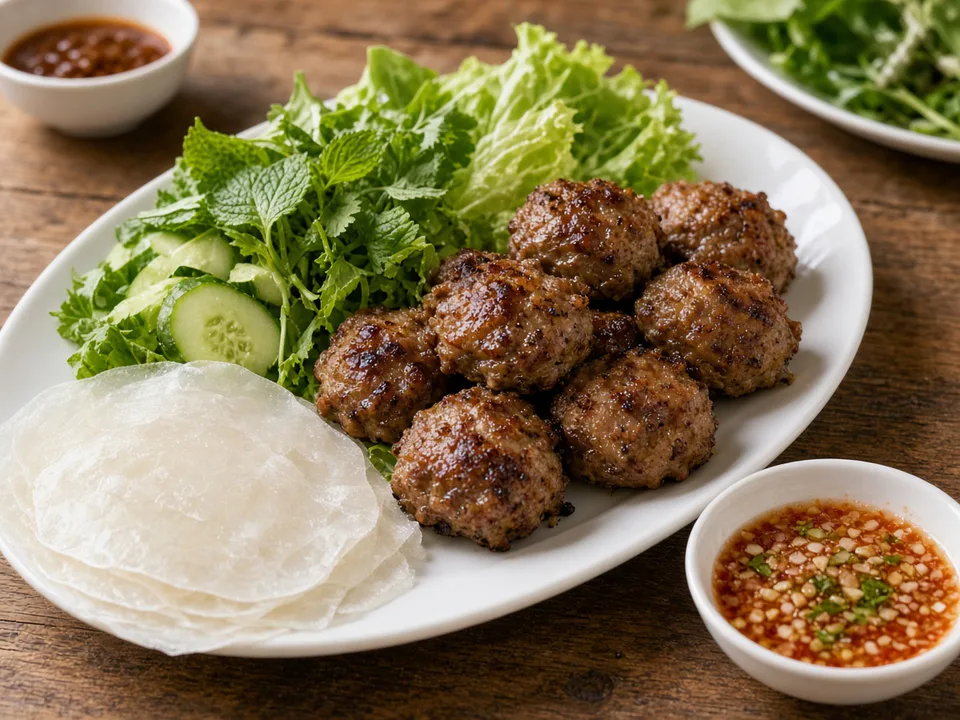
A home-style Vietnamese kitchen that still feels like eating in someone’s house — clean plates, fair prices, and recipes locals grew up on.
Must-orders are fresh spring rolls, bun bi, kuan haeng, and grilled pork with garden herbs when you want Nakhon Phanom’s Vietnamese comfort food.
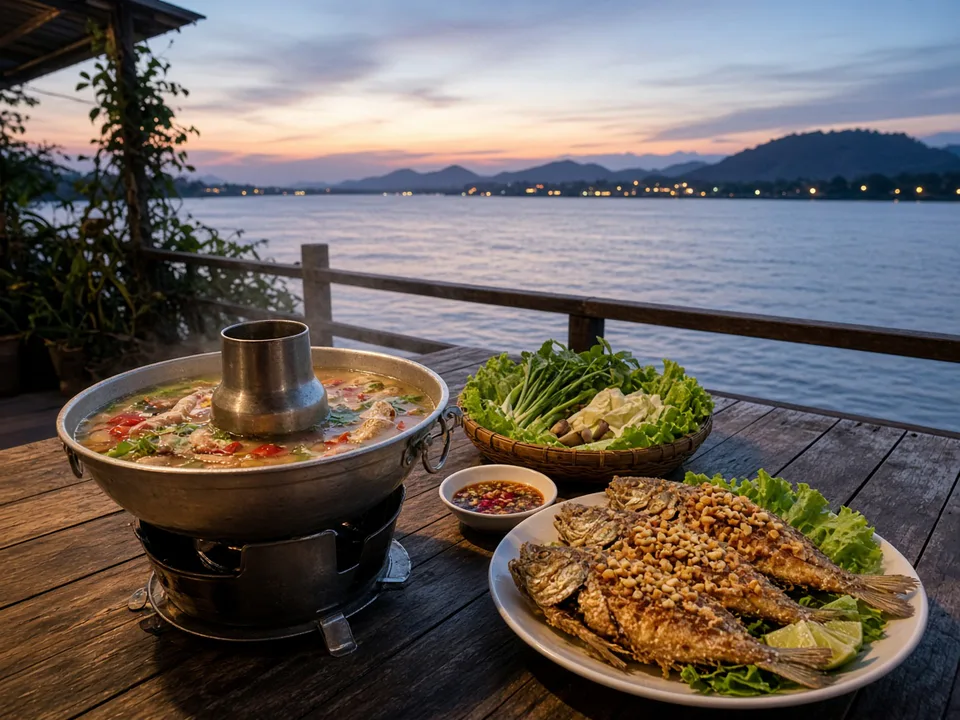
A Mekong-fish house on the river road toward the Friendship Bridge — Lao hills across the water, Isaan heat on the table.
The house move is pla jum (fish hotpot); also order garlic-fried pla khang, steamed fish, mushroom gaeng, and som tam when the river catch is the point of the trip.
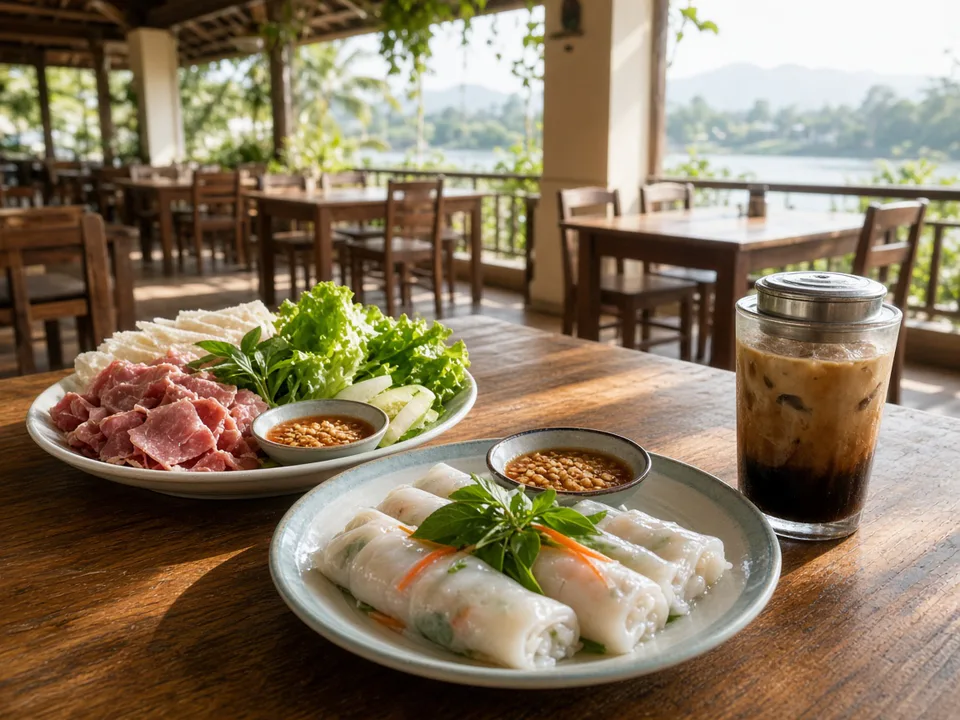
A bright Vietnamese breakfast hall — clean, airy, and built for morning crowds that still name it for classic naem nueang.
Order pak moh, phonhom, naem nueang, and khao kriap pak moh when you want the city’s Vietnamese dawn table.

A wooden riverside room on the Mekong — the classic sunset dinner stop for travellers who come for fish and breeze.
Order pla khang laab, garlic-fried soft fish, and tom yum goong when you want river views with Isaan heat.
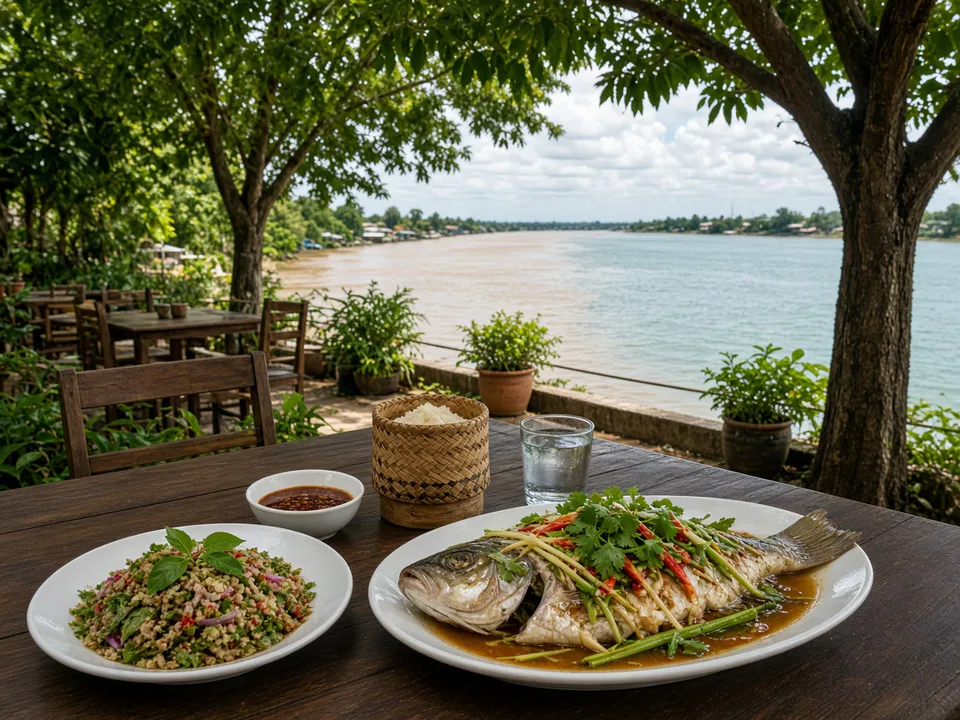
A garden table by the two-tone river mouth — Thai and Isaan plates with a cooler waterfront pace than the city strip.
Share pla laab, steamed fish, and river dishes when you want Mekong scenery without the downtown rush.

On Nakhon Phanom Walking Street — open dining, quick service, and a mix of noodle pots and Isaan salads for night strolls.
Try pickled-cabbage tam sua and hotpot kao lao with nam tok beef when you want a full table after the Mekong promenade.
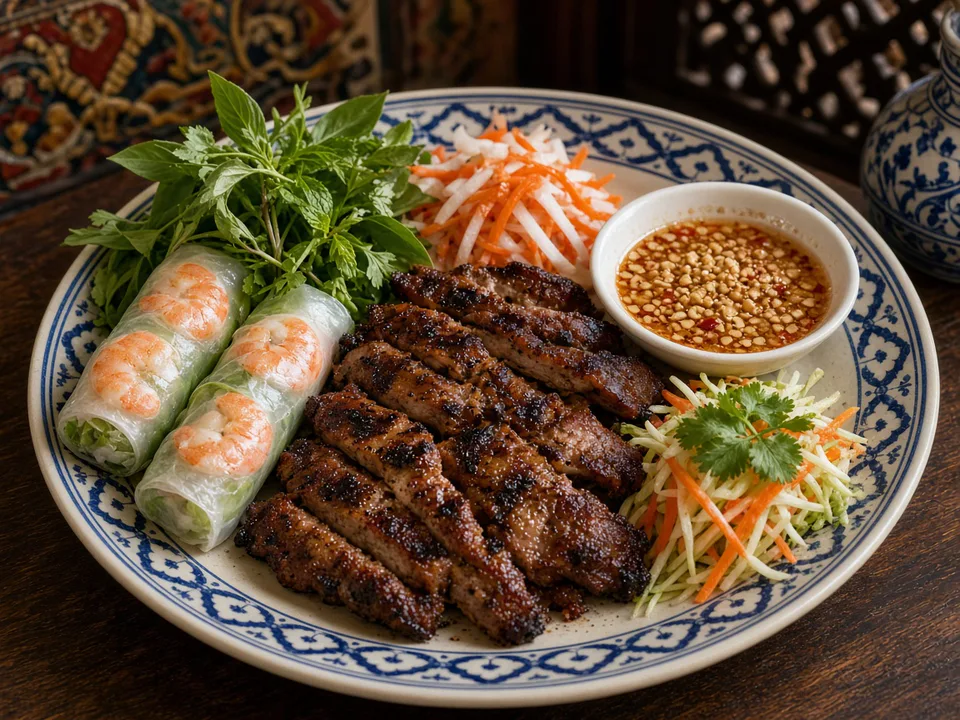
A Bamrung Mueang Road Vietnamese–Thai room dressed with Indochina details — spring rolls to Thai a-la-carte on the same menu.
Order the Vietnamese mixed platter (five classics on one plate) when you want a photogenic introduction to the city’s Vietnamese kitchen.
05
Souvenirs from Nakhon Phanom
Nakhon Phanom’s gift bag tastes Vietnamese–Isaan and smells of banana leaf — peppery mu yo, That Phanom kalamae, Renu fermented fish, and fresh rice-noodle sheets for Vietnamese kuey jab. Leave room for handwoven cotton and a slow walk along the Mekong before you pack.

06
Local Culture & Vibe
The province’s brightest cultural signature is Lai Ruea Fai — the Illuminated Boat Procession at End of Buddhist Lent, when the Mekong carries thousands of lamps for the Buddha and Mae Khong. Around that river faith sit the great Phra That Phanom homage fair, a July offering to Phaya Si Sattanakharat, and the Saek Ten Sak ancestor rite in Na Wa — four calendars that still shape how Nakhon Phanom gathers.

07
Travel Info & Getting There
How to reach Nakhon Phanom from Bangkok, and how to move around once you arrive.
Nakhon Phanom Airport (KOP) is the easy door — about 15 km west of town, roughly 20 minutes by taxi. Direct flights from Bangkok Don Mueang (DMK) take about 1 hour 15–25 minutes with Thai Lion Air, Thai AirAsia, and often Nok Air; there is no Suvarnabhumi service. Book early around Phra That homage season and Lai Ruea Fai; airport taxis usually wait outside arrivals.
About 730–740 km from Bangkok — a full day on the road in ordinary traffic. Take Highway 1 (Phahonyothin) to Saraburi, then Highway 2 (Mittraphap) through Nakhon Ratchasima, Khon Kaen, and Udon Thani toward Sakon Nakhon, and finish on Highways 22 / 212 into the Mekong capital. Once you hit the riverfront, Phra That Phanom sits about 50–55 km south on 212.
There is no passenger railway into Nakhon Phanom. Ride the Northeastern Line from Krung Thep Aphiwat to Udon Thani (or Khon Kaen), then continue by coach or hired car — roughly 3–4 hours from Udon, a little longer from Khon Kaen. Overnight sleepers into Udon plus a morning bus remain the classic rail-and-road combo if you prefer not to fly.
The simplest door-to-door ride: coaches from Bangkok’s Mo Chit 2 (Chatuchak) cover about 730 km in roughly 10–12 hours and roll into Nakhon Phanom Bus Terminal. Cherdchai / Chan Tour, Nakhonchai Air, Thai Sa-nguan, and Transport Co (999) share the corridor — day seats from about 07:30, many evening overnight services that land at dawn. Book ahead for festival weekends.
The Mekong promenade, naga plaza, clock tower, and Vietnamese breakfast halls sit close enough for walking or a rented bicycle — the riverside bike path and Nagaraja Tunnel are made for it. Songthaews, motorbike taxis, and tuk-tuks cover short hops; Grab can be thin. Rent a car or hire a driver for Phra That Phanom (~50 km), Renu Nakhon, Tha Uthen, Phu Langka / Tham Naki, and the Friendship Bridge — Highway 212 is the spine along the river.
November to February brings cool, clear Mekong days for temples, cycling, and riverside evenings. October is Lai Ruea Fai season — book rooms early. The 3rd lunar month fair fills That Phanom with pilgrims; July brings the Phaya Si Sattanakharat offering. March–May is hottest but reveals Si Kotrabun sandbars when the river drops; May–October greens Phu Langka and fills the falls — pack light rain cover.
Continue the Journey