3M+
Foreign patients visiting Thai private hospitals in recent industry estimates (2024), including medical travelers and residents.

 ThailandLover
Contact
Live & Work
Private hospitals, insurance & the medical hub
A practical guide for expats, digital nomads, and long-stay travelers — how Thailand’s private care, insurance, and medical tourism actually work.
Updated for 2025–2034 medical hub strategy
2025–2034
Thailand’s 10-Year Medical Hub Strategies (2025–2034), promoted by the Ministry of Public Health, aim to position the country as a leading international health and comprehensive medical industry hub — spanning treatment, wellness, medical products, and related investment.
For travelers and residents, that ambition shows up in day-to-day ways: JCI-accredited private hospitals, English-speaking care teams, and competitive pricing on procedures that often cost far more in Western markets — commonly cited in the 50–70% lower range for many elective and specialist treatments, depending on case complexity.
How the system is structured →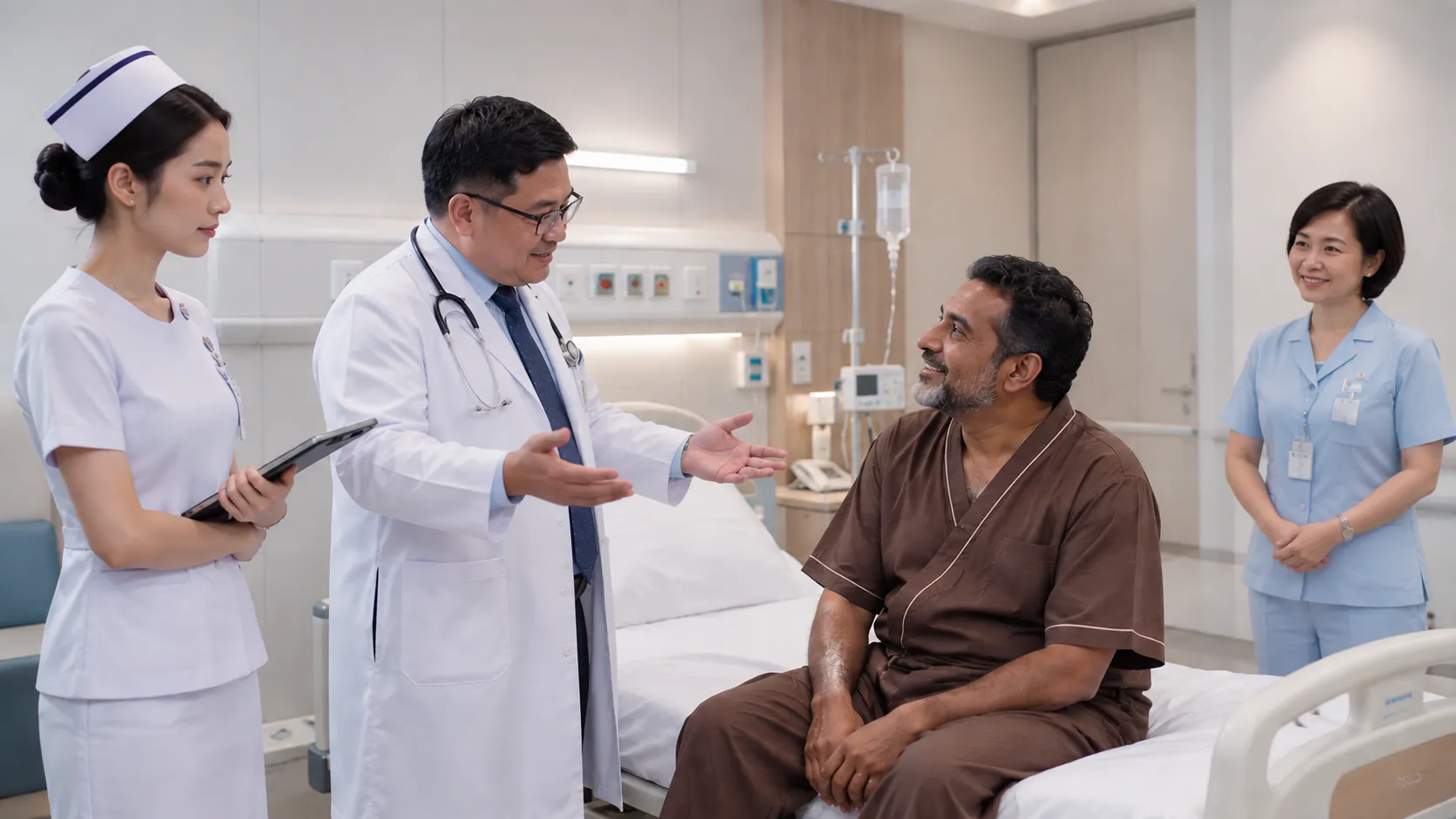
3M+
Foreign patients visiting Thai private hospitals in recent industry estimates (2024), including medical travelers and residents.
60+
JCI-accredited medical facilities nationwide — a strong signal for international-standard safety and care quality.
16.6%
Projected average annual growth for Thailand’s aesthetic and beauty medicine market through the late 2020s.
The System
Public coverage for Thai citizens runs alongside a strong private hospital network used by most expats and medical travelers. The move order is on Moving to Thailand. This page is the care.
The Ministry of Public Health oversees the national system. Thai citizens commonly use the Universal Coverage Scheme and related public pathways. Expats and visitors almost always choose private hospitals — especially JCI-accredited centers concentrated in Bangkok and major tourist hubs — for speed, comfort, and specialist access.
Thailand’s primary-care push pairs Village Health Volunteers, local health officers, and family doctors to ease hospital congestion. For long-stay readers, the practical takeaway is simpler: public clinics handle routine local care; private hospitals remain the default for international patients.

High-value care
Thailand’s medical tourism draw is not only price — it is the combination of specialist depth, hospitality-style service, and recovery settings that feel closer to a hotel than a clinic.
Where to Go
Bangkok remains the hub of excellence. Major groups also run strong regional hospitals for island and northern living.

Bangkok
One of Asia’s best-known destinations for international patients — multilingual teams, complex specialties, and a long track record with non-Thai revenue share.
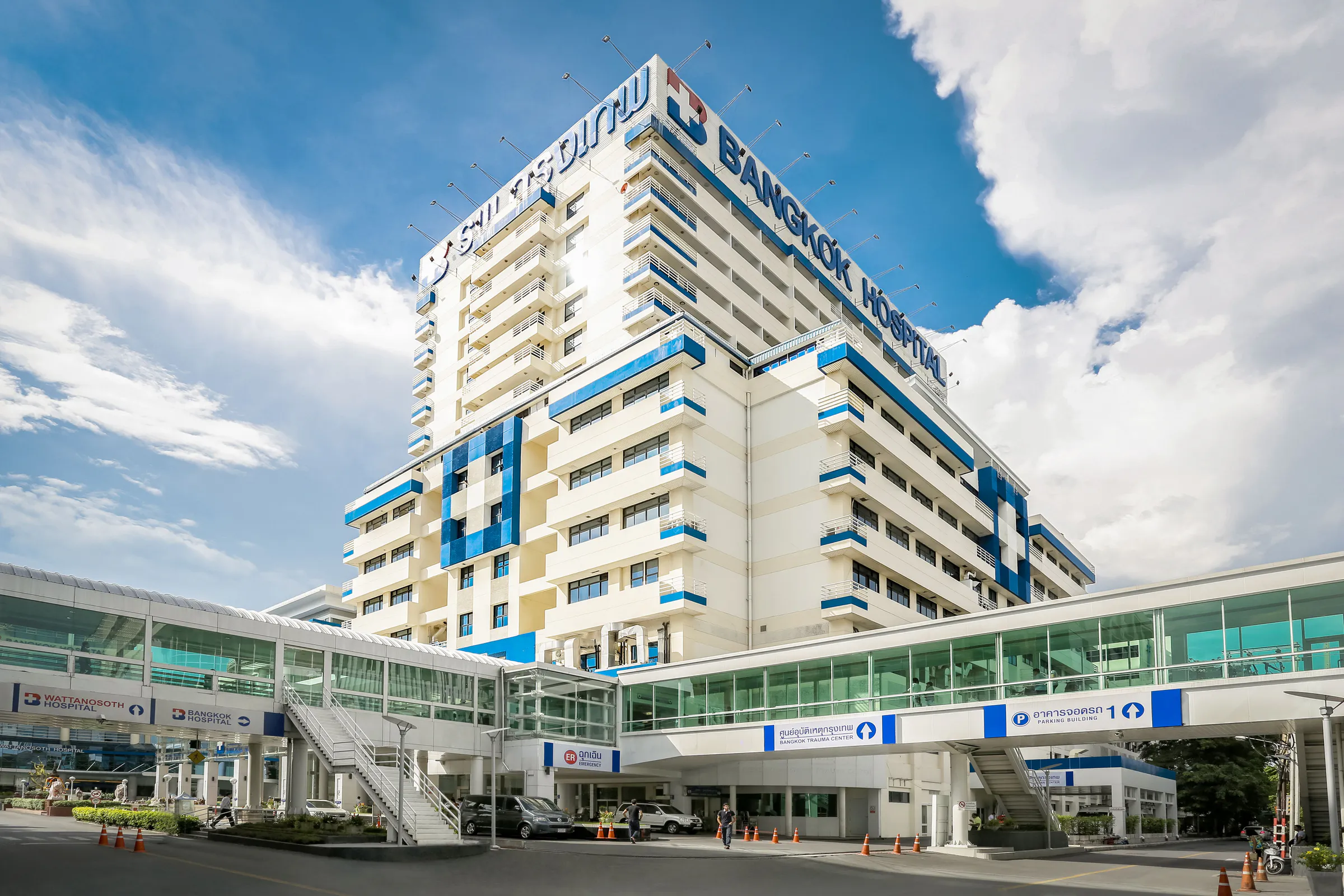
Bangkok · BDMS
Part of Bangkok Dusit Medical Services, Thailand’s largest private hospital operator with dozens of hospitals nationwide under brands including Bangkok, Samitivej, BNH, and Phyathai.

Bangkok
Widely chosen for family medicine and pediatrics, with a polished international-patient experience across Sukhumvit and other campuses.
Bangkok Hospital Chiang Mai and regional networks support long-stay communities who want specialist care without always flying to Bangkok.
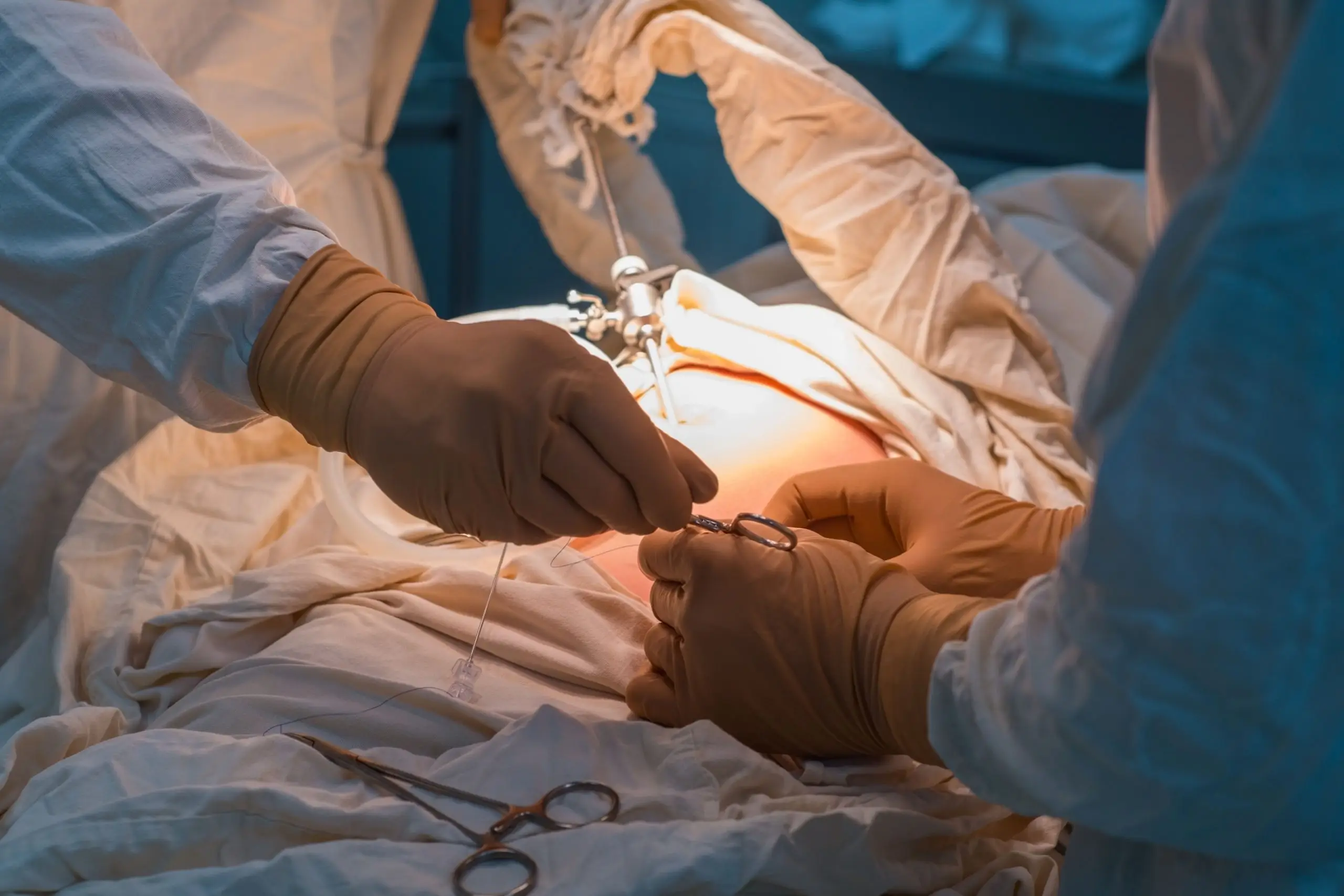
Bangkok Hospital Phuket and Phuket International Hospital cover trauma, specialists, and routine care for island expats and visitors.

Bangkok Hospital Pattaya and Pattaya International Hospital serve the eastern seaboard’s large expat and tourism community.
Bangkok directory
ThailandLover keeps the full A–Z list on its own page — public, state-enterprise, and private hospitals, not grouped by Social Security. Private hospitals in other provinces are on a separate page, listed by province. Open a list when you need a name, then come back here for insurance and how the system works.
Living Here
Most expats use a hybrid model: private hospitals for speed and specialists, paid out-of-pocket for simple visits or through international insurance for bigger care.
Travel insurance is not long-stay health insurance. Look for inpatient surgery, critical illness, evacuation, and hospital networks you actually use.
International insurers such as Cigna, Luma, AIA, and Allianz often arrange cashless / direct-billing at major groups like BDMS and Bumrungrad — confirm before you need it.
Private lobbies, multilingual coordinators, and many English-speaking doctors trained abroad make appointments feel closer to a premium lounge than a waiting room.
ThailandLover tip: Save your nearest private hospital pin in Maps, keep your policy number and insurer emergency line offline, and ask about waiting periods before you rely on a new plan for pre-existing conditions.
Aesthetic Medicine
Thailand is a global capital for aesthetic medicine — blending surgical precision with a reputation for natural-looking results and recovery hospitality.

Rhinoplasty, double-eyelid surgery, jaw contouring, and reconstructive work draw patients who want specialist volume and competitive packages.
Breast augmentation, liposuction, and tummy tucks are among the most requested body transformations, often paired with hotel-style recovery plans.
Thailand is widely recognized as a pioneer destination for gender confirmation procedures, with highly specialized surgeons and established international patient pathways.
Save These
Keep these numbers in your phone before you need them — they work nationwide.
1669
Medical Emergency
National ambulance · free · 24/7
1155
Tourist Police
Multilingual help · 24/7
191
Police
General emergency
199
Fire Department
Fire & rescue

ThailandLover Tip
Before you need a hospital visit, confirm that your international policy has direct-billing agreements with major groups such as BDMS or Bumrungrad. It turns a stressful admission into a smoother, nearly cashless experience — and saves you from large upfront deposits.