02
History & Heritage
From U Thai to Sakae Krang
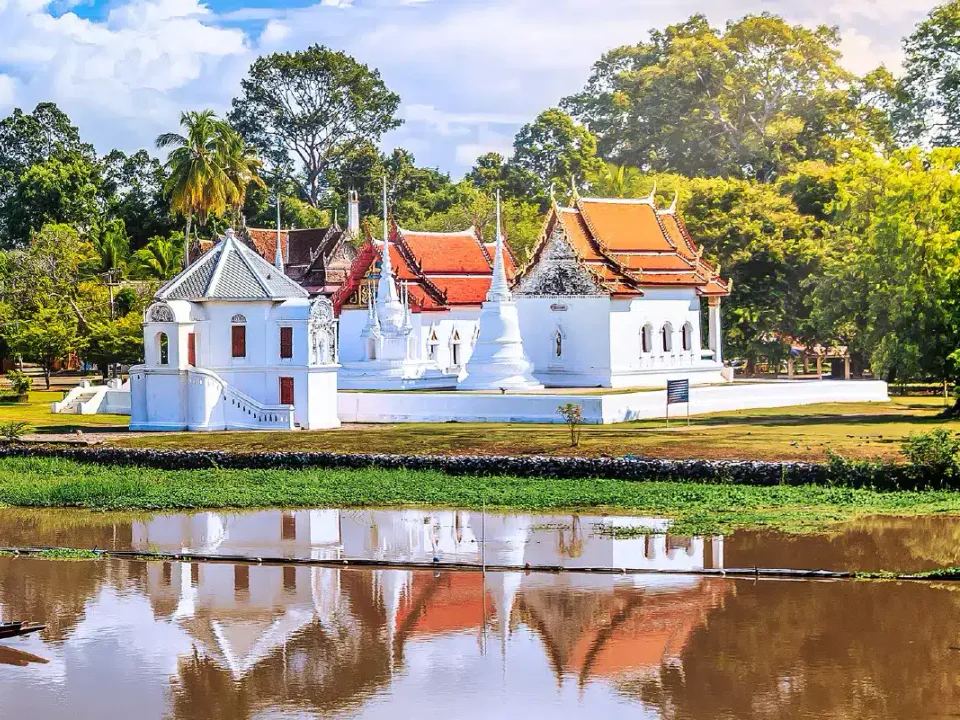
People have lived on this land for a long time. The Fine Arts Department records prehistoric settlement here about 3,000 years ago — skeletal remains, pebble stone tools, and prehistoric rock paintings at Khao Pla Ra among the finds that mark early life in the hills and valleys of today’s Uthai Thani.
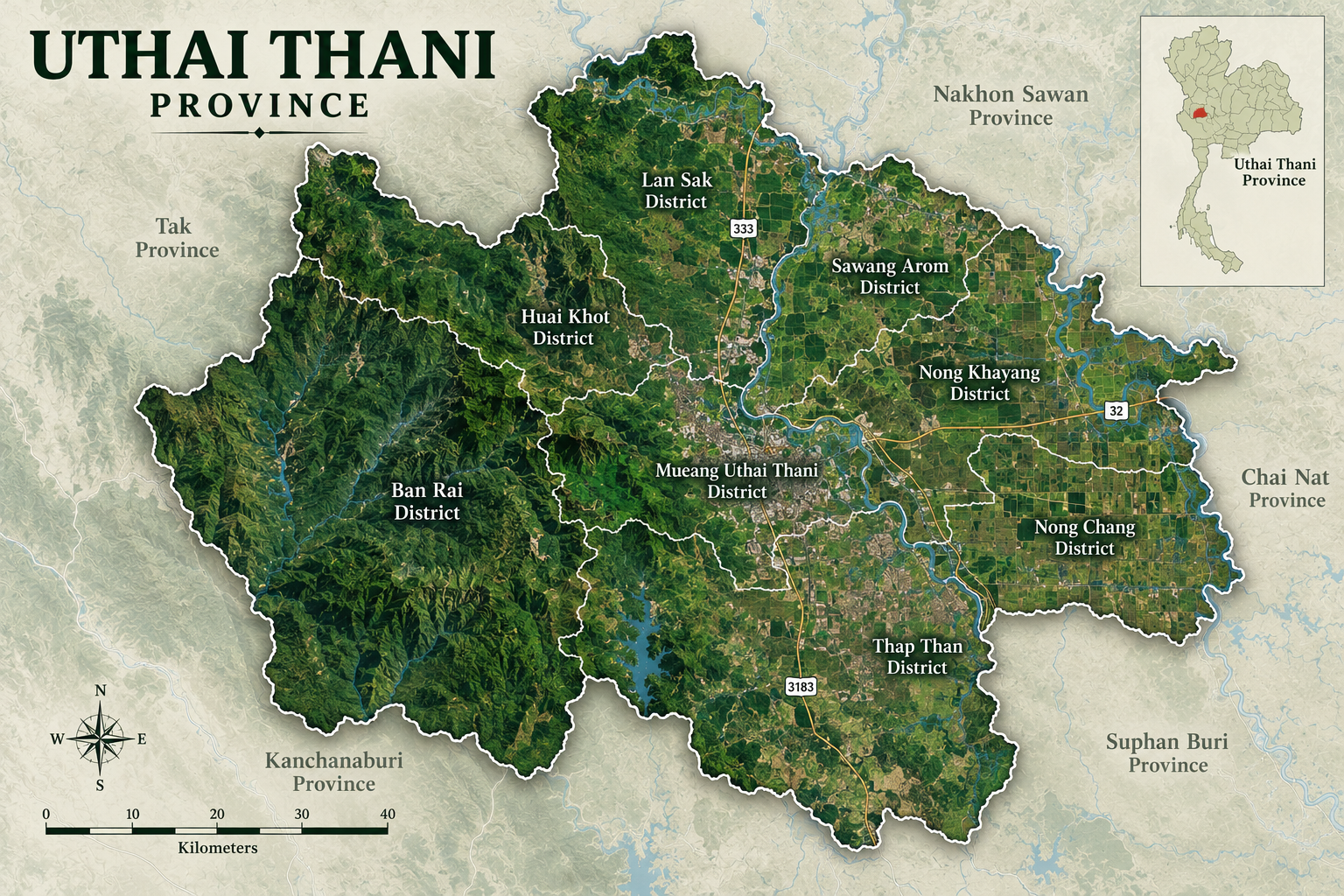
Local tradition places the first Thai town in the Sukhothai age. Legend says Thao Maha Phrom founded a settlement at Ban Uthai Kao — in present-day Nong Chang District — and brought Thai families to live among Mon and Karen villages. The place was called Mueang U Thai, “the Thai settlement,” for the dense Thai households and the richer gardens and food of that ground. When the river shifted course and water grew scarce, the old town was abandoned. In the Ayutthaya period a Karen leader remembered as Pha Tabeut revived the site, dug water storage beside the town, and became its first recorded ruler. The name softened through local speech to Uthai, then Uthai Thani. Inland and without a great river for boats, the town ranked as an outer frontier of Ayutthaya — under King Ekathotsarot (B.E. 2148–2163 / 1605–1620) the old law listed Mueang Uthai Thani among the towns under the Ministry of Mahatthai. Frontier posts at Mae Klong and Nong Luang (in today’s Umphang country of Tak) watched the Burmese roads from the west.
Because the old seat sat on higher ground away from a navigable river, people carted rice by ox-wagon to the water’s edge. Traders raised granaries there until a riverside village grew under a great sa-kae tree and a belt of sa-kae forest — Ban Sakae Krang. Chinese merchants called it Si-ke-ya-kang and made it a rice market; later nobles and officials settled for the same convenience, and for the trade in bat guano, timber, cardamom, wild elephants, and grain that the landing could send toward the capital.
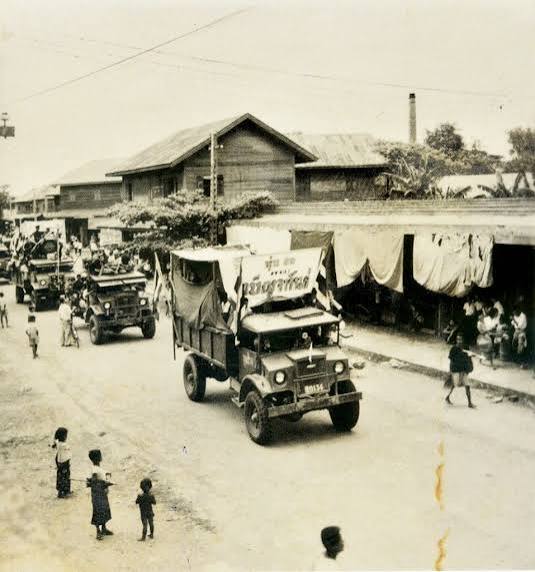
In B.E. 2376 (1833) Phraya Uthai Thani, the Bangkok-appointed governor, saw that Ban Sakae Krang had become the real market — crowded, busy, and long used by people of Uthai Thani for rice and timber — and moved his residence to the riverside. Friendship with the governor of Chai Nat helped the claim; fear of jungle fever at the old inland town made the shift easier, and more households followed. In B.E. 2391 (1848) the border with Chai Nat was redrawn: the south bank of the Sakae Krang channel from the lower end of Ban Sakae Krang up toward the old Uthai ground passed from Chai Nat to Uthai Thani, so the river town sat firmly inside the province. In B.E. 2441 (1898) Uthai Thani was placed under Monthon Nakhon Sawan; under King Rama VI it later answered to Monthon Ayutthaya. When the monthon system ended in B.E. 2476 (1933), the province stood as its own regional unit — still a quiet river town with a deep western forest behind it.