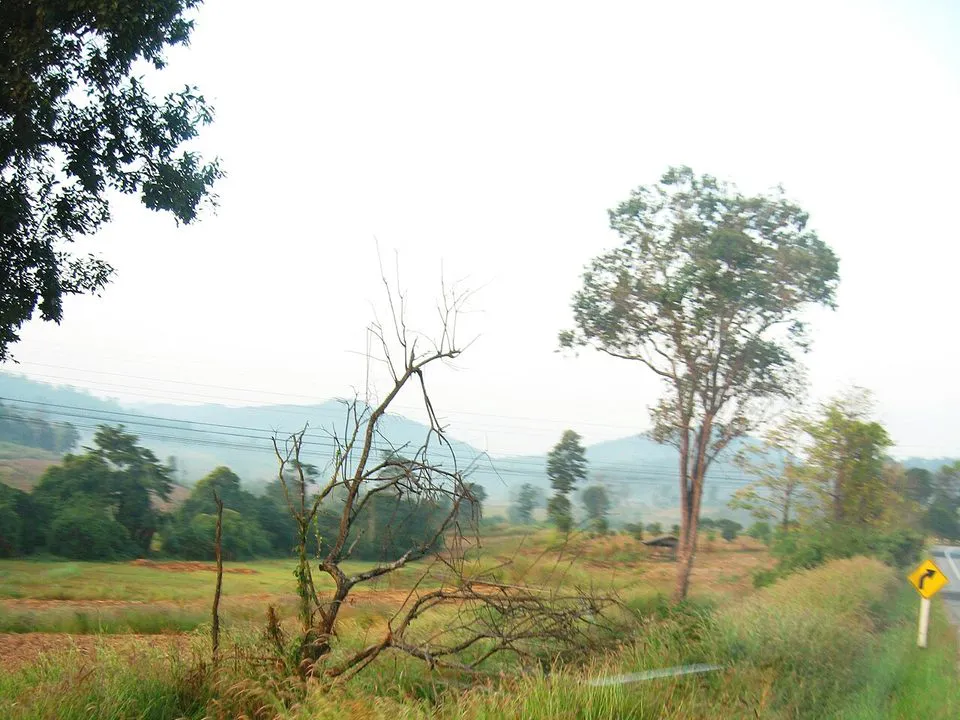
Ban Mae Sa Ngae
A quiet Karen (Pgaz K’Nyau) valley village wrapped in forest and small streams. Homestays, mountain mist, and unhurried mornings make this the slow-life escape when the old town pace still feels too busy.

 ThailandLover
Contact
ลำพูน
Heart of Hariphunchai
Just south of Chiang Mai, Lamphun keeps the quiet grace of an ancient Mon capital — golden chedis, Queen Chamadevi’s legend, longan orchards, and a paced Lanna town that still feels like northern Thailand’s old heart.
01
Geography & Climate
Lamphun lies in the Ping River valley of upper northern Thailand — the smallest province in the North, about 670 kilometres from Bangkok and only roughly 26 kilometres south of Chiang Mai. Mountain chains frame the basin: the Thanon Thong Chai Range to the west and the Khun Tan Range to the east, with alluvial plains and longan orchards opening along the Ping and Kuang rivers.
Forest still covers more than half the province. Beyond the old town, Mae Ping, Mae Takhrai, and Doi Chong national parks open waterfalls, highland trails, and cooler ridges, while the famous Khun Tan railway tunnel marks the mountain pass toward Lampang.
The climate follows the northern monsoon. Cool, clearer days settle in from about November to February; March to May brings the hot stretch; and rains green the valley from roughly May through October.
Best time: November – February for cool dry air, temple mornings, and easy old-town walks; May – October for lush orchards, fuller waterfalls, and a quieter pace after the rains.
02
History & Heritage
Long before it became a modern province, Lamphun was Hariphunchai — the northernmost Mon city of the Dvaravati world and one of the oldest urban centres in the North. Northern chronicles credit the hermit Wasuthep with laying out the town between the Kuang and Ping rivers, then inviting Princess Chamadevi from Lawo (Lopburi) to rule as its first queen. Her legend still shapes the city: Wat Chamadevi (Wat Ku Kut) is tied to her memory, and the sacred chedi of Wat Phra That Hariphunchai remains Lamphun’s spiritual heart.
Hariphunchai held its independence for centuries as a Theravada centre of Mon learning and art. In 1281 King Mangrai of Lan Na took the city — the last great Mon capital in the North to fall — and folded it into the rising Lanna world. Lamphun’s crafts and faith helped shape early Chiang Mai; later centuries brought Burmese overlordship, then reunion with Siam as local Lanna houses realigned with Thonburi and Bangkok.
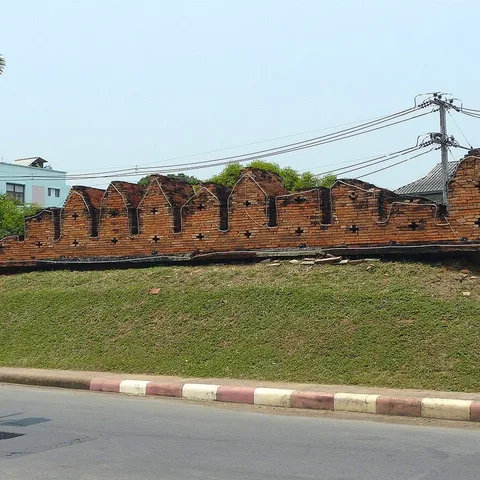
By the late nineteenth century Lamphun was organised as a province of Siam. Walk the old walls, pause beneath the golden Phra That, and the same valley that once held Hariphunchai still reads as northern Thailand’s quiet first capital — heritage you feel before you name it.

03
Top Attractions
Golden chedis, glass skywalks, misty reservoirs, and slow old-town streets — Lamphun’s must-sees, listed A to Z.
A quiet Karen (Pgaz K’Nyau) valley village wrapped in forest and small streams. Homestays, mountain mist, and unhurried mornings make this the slow-life escape when the old town pace still feels too busy.

Opposite Wat Phra That Hariphunchai, this Fine Arts Department museum holds Mon and Hariphunchai treasures — inscriptions, Buddha images, and stucco that explain why this small province once ruled the North’s oldest city.
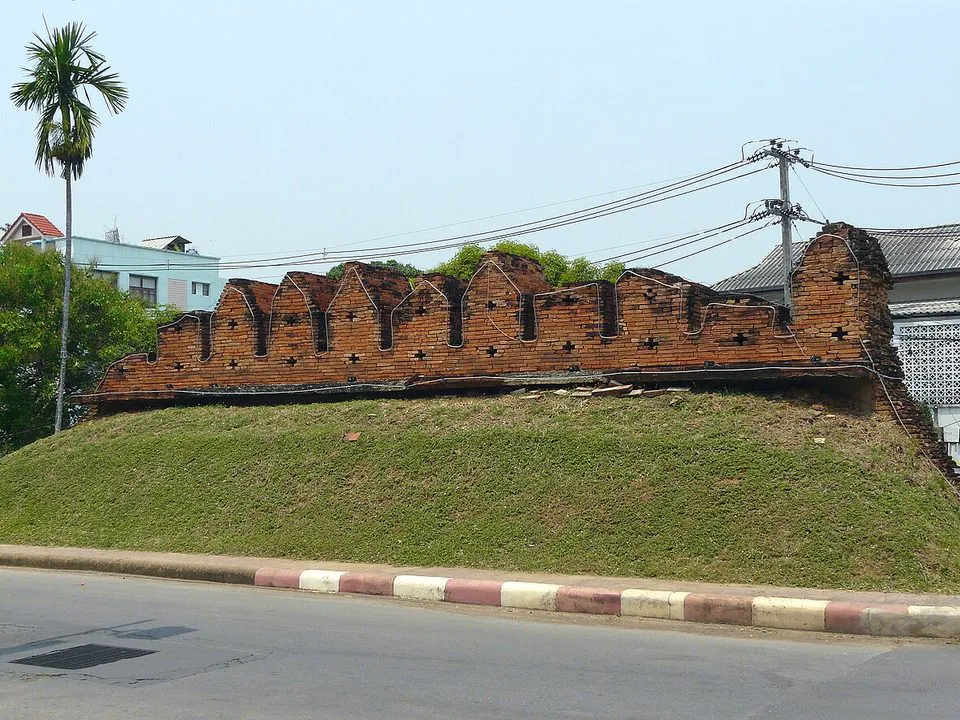
Lamphun’s north–south cultural spine — colonial façades, street art, cafes, and local kitchens along the old city’s main axis. Best for a slow walk that pairs heritage walls with contemporary Lamphun life.
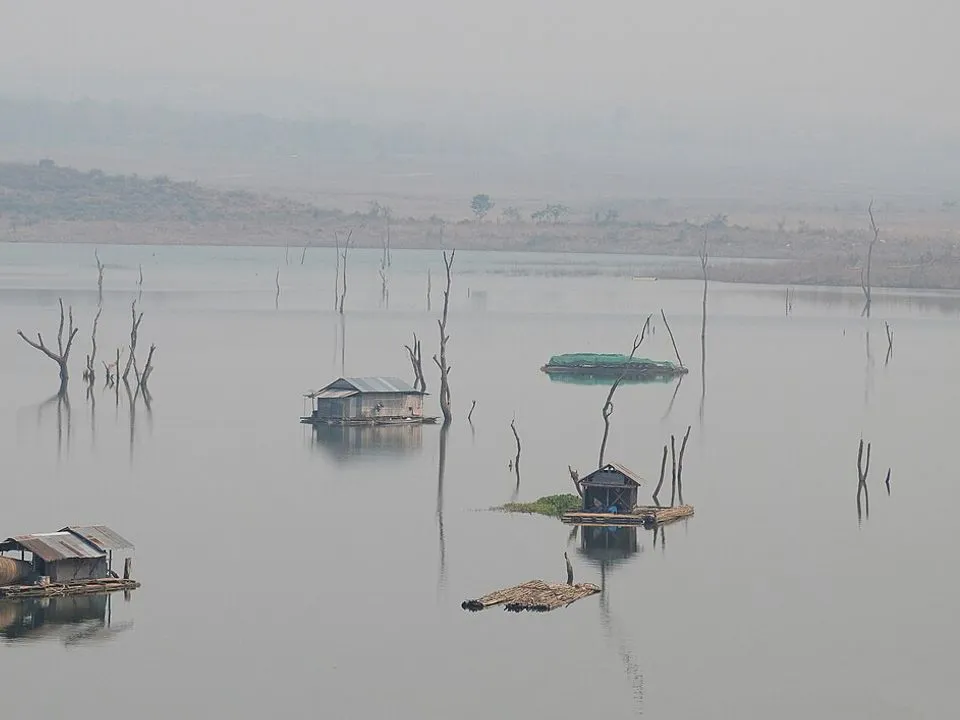
When reservoir waters fall — often clearest around January to February — brick ruins, chedi fragments, and drowned walls emerge at Kaeng Kho. Boat rides past giant cha-cha trees make this Lamphun’s most haunting unseen stop.

A leafy city park wrapping the sacred Ku Chang–Ku Ma chedis of Queen Chamadevi legend, plus a vintage train-learning corner with real carriages. Faith, local lore, and family photos in one easy town stop.
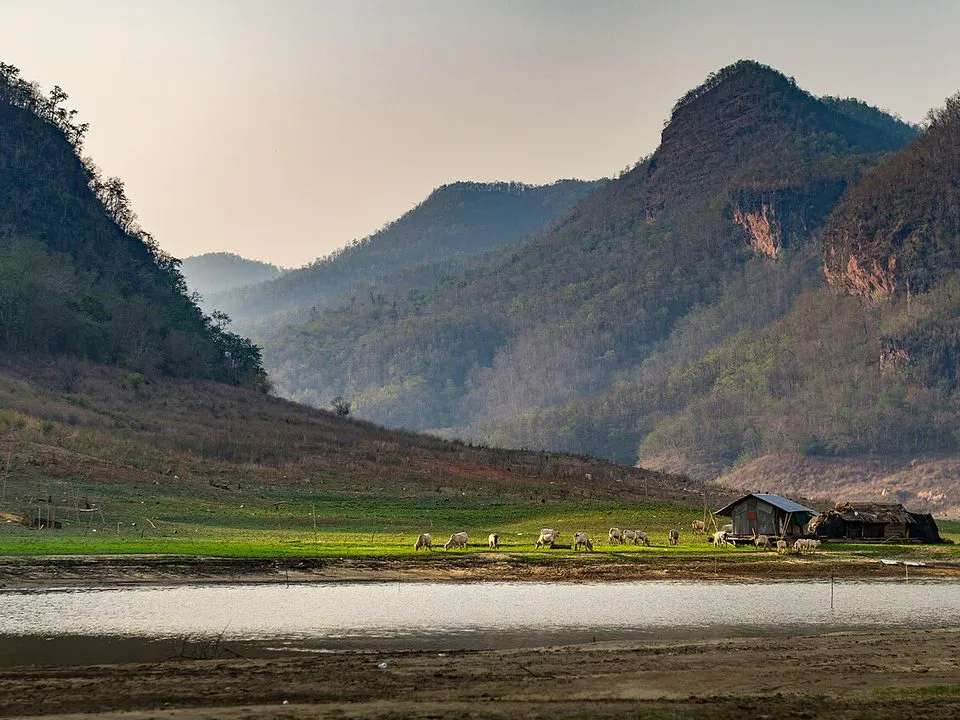
Still water against green ridges just outside town — walk the dam crest, watch local fishing life, or continue to Mae Thi Waterfall. A calm nature reset when temple circuits are done.

A garden-cafe world of terracotta art under forest shade in Rim Ping — northern plates, Thai fusion, and sculpture paths made for long lunches and soft-light photos.

A cool limestone cave of eight chambers, stalactites, and a seated Buddha hall reached by a naga staircase through green hillside. Quiet, sacred, and perfect for travellers who like earth and faith in one climb.
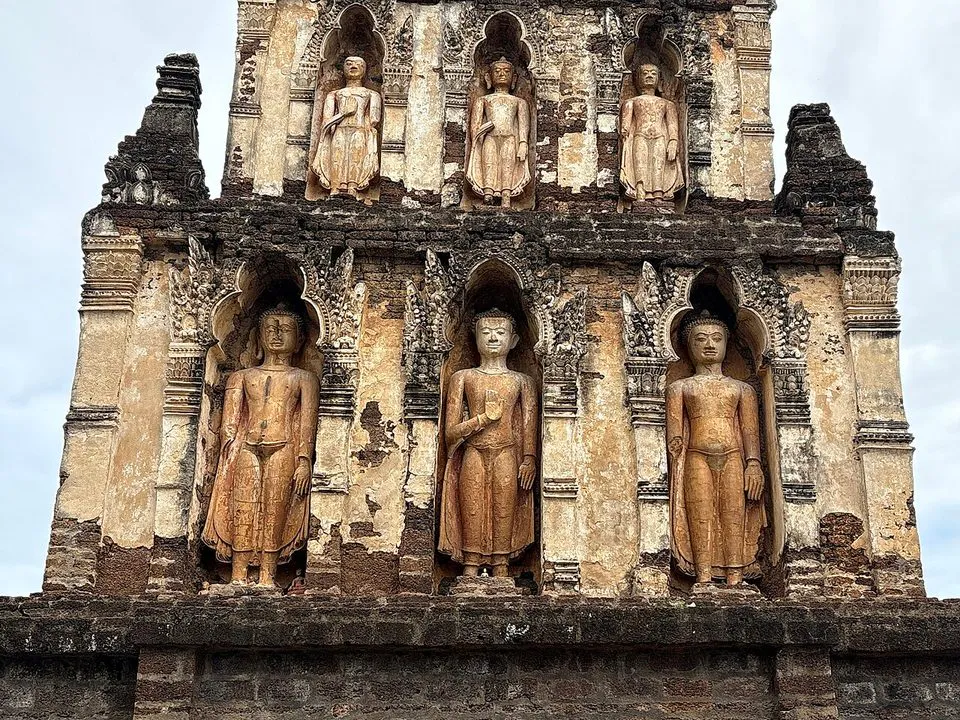
Also called Wat Ku Kut — home of the stepped Hariphunchai chedi tied to Queen Chamadevi’s memory. Murals, a small museum, and Mon-era brickwork make this the essential companion to the city’s golden Phra That.
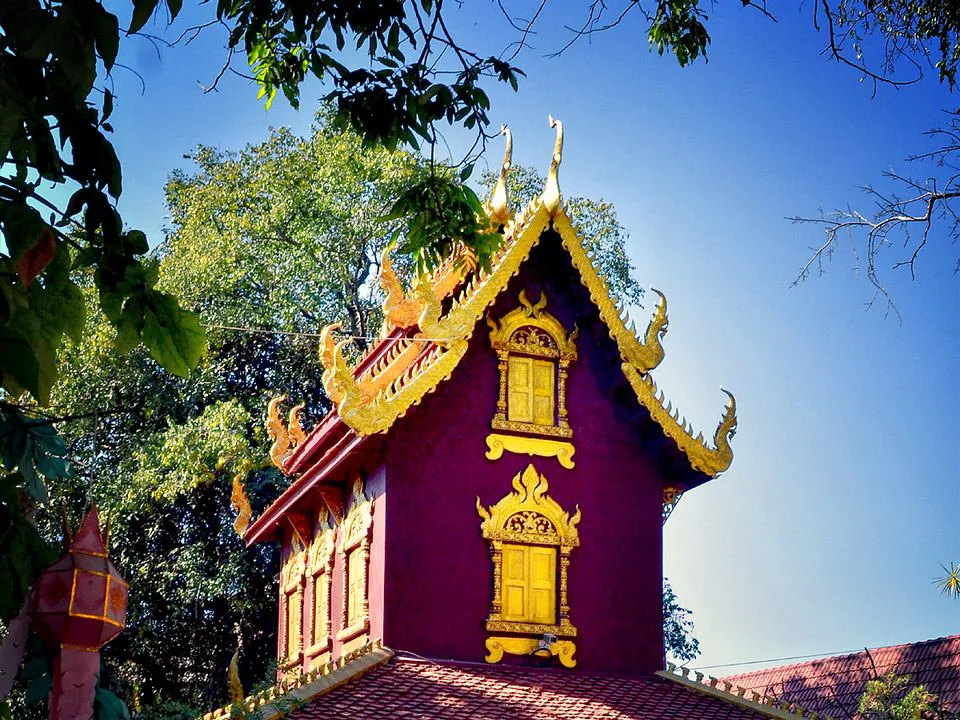
A glass skywalk opened in 2024 above Pasak hills — Doi Inthanon and Doi Suthep on clear days, plus blessings at the giant Kru Ba Sri Wichai image. Faith and panoramic thrill in one ridge stop.

Lamphun’s sacred heart — a gleaming golden chedi said to hold a Buddha relic, already the city’s main temple in Mon times and still the province’s spiritual landmark. Come for morning light, lions at the gate, and quiet circumambulation.
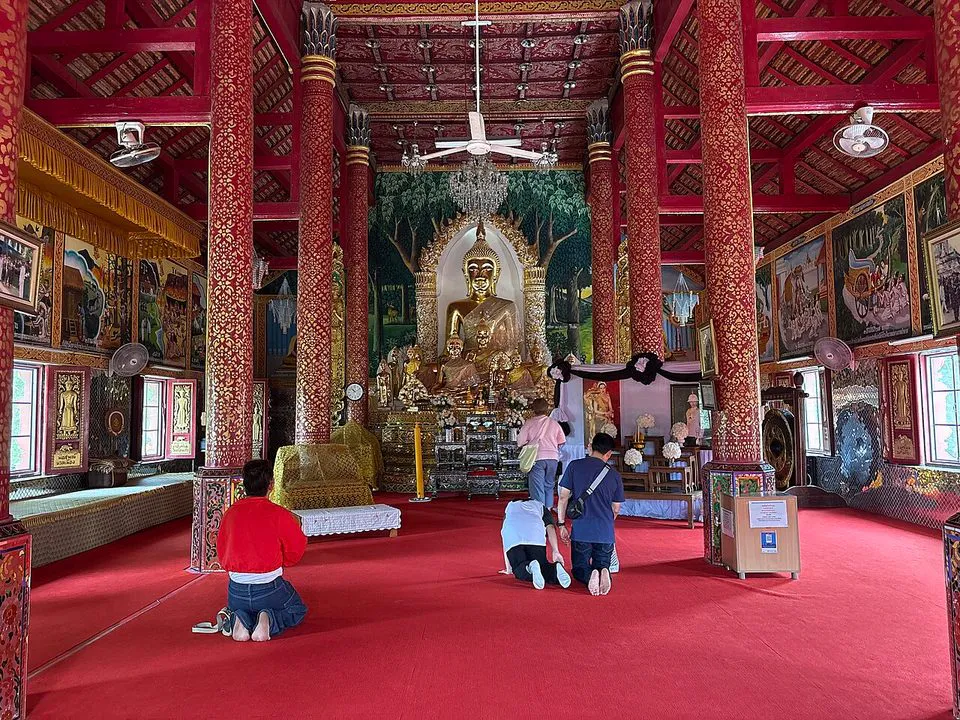
An ancient standing-Buddha sanctuary just outside the old walls in Wiang Yong — tall brick chedis and deep Hariphunchai roots. Pair it with the Phra That for a fuller sense of Lamphun’s sacred geography.
04
Local Flavours & Food
Lamphun eats like a small northern capital: longan-stewed pork noodles behind Wat Phra That Hariphunchai, khantoke rooms of sai ua and nam prik ong, and morning bowls that still belong to the old town. These are the tables locals send you to — listed A to Z. Hours can change; tap Location for the latest pin.
Where to Eat
Longan-stewed noodles behind the Phra That, khantoke rooms, old-town sai ua, and morning bowls locals still queue for. Listed A to Z. Hours can change; tap Location for the latest pin.
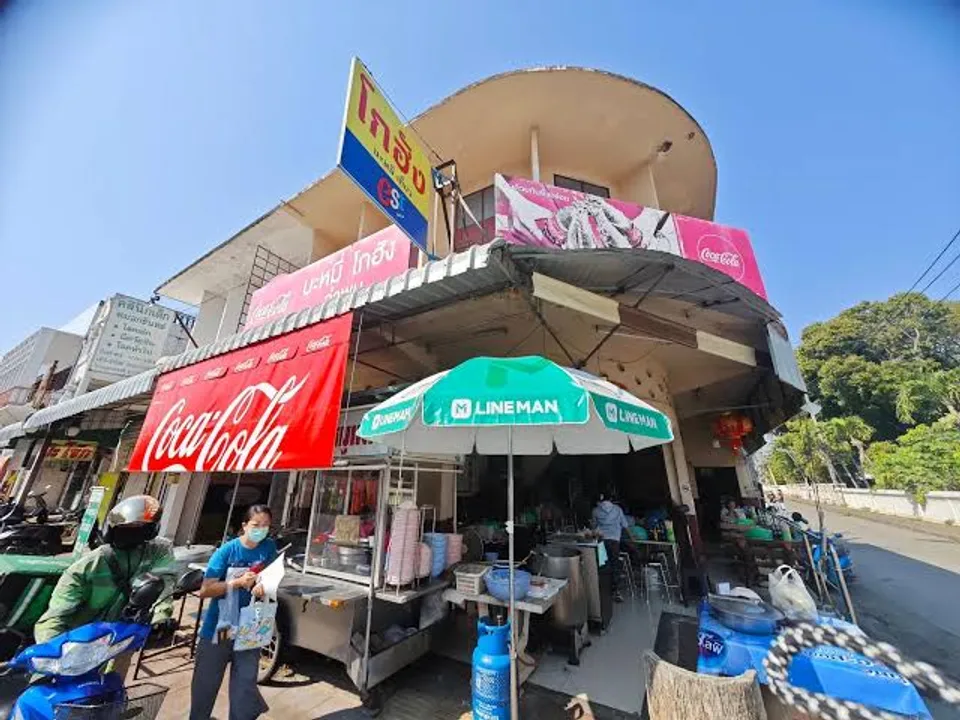
A long-loved noodle shop in the old town, famous for crab bamee with red pork.
The noodles stay springy, the crab sweet, the broth barely needing extra seasoning — add pork-bone soup or crab wontons if you want a second bowl.
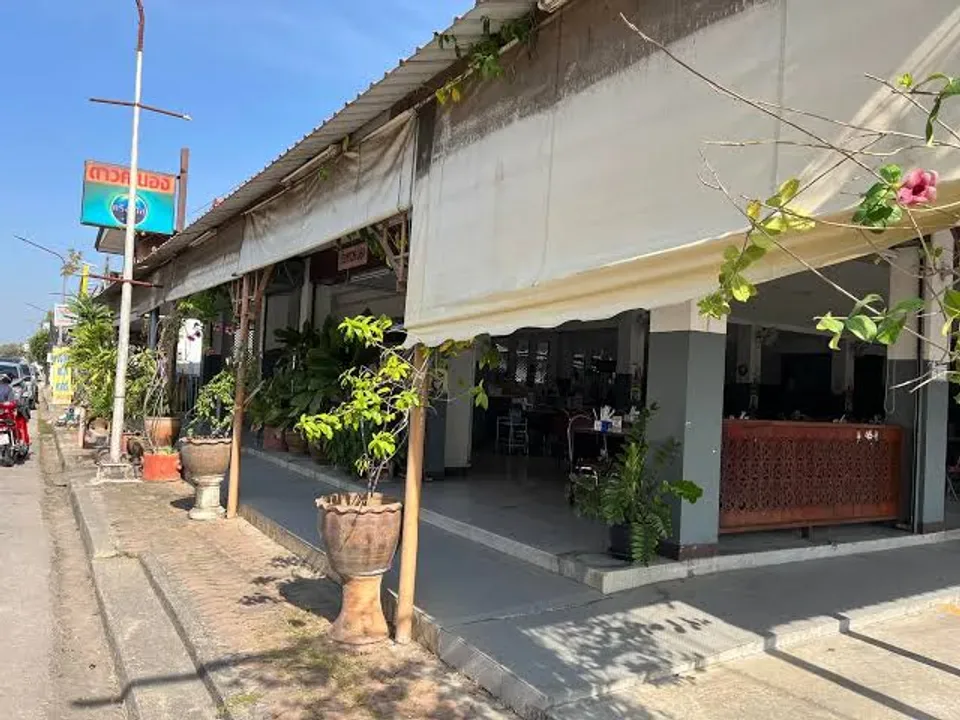
Lamphun’s best-known northern table, with roots in the Sor. Dao Khanong boxing camp kitchen.
Share sai ua, nam prik ong, hang lay, jackfruit salad, duck laab, and a full khantoke spread — two branches make it easy after temples or the skywalk.
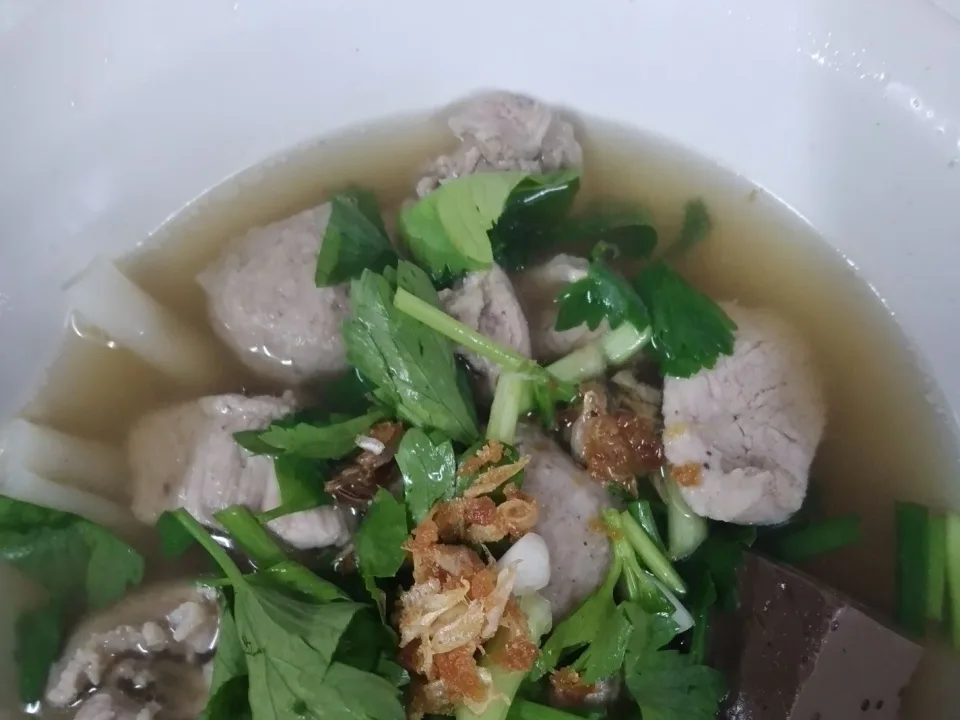
A morning bowl built on pork-blood soup simmered with herbs, especially jing joo chai, the medicinal green that locals swear by.
Come early, eat it hot, and treat it as the healthy start before a day of chedis and old-town walking.

The night-market yen ta fo stall nicknamed for bowls piled high — noodles, squid, fish balls, tofu, blood cake, and greens.
The broth is thick and fragrant; it is the late bowl after Walking Street when the old town finally cools.
Fresh khanom chin (khanom sen) served with nam ngiao that is rich with spice but not fierce heat.
Add som tam, mango salad with grilled fish, or khao soi chicken when you want a full northern lunch under a café-garden pace.

An old Wiang Yong kitchen that still treats khao soi as daily food, not a tourist extra.
Choose chicken or beef in a deep curry broth, then branch into nam ngiao, yen ta fo, or kuay jap if the table wants more than one northern bowl.

The fried-banana stall every Lamphun visitor is told to ask for, on San Mueang Tai Road.
The batter is fragrant and crisp around ripe banana, plus fried yam and quail eggs — cheap, hot, and gone in a few bites.

More than twenty years of Yong-style northern cooking in a leafy garden dining room on the Rim Ping road.
Order kaeng khae, sour bamboo-shoot curry with thob mushrooms, steamed snakehead parcels, red-ant-egg dishes in season, and a khantoke set built for sharing.
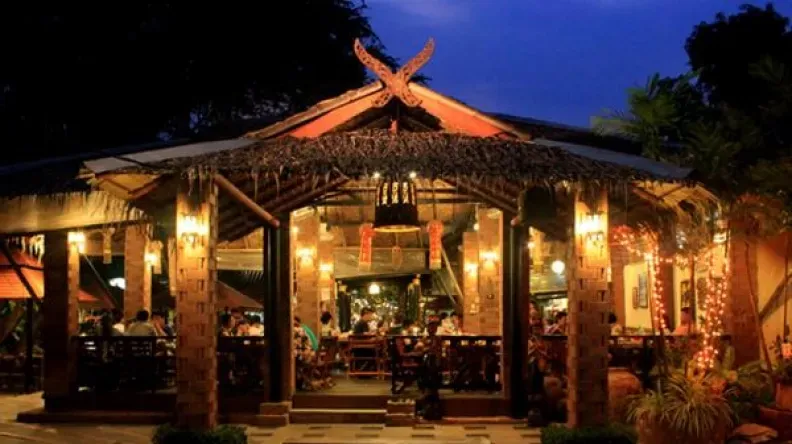
A wide, easy-going room for Thai and Isan plates with live music on some nights.
Come for spicy salads, grilled meats, and full sharing tables rather than a quiet temple-side noodle stop.

Northern food under an old Lanna wooden house, with garden shade and a weekday-lunch rhythm.
Share nam prik num, pork kaeng om, grilled pork neck, roasted pork laab, and sour bamboo soup with grilled fish.
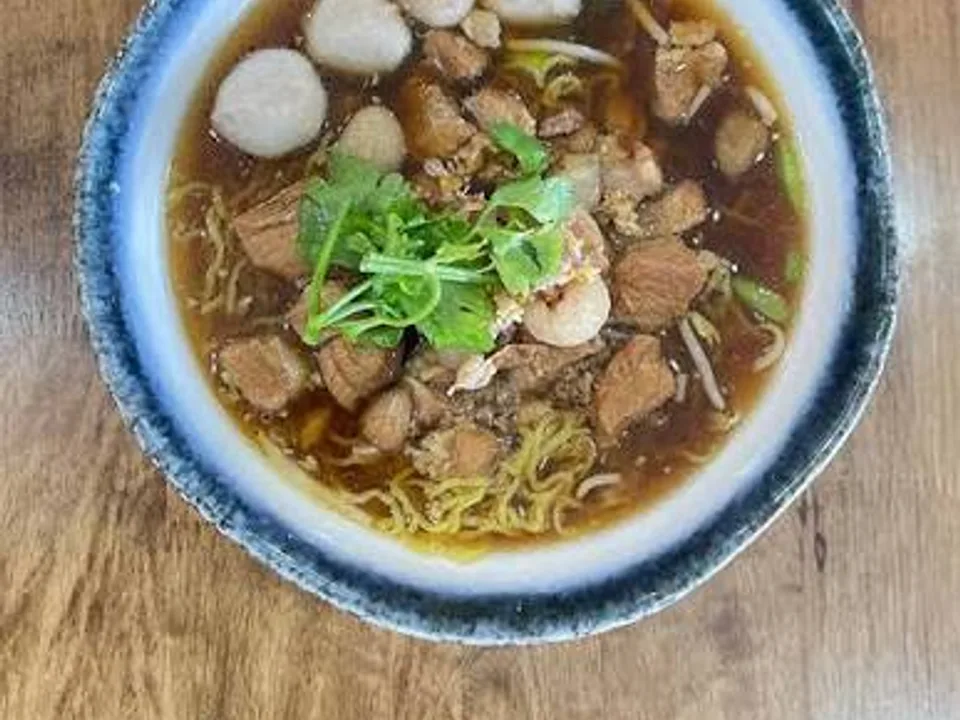
Lamphun’s signature bowl: pork-bone broth simmered with local dried longan, plus melting stewed pork and a scatter of crispy wonton.
Cross the old wooden bridge after the Phra That, finish with longan juice, and you have eaten the province in one lunch.

A thirty-year curry-rice stall in an old wooden shophouse beside the great temple, cooked to Pa Nang’s own recipes.
Simple trays, fresh pots, and Yong-language chatter — the everyday Lamphun lunch travellers miss if they only chase cafés.
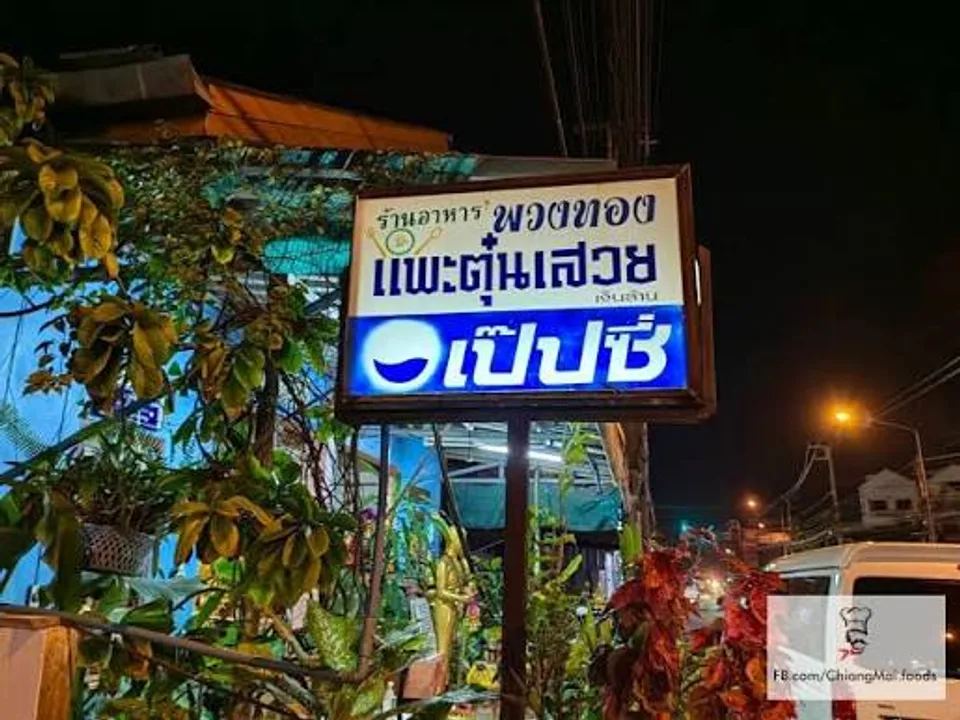
A Chinese-Thai kitchen known for goat slow-stewed with herbal spices until the broth is deep and free of gamey heat.
Pair it with other Thai-Chinese plates on the Chiang Mai–Lamphun road when you want something richer than a noodle lunch.

Takeaway northern sausage made fresh to an old family recipe — no preservatives, premium pork, and a herb-loud grind.
Buy it hot off the grill as a snack or a souvenir; this is the sai ua locals point to, even without tables to sit.
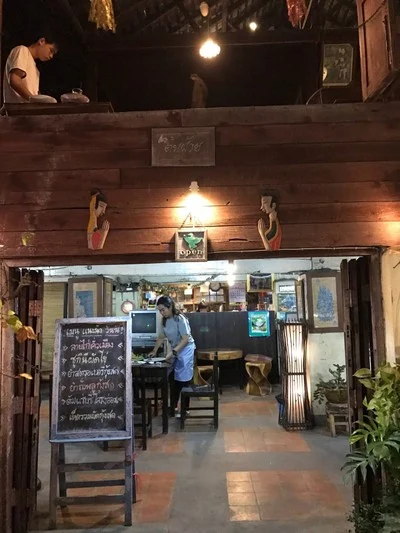
A teak house on the inner ring road, a short walk from Wat Phra That Hariphunchai, serving Thai and Lanna plates in a calm family room.
Gentle flavours, easy sharing, and the kind of old-wood atmosphere that fits an evening after the golden chedi.
05
Local Specialties & Souvenirs
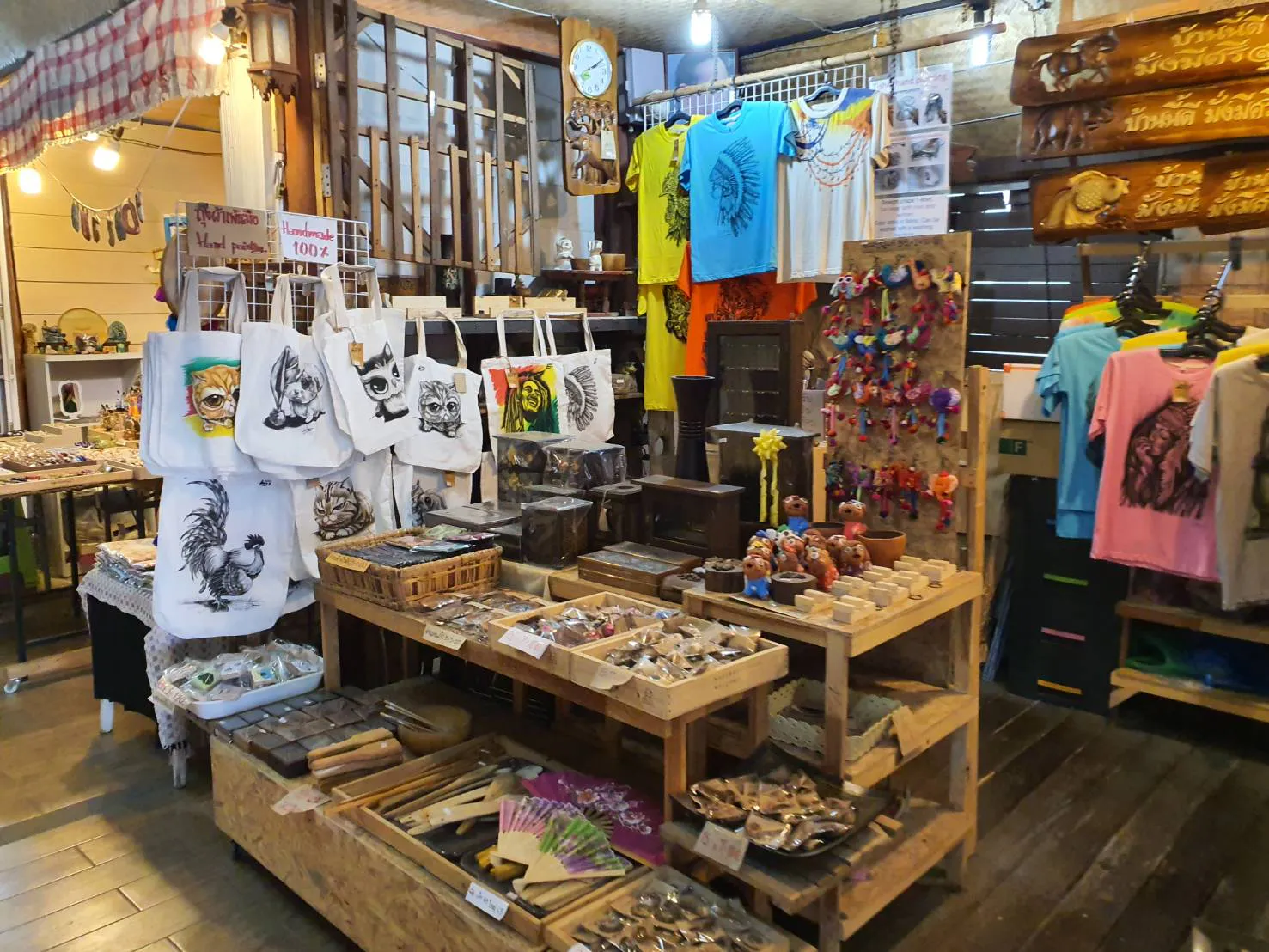
Lamphun packs its orchard and loom into bags you can carry. The star is GI golden dried longan — fragrant, honey-sweet fruit from the Ping valley — then herb-loud sai ua, OTOP chilli pastes, and cloth that still belongs to Wiang Yong and Ban Don Luang. Fill the edible side first; leave room for silk.
Community makers also sell through the official Lamphun Province website (lamphun.go.th), handy when you want extra OTOP bags after the market run.
06
Local Culture & Vibe
Lamphun still keeps time as Hariphunchai — a small northern capital of Queen Chamadevi’s legend, Yong weaving villages, and a golden chedi that gathers the year. Faith arrives with water and lanterns; the orchard writes August; Pa Sang keeps cotton on the loom. These are the rites and fairs that set the province’s pace.

February · Wat Phra That Hariphunchai
A harvest-and-craft fair in the temple grounds — farm produce, processed longan, housewife-group stalls, folk shows, and a rural-house contest. Shop community goods at village prices, then walk the chedi in the same afternoon.
March–April · Pa Sang, Mae Raeng
Pa Sang is Lamphun’s cotton country. Village fairs at Ban Don Luang, Nong Nguak, and nearby Yong communities put handwoven cloth, batik, and quilts — the district still boasts a giant quilt — straight from the loom into your hands.
13–15 April · Tha Kham Bridge & old town
Lamphun’s New Year is still a rite before it is a water fight. Dawn alms, bathing the Buddha, and the procession of Phra Rod Luang — the province’s beloved small Buddha — through the municipality around Tha Kham Bridge.

6th lunar month · often late April–May
The holiest week in the province. Royal lustral water and sacred water from Doi Khamo are poured over the golden chedi on the full moon of the sixth lunar month. Dates move with the moon — in 2025 the rite ran 5–11 May — so check before you travel.
August
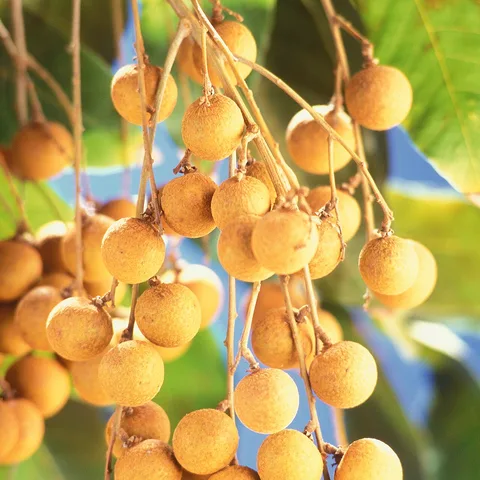
Peak orchard season: floats dressed in fruit, a Longan Queen contest, agricultural stalls, and the crop that made Lamphun’s name. Exact dates shift; the 2025 Chamber of Commerce fair filled 1–12 August. August is still the month to come.

Yi Peng into winter · old city & the Phra That
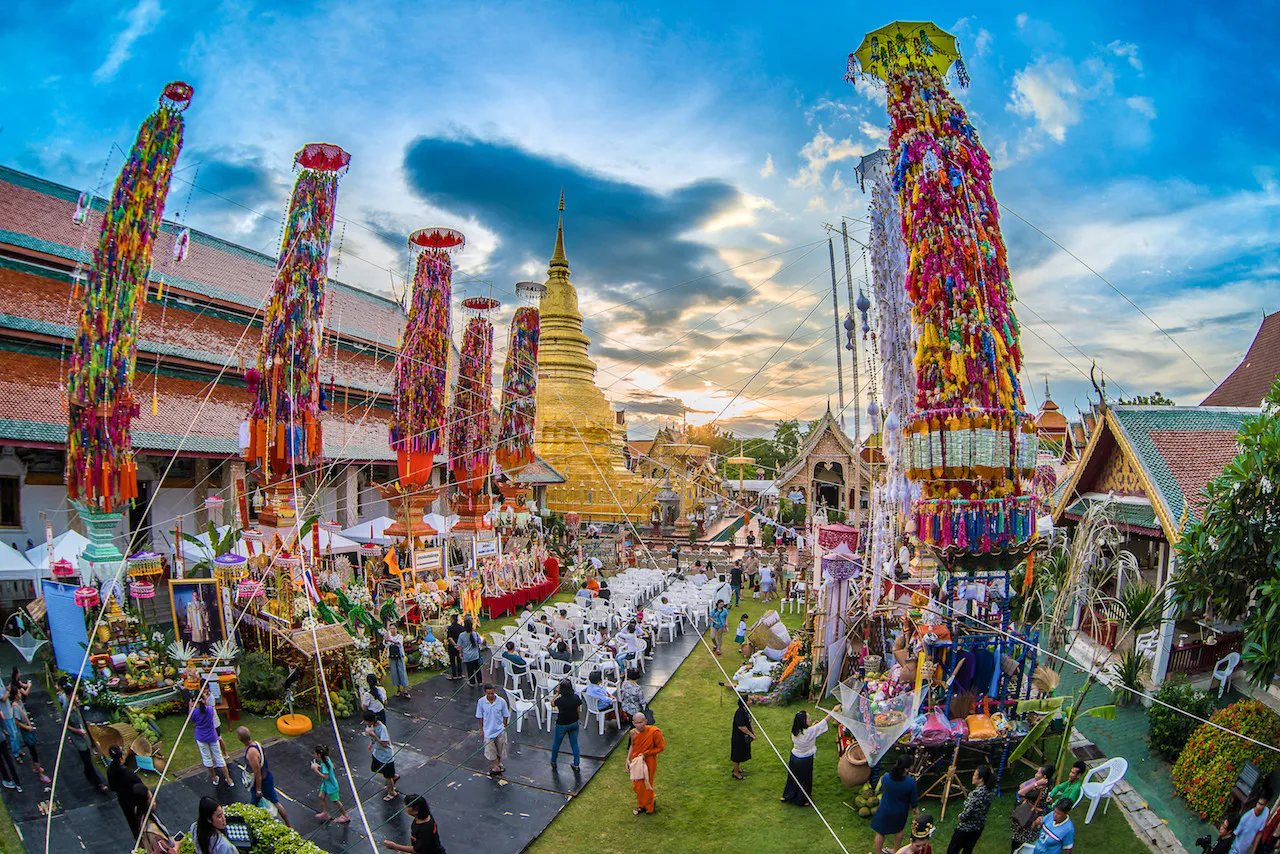
Colourful tung and lanterns honour Queen Chamadevi, Lamphun’s founding monarch. Yi Peng lights Wat Phra That and Inthayongyot; the season can run toward a winter fair with Miss Lamphun and Yong daughter pageants. The courtyard in the photo is that faith, hung in silk.
07
Travel Info & Getting There
How to reach Lamphun from Bangkok, and how to move around once you arrive.
Lamphun has no commercial airport of its own. Fly into Chiang Mai International (CNX) — about 1 hour 10 minutes from Bangkok — then ride 25–30 km south. Grab or a taxi from the terminal puts you in the old town in roughly 30–45 minutes; a hired car is easier with luggage. Lampang (LPT) is a thinner backup, then about an hour west on Highway 11.
From Bangkok it is about 670 km up Phahonyothin and Highway 11 — a long northern drive via Nakhon Sawan, Kamphaeng Phet, and Lampang, best split over a day. From Chiang Mai, Superhighway 11 is the fast 30-minute run; Highway 106, the old Ton Yang rubber-tree road, is the slower, shadier classic. Park outside Wat Phra That on festival days; the old streets are narrow.
The Northern Line stops at Lamphun Railway Station, the last halt before Chiang Mai, about 2–3 km from the old walls. From Krung Thep Aphiwat, Special Express 7 (07:30) is the daylight classic, reaching Chiang Mai around 17:50 — step off at Lamphun some twenty minutes earlier. Overnight sleepers 9, 13, and 51 follow through the evening; book a second-class berth ahead in cool season. Anywheel bikes, a tuk-tuk, or Grab cover the short hop into town.
Overnight coaches from Bangkok’s Mo Chit 2 (Chatuchak) run the Kamphaeng Phet–Lampang corridor into Lamphun Bus Terminal. Sombat Tour’s evening Supreme is a typical example — around 20:30 from Mo Chit, in about 07:00 — though times and fares shift, so confirm before you book. Many travellers sleep to Chiang Mai instead, then take the frequent blue songthaew from Kad Luang or Khua Lek (Iron Bridge) for about 30 THB and 40–50 minutes.
The old town is small, flat, and made for walking or a rented bicycle — Anywheel docks sit at the station, Ku Chang, the Chamadevi monument, and Wat Phra That. Blue songthaews link Chiang Mai all day (thin after about 18:00). Grab works in town; motorbike taxis cover short hops. For Pa Sang, Li, Ban Hong caves, and the Khun Tan ridge, rent a car or scooter, or hire a local driver — those days sit beyond the walls.
November to February is the sweet spot: cool temple mornings, clear orchard light, and easy old-town walks. Mid-April is Songkran and the Phra Rod Luang procession; the sixth lunar month (often late April or May) brings the bathing of Phra That Hariphunchai; August is Longan Festival. March–April can turn hazy in burning season; May–October is greener, quieter, and best for waterfalls after rain.
Continue the Journey