
Buriram Castleปราสาทบุรีรัมย์
A Khmer stone prang in the last light — tiered towers, a grassy slope, and the silhouette Buriram uses when it wants to look like its own past. Stay for the sun to drop behind the stone.

 ThailandLover
Contact
01
Geography & Climate
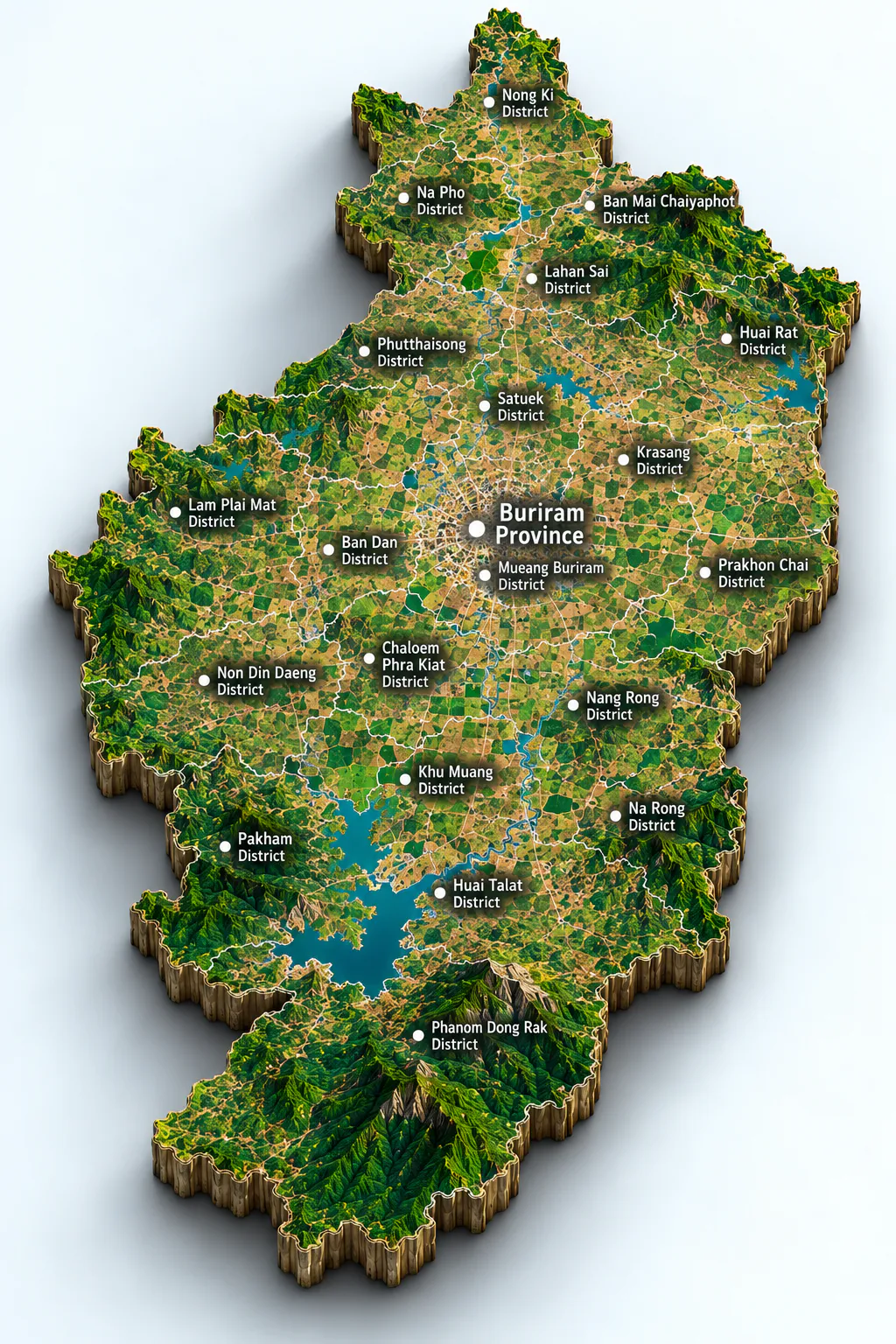
Buriram lies in lower northeastern Thailand — about 10,323 square kilometres, roughly 410 kilometres from Bangkok. Khon Kaen and Maha Sarakham sit to the north, Surin to the east, Sisaket to the southeast, and Nakhon Ratchasima to the west.
The north and centre are classic Khorat rice plain. The south changes character: extinct volcanoes at Khao Kradong, Phanom Rung, and Khao Phra Angkhan, and the long approach of the Dongrak hills toward the Cambodian rim. Southern districts also touch Thung Kula Rong Hai, the great jasmine-rice basin shared with Surin, Sisaket, Maha Sarakham, and Roi Et.
Expect a savanna climate. November to February is dry and kinder. March to May is harsh, which is also when the Phanom Rung sunrise show falls. Rains run from about May through October.
Best time: November – February for temples and easy driving; the first weekend of April for the Phanom Rung Festival and the doorway sunrise; May – October if you want green paddies and fewer tour buses.
02
History & Heritage
Buriram’s name means city of happiness — buri for a town, ram for joy. The ground under that cheerful name is older and sterner. From the 10th to the 13th centuries, Khmer builders raised sanctuaries along the route from Angkor toward Phimai: Phanom Rung for Shiva on a volcanic cone, Muang Tam in its baray below, and smaller shrines still scattered through the southern districts.
The modern mueang took shape in the Thonburi and early Rattanakosin centuries as an Isan town on that same southern road. What travellers meet now holds both clocks at once. The Fine Arts Department’s restoration opened Phanom Rung Historical Park in 1988, and the April festival still climbs the hill to gild a Buddha footprint at Prang Noi — a Hindu temple that became a Buddhist pilgrimage without losing its lintels.
The twentieth century added the city’s own volcano, Khao Kradong, and the seated Buddha on its rim. The twenty-first added Chang Arena and a castle skyline. Happiness, here, is a working word: stone, rice, silk, and a Saturday that can fill every hotel.

03
Top Attractions
Phanom Rung’s fifteen doorways, Muang Tam’s pools, a city volcano, and the evening walking street — Buriram, listed A to Z.
A Khmer stone prang in the last light — tiered towers, a grassy slope, and the silhouette Buriram uses when it wants to look like its own past. Stay for the sun to drop behind the stone.
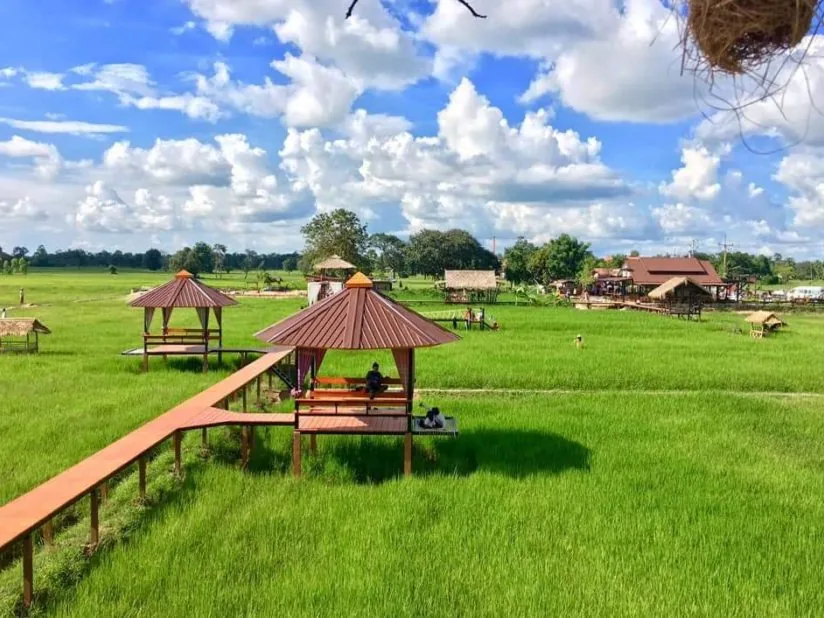
Pavilions on walkways over a green rice field — a slow garden hour between the crater and the Khmer parks. Come in the growing season, when the paddies are still bright.
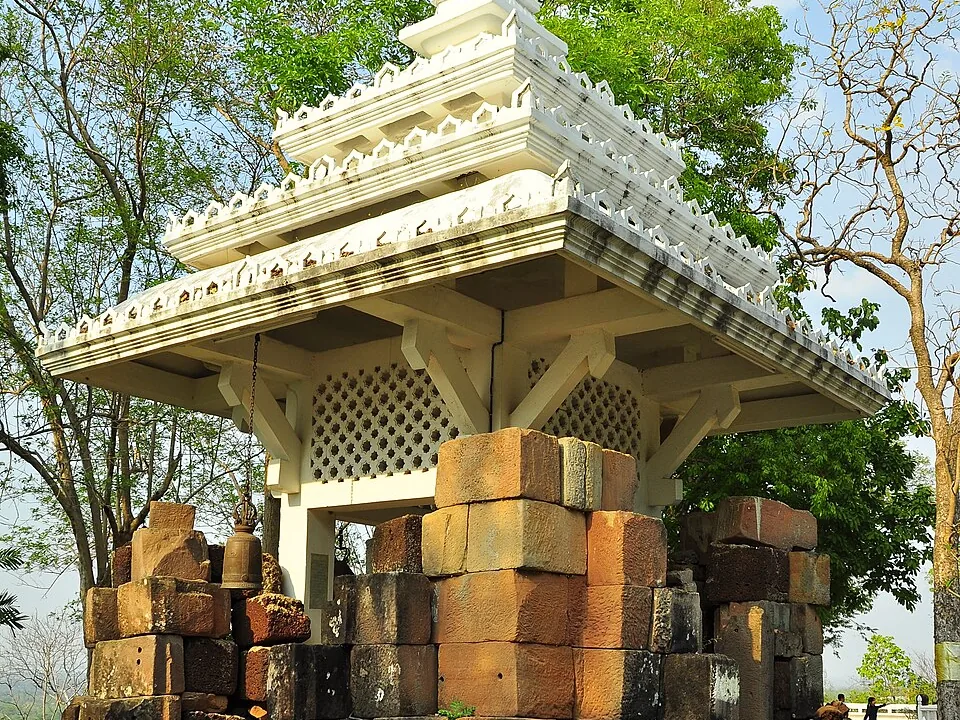
The city’s extinct volcano — a short climb or a drive to the rim, where the seated Buddha Phra Suphattharabophit faces the plain. Sunset is the hour locals actually come.
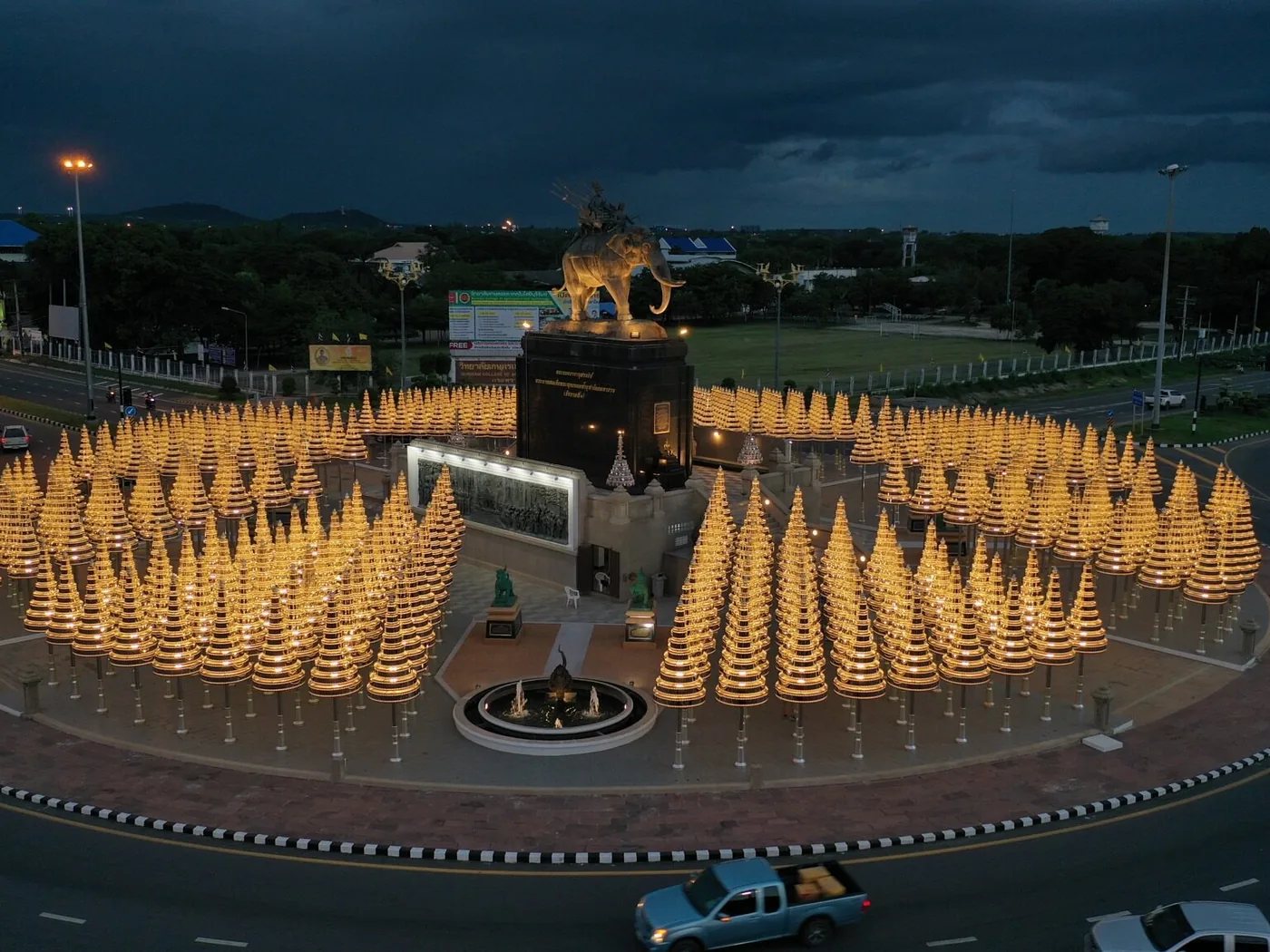
The city’s memorial to King Rama I, founder of the Rattanakosin era. A formal civic stop — garlands, a wide plinth, and a photograph on the way to the lake or the station.
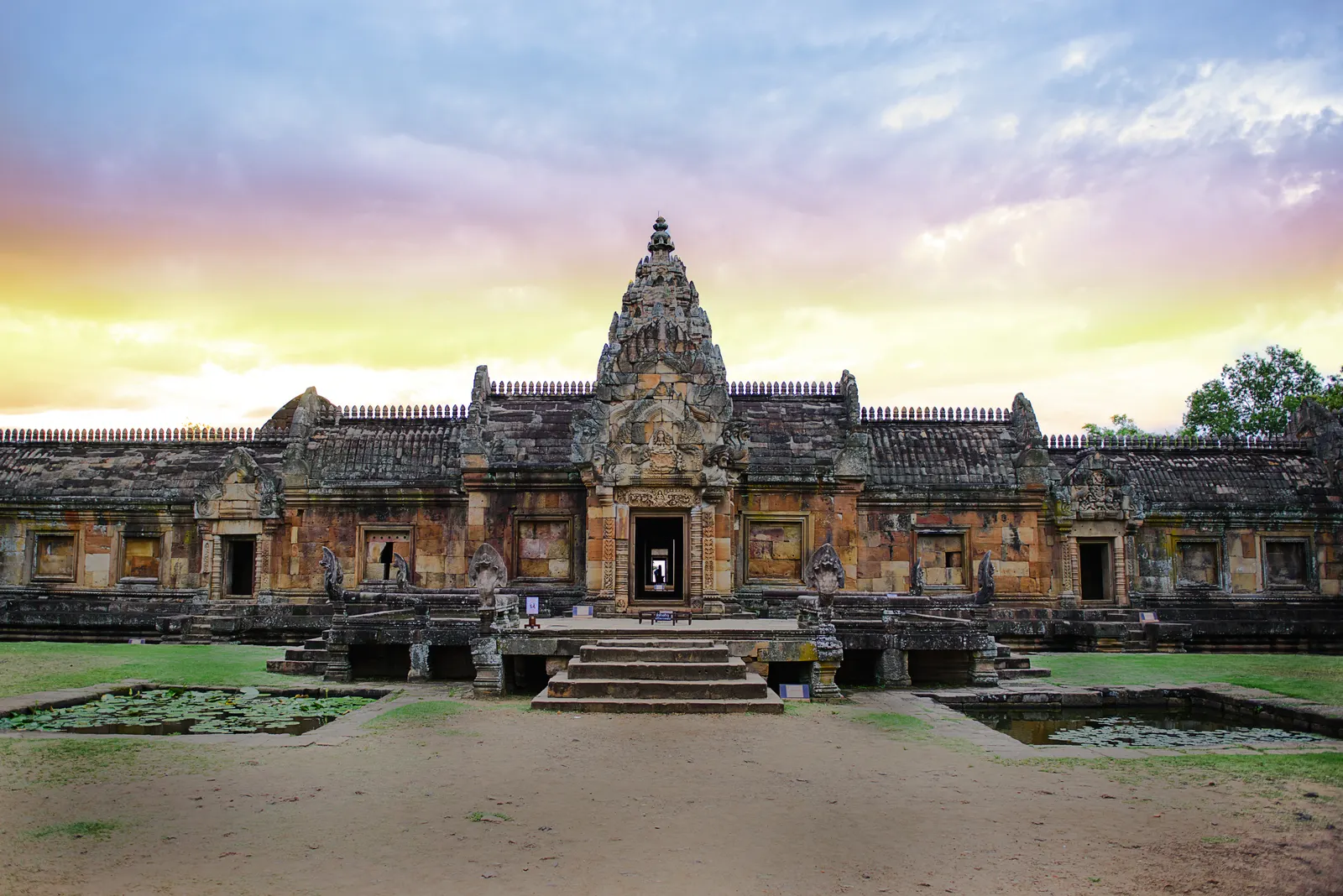
A Shiva sanctuary of the 10th–13th centuries on an extinct volcano — sandstone causeway, naga bridges, and fifteen doorways the April sunrise can thread in one line. Thailand’s finest Khmer temple outside Phimai.
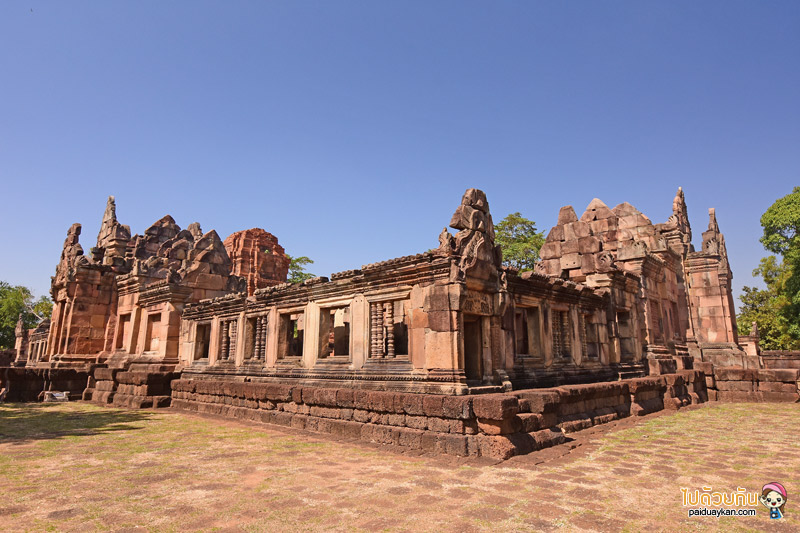
Five brick towers in a laterite pool, about eight kilometres from Phanom Rung and built for Shiva in the same centuries. Lintel light and still water — go the same morning, before the heat sits in the courtyards.
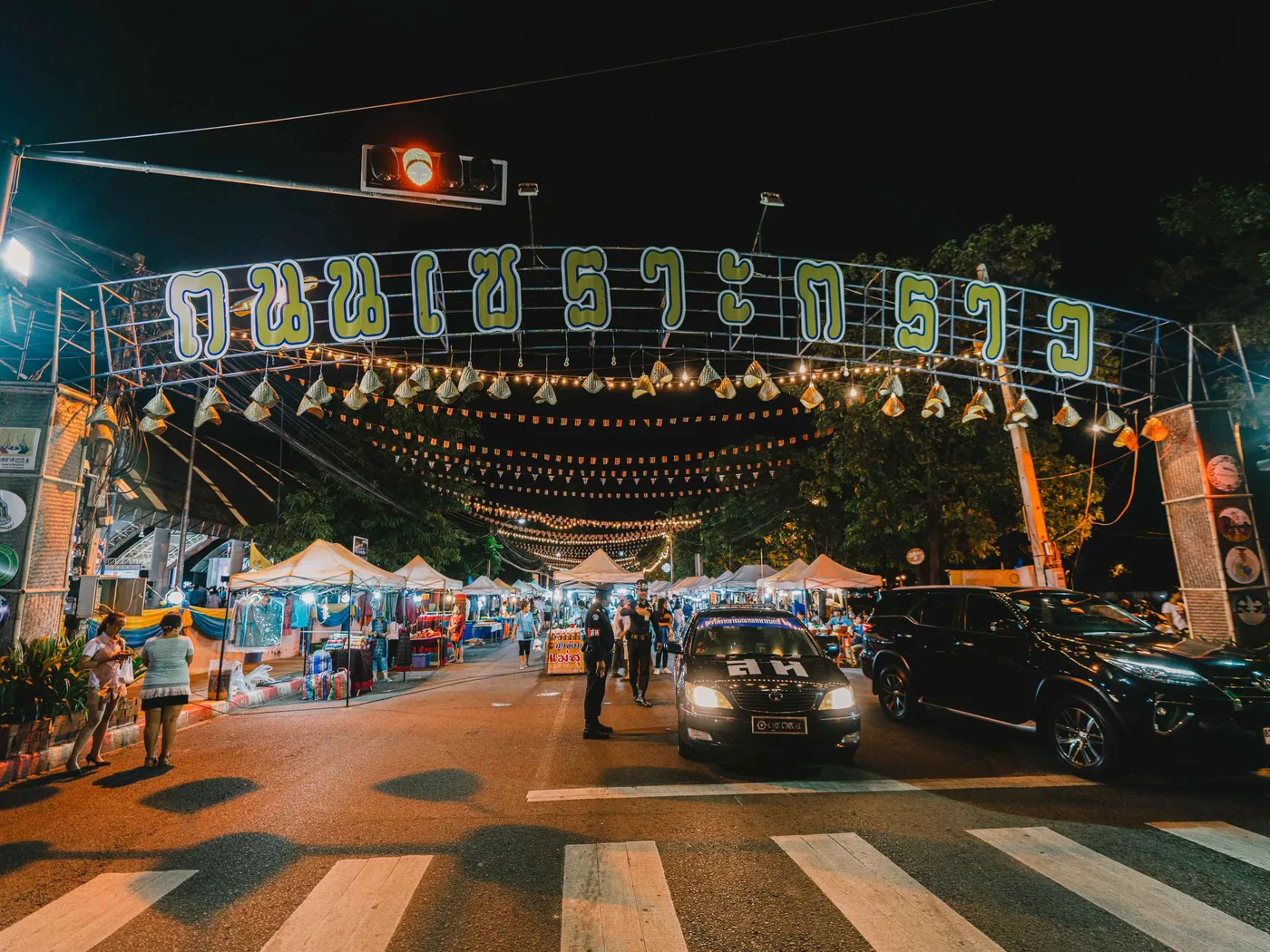
The city’s evening walking street — grilled meat, sweets, and a crowd that gathers once the shops roll down their shutters. Eat here instead of hunting a restaurant on a quiet weeknight.

A temple on another dead volcano near Phanom Rung, with Khmer stone on the hill and a later Angkor-style complex below. Wind, a wide view, and an easy pair with Muang Tam.

The old city temple — ordination hall, murals, and a courtyard that still works as a neighbourhood, not a ticket gate. Start a walking morning here.

A forest temple on a small hill, for a quieter merit stop after the historical parks. Dress modestly, walk slowly, and leave the loud voices in the car.
04
Kai Yang, Roast Duck & Garden Tables
Buriram eats like the lower Isan plain it sits on — herb-grilled chicken and sticky rice on the Phanom Rung road, pork leg and roast duck in town, and garden cafés when the crater walk is done. The tables below are the ones the photos already know. Hours can change; tap Location for the latest pin.
Where to Eat
Grilled chicken, roast duck, pork leg, and garden cafés — Buriram tables locals still name, listed A to Z. Hours can change; tap Location for the latest pin.
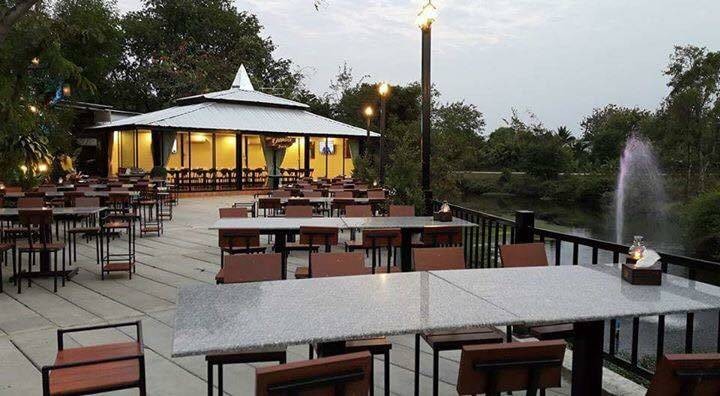
A waterside table for a long Isan lunch — grilled meats, som tam, and a breeze off the water when the stadium roads feel too loud.
Come hungry and share; the pin is the surest way to catch the day’s hours.
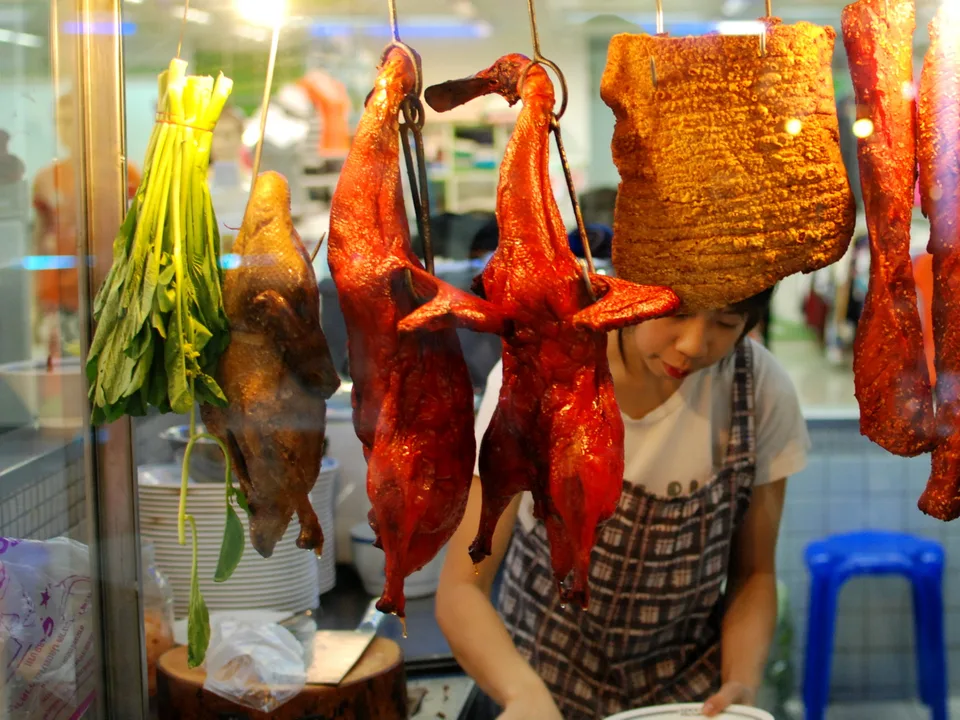
Crisp-skinned roast duck for a quick city meal between the station and Khao Kradong.
Order rice and a clear soup if the table wants something simple after a morning at the prasat.

A local room for everyday Isan plates — sticky rice, grilled pork, and the kind of lunch that does not need a reservation.
Useful when you are already in town and want food that tastes like the market, not a hotel buffet.

Braised pork leg with rice — a heavy, comforting plate after a hot walk up Khao Kradong or a long bus from Korat.
Ask for the skin if you want crackling; the gravy is the point.

One of the names Buriram still sends you for grilled chicken — herb-rubbed birds, sticky rice, and som tam on the side.
Best as a roadside stop on the way to or from Phanom Rung, not as a late-night city meal.
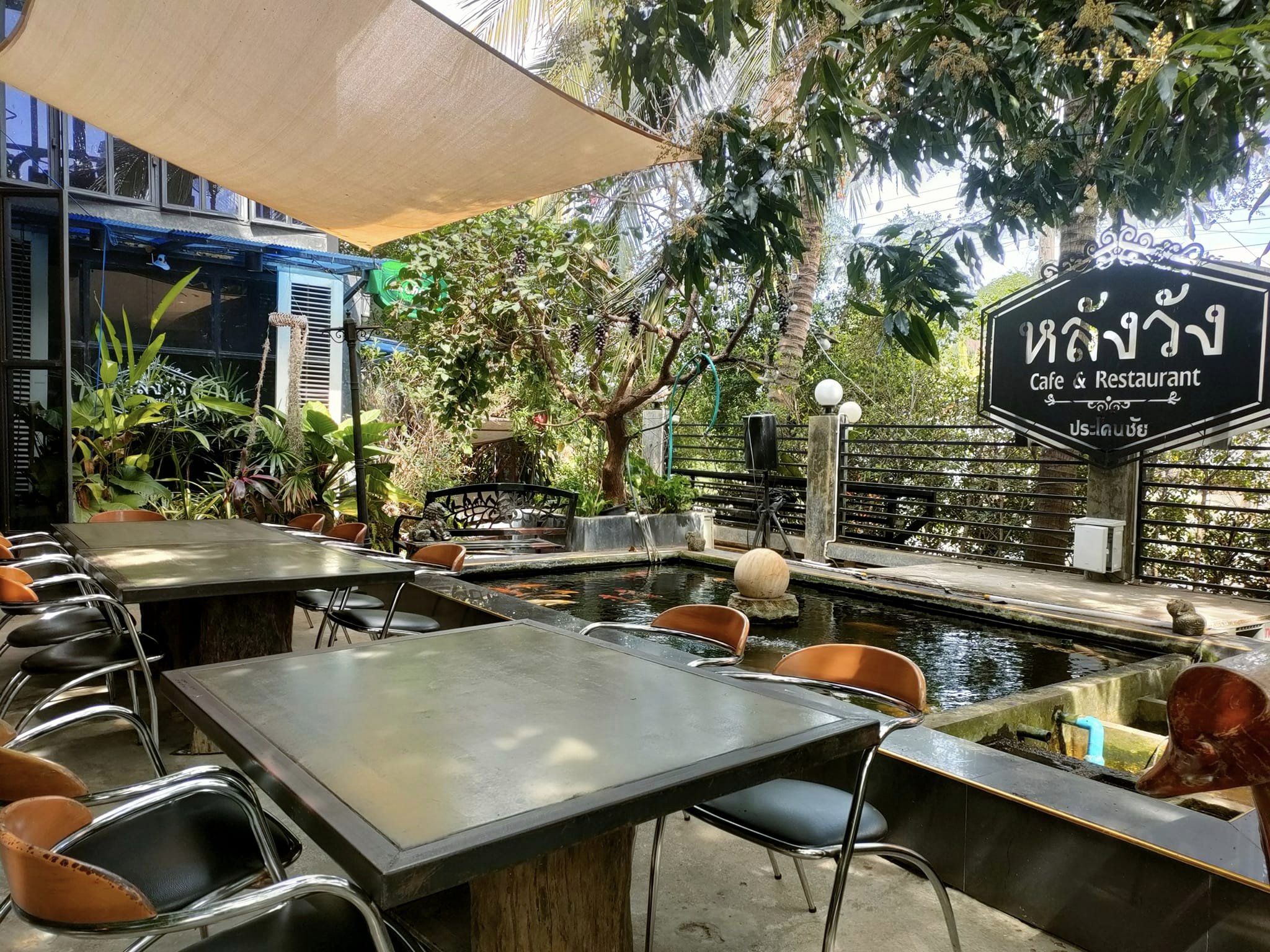
A garden table for Thai and Isan plates when you want shade and a slower lunch than the walking-street stalls.
Share grilled dishes and a spicy salad; check the pin before you drive across town.
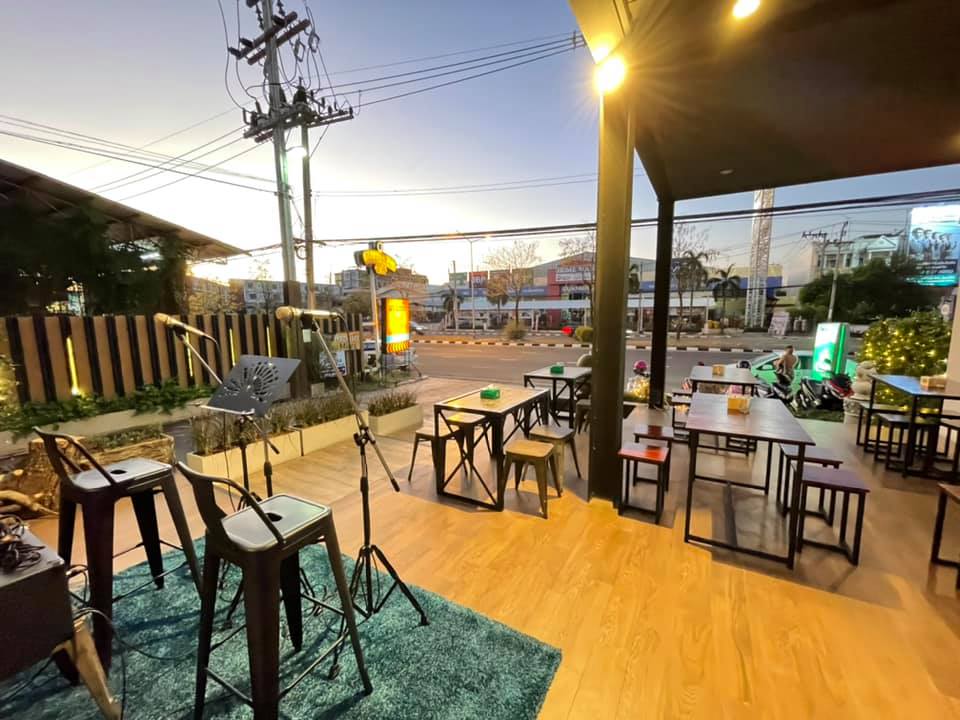
Coffee and a light bite between temple hours and the evening market — a small pause, not a banquet.
Come for an iced drink when the April sun on Phanom Rung has already done its work.
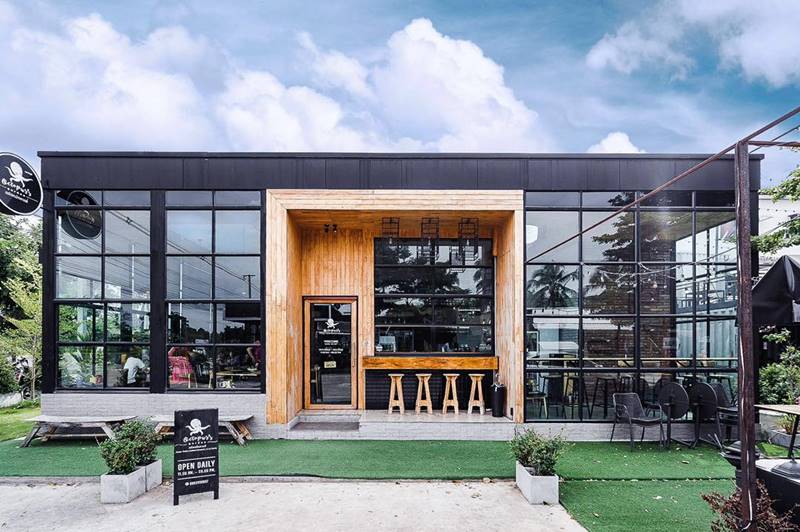
A garden café for coffee, photos, and a slow afternoon when the family has already seen the castle and the crater.
Seats fill on weekends; the pin shows whether the kitchen is open.
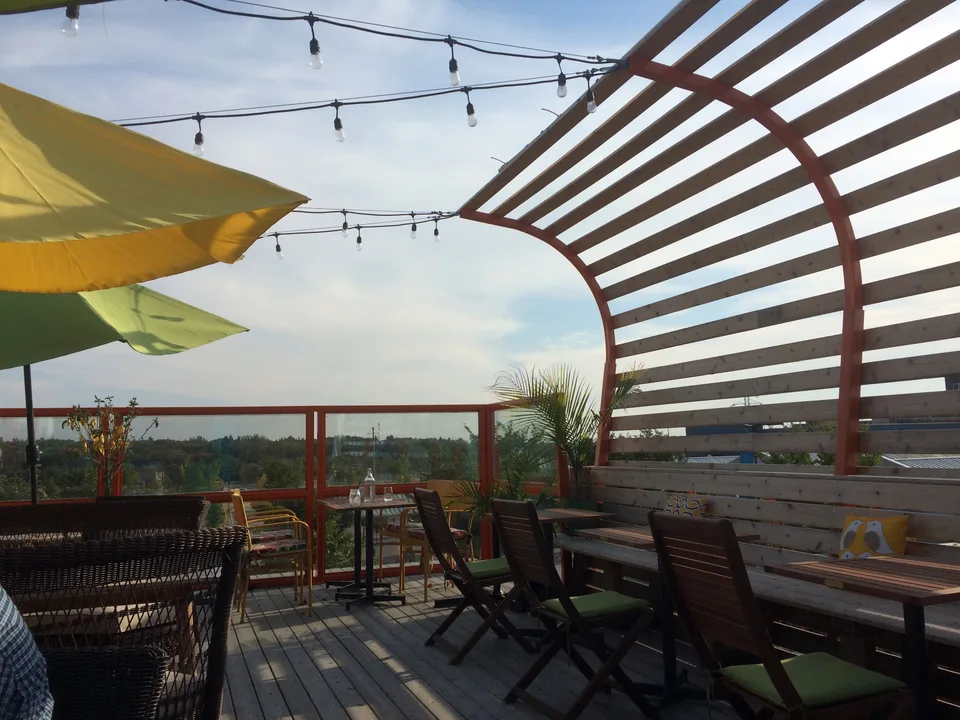
A café with a view toward Buriram’s modern landmarks — useful for a drink after Chang Arena or a late afternoon in the city.
Order something cold; match day crowds change the pace.

A contemporary café-restaurant for travellers who want coffee, Western plates, and air-conditioning between Khmer ruins and the night market.
Book or go early on football weekends, when rooms near the stadium fill first.
05
Souvenirs from Buriram
Leave room for cloth and rice, not only a stadium scarf. Buriram’s south weaves silk, its Thung Kula edge grows GI-country jasmine, and the walking street packs the edible gifts that survive a train home.
06
Local Culture & Vibe
Buriram’s year still climbs a volcano to meet a Shiva temple that became a Buddhist rite, then comes home to silk looms and a football Saturday the rest of Thailand watches. The happiness in the name is not soft. It is a province that kept its lintels and built a modern crowd on top of them.

07
Travel Info & Getting There
How to reach Buriram from Bangkok, and how to move around once you arrive.
Buriram Airport (BFV) is the simple door — a short flight from Bangkok’s Don Mueang, then about 40 kilometres into the city. On fixture weekends the flight is the calm part; the hotel is not. If the schedule is thin the week you travel, fly into Nakhon Ratchasima’s corridor or Khon Kaen and finish by road.
About 410 kilometres from Bangkok, roughly 5–6 hours via Highway 2 (Mittraphap) to Nakhon Ratchasima, then Highway 226 east into Buriram. Highway 24 is the other Isan spine if you are coming from the south of Korat toward Prakhon Chai and Phanom Rung. Once there, a rental car is the right tool: the sanctuaries sit well south of town, and the crater is the only famous sight you can reach without one.
Buriram station is in the city, on the Northeastern Line to Ubon Ratchathani. Day trains from Krung Thep Aphiwat take roughly 6–8 hours; overnight sleepers land you ready for Khao Kradong. Book early when the April festival or a home match stacks the second-class berths.
Coaches from Bangkok’s Mo Chit 2 cover the same Mittraphap–226 run in about 6–7 hours and arrive at Buriram Bus Terminal. Nakhonchai Air and Transport Co both work this road. From the terminal, a songthaew or hired car finishes the hop; do not expect a city bus to Phanom Rung.
The centre — station, Wat Klang, the walking street, Khao Kradong — is manageable by tuk-tuk, songthaew, and a short hire. Phanom Rung, Muang Tam, and Wat Khao Phra Angkhan need a car or a driver for the day; they cluster south, so one loop covers all three. Grab exists but thins out fast beyond the city.
November to February is the kind travel window. The first weekend of April is the festival, hot and worth it if the doorway sunrise is the point. Green season is quieter and greener, with afternoon rain more often than an all-day washout.
Continue the Journey